
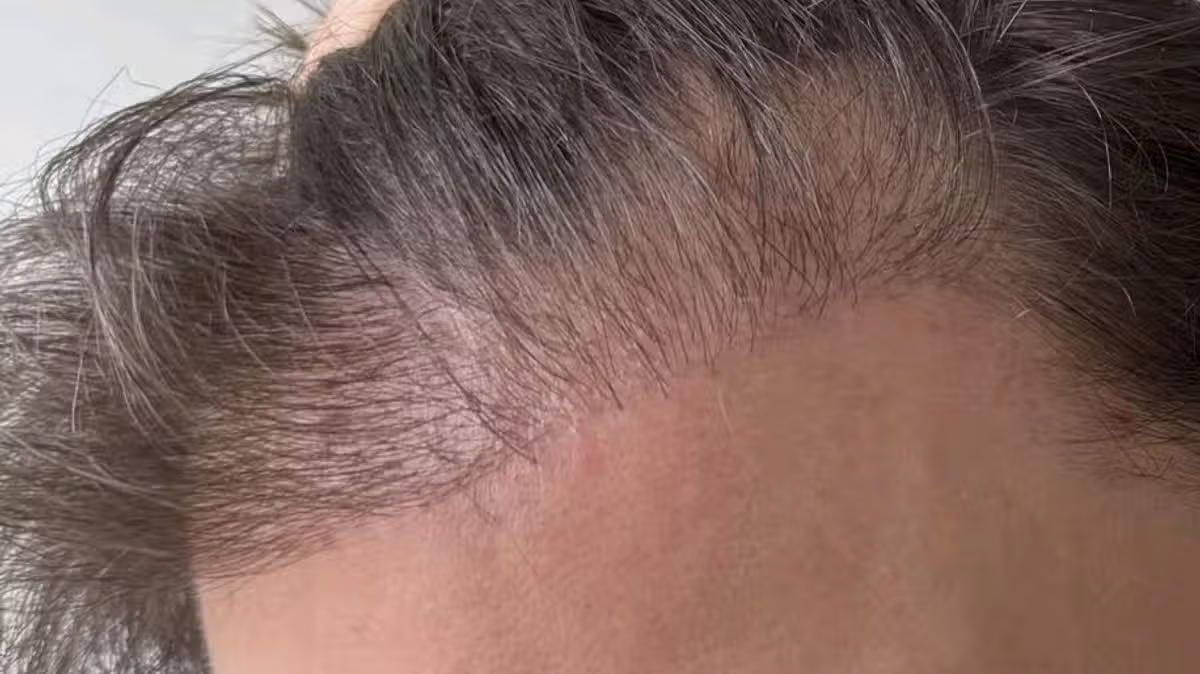
Valentino says he would not make the same mistakes again
A 34-year-old man says a hair transplant he underwent in Turkey left him devastated after the results turned out patchy, unnatural and far from what he had been promised. Valentino Cinavrio says the ordeal cost him around £8,900 and left him hiding beneath hats, avoiding swimming pools and hating his appearance every day.
“My hair transplant was about eight years ago. The initial procedure cost around £2,550, but by the time I paid for additional treatments and attempted corrections, I had spent around £8,900,” said Valentino.
At the time, he was desperate to tackle his thinning hair and believed he had found an affordable solution overseas. “From the beginning, the experience wasn’t what I expected,” he said.
“The procedure was carried out by trainees rather than properly trained medical staff, and the doctor was barely present during the surgery. At one point I actually fainted at the very start of the procedure, and the way the situation was handled immediately made me feel unsafe.”
Valentino says the operation itself was far more painful than expected. “Even though my scalp was supposed to be numb, I could still feel a lot of what was happening during the extraction process,” he said. “It was extremely distressing. I also didn’t feel properly supported or reassured by the staff during the procedure, which made the whole experience even more overwhelming.”
Months later that Valentino realised the transplant had failed. “As time went on, I started noticing that the results were very patchy and uneven,” he said. “The grafts weren’t placed in a natural pattern. Normally, single-hair grafts are used at the front and multi-hair grafts are placed further back to create a natural look, but that wasn’t done.
“Everything was placed randomly, which made the hairline look unnatural and inconsistent.”
Valentino began to fear the damage might be permanent. “That’s when I realised something had gone wrong and I started worrying about the long-term result,” he said. “The hardest part came afterwards when I realised the results were patchy and uneven.
“I kept hoping things would improve over time, but they never did. The clinic would occasionally respond with vague messages telling me to wait, but there was no real follow-up or guidance. That lack of clarity and support made the process very difficult to deal with mentally.”
The failed transplant affected almost every aspect of his life and left him feeling embarrassed about his appearance. “I was in my mid-20s at the time and I blamed myself for choosing the wrong clinic,” he said. “I felt ashamed and didn’t really talk about it with anyone.”
He developed daily habits to hide the outcome, brushing his hair forward. “I used hair fibres on my hairline, wore hats often and avoided situations where it could be noticeable. I avoided going to the pool and was very cautious at the beach. Over time it affected my lifestyle more than I realised because I was constantly managing how I looked and how other people might perceive me.”
Valentino approached his second hair transplant very differently. Rather than relying solely on online reviews and marketing material, he travelled back to Turkey a year before his planned surgery to personally visit multiple clinics.
The experience opened his eyes to major differences between providers. “I was able to see how each clinic operated in real life, meet the staff and understand their level of professionalism,” he said.
“Some clinics were clearly overworked and performing far too many procedures in a single day, which immediately didn’t feel right.”
At one point, Valentino says he was even offered £17,000 by a clinic to collaborate with them and promote their services online. Despite his large social media following, he has amassed more than two million likes on TikTok, Valentino declined.
“I didn’t want to recommend something to my audience that I hadn’t fully vetted or genuinely believed in,” he said. “The offer was significant, but it didn’t align with my values or the responsibility I feel toward the people who trust my content.”
Eventually, he found a clinic that gave him confidence. Unlike his first experience, Valentino says the doctor was actively involved throughout the process and patient numbers were carefully controlled.
“The clinic I chose stood out because everything felt much more controlled and professional,” he said. “They limited the number of patients per day, the doctor was directly involved in every step and the entire process felt transparent and structured.”
Valentino says one of the biggest differences was the amount of time the surgeon spent with him before the procedure. “I also met the surgeon beforehand, and he took the time to explain everything clearly, which immediately gave me a sense of trust I didn’t have the first time,” he said.
Late last year, Valentino underwent a second transplant using the DHI (direct hair implantation technique), receiving 3,246 grafts.
During the procedure, hair follicles are taken one at a time from the back or sides of the head, where hair is usually thicker. These follicles are then placed directly into thinning or bald areas using a special pen-like tool. This method allows the surgeon to carefully control the angle, depth, and direction of each hair, helping to create a natural-looking result.
The procedure included detailed consultations, blood tests, heart monitoring and extensive planning to create a natural-looking hairline that followed his facial structure. He later underwent exosome therapy and regenerative treatments designed to support healing and encourage stronger hair growth.
Now around seven months into recovery, Valentino says he remains optimistic and is beginning to see the benefits of the procedure. Valentino believes one simple decision could have saved him years of frustration.
Advice for men considering op
“I would tell myself to slow down and take more time to research properly,” he said. “I understand the urgency I felt at the time, but rushing into it was a mistake.
“Visit the clinics first, ask more questions and make sure you fully understand the process before committing. My advice is to do proper, real-world research whenever possible.
“Social media and websites can be very misleading, and it’s easy for clinics to present an image that doesn’t reflect reality. If you’re considering a procedure, try to visit the clinic beforehand. Meet the staff, see the environment and understand how many patients they handle per day.
“That alone can tell you a lot about the quality of care. Even if it requires travel, it’s worth it. That extra step can make the difference between a decision you’re comfortable with and one you might regret for years.”