Washington briefly became the world’s most polluted major city after massive Fourth of July fireworks went off as part of the Trump administration’s Freedom 250 celebrations, according to IQAir data.
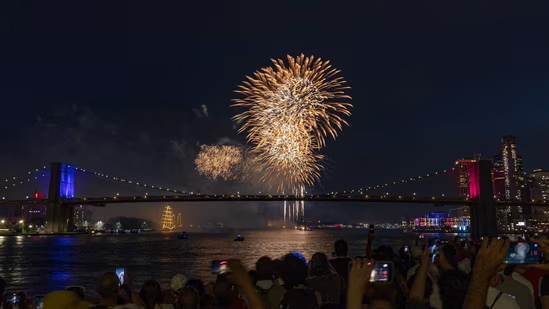
The fireworks display happened to mark America’s Independence Day. Pyrotecnico, the company hired for the event, had the goal to break the world record by launching around 850,000 fireworks during the 40-minute show.
Large crowds of people gathered at Lower Manhattan and across the city to witness the 50th year of Macy’s Fourth of July fireworks and celebrate America’s 250th birthday. This year, the fireworks show featured more than 85,000 shells and effects. It also featured a laser and light show for the first time.
Pollution triggered
The fireworks show was delayed by more than an hour due to storm threats. Pollution levels in Washington began to rise during local fireworks displays but increased sharply after the main event began.
Also Read | Brooklyn Bridge fire: Scary videos show massive blaze that broke out during Fourth of July fireworks | Watch
Fine particle pollution, known as PM2.5, reached dangerous levels after the show began. Smoke spread across the city. These tiny particles are dangerous, and can enter deep into the lungs and cause short-term health problems as well as long-term diseases.
One monitoring station recorded PM2.5 levels above 200 micrograms per cubic metre, which is much higher than the US Environmental Protection Agency’s 24-hour limit of 35 micrograms per cubic metre. Air quality alerts classified as Code Purple at the time, and covered large parts of Washington and nearby areas in Virginia and Maryland. Code Purple means the air was very unhealthy.
IQAir data revealed that Washington ranked as the world’s most polluted major city between around 3 am and 5 am on July 5. However, it later dropped in rankings, with cities including Jakarta, Kinshasa and Addis Ababa among the most polluted.
According to scientists, the smoke was cleared and air quality improved, thanks to heavy rain. Russell Dickerson, an atmospheric scientist at the University of Maryland, said that without the rainfall, the situation would have been even worse.