
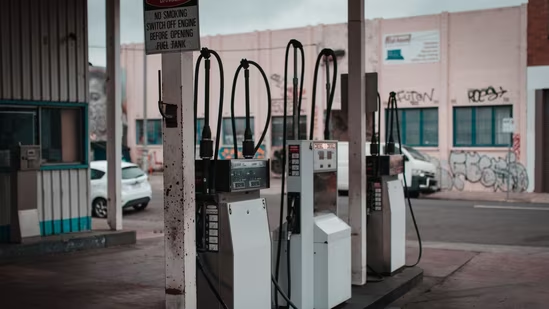
Gasoline prices in the US have started coming down after the US and Iran reached an interim peace agreement that reopened the Strait of Hormuz, a key global oil shipping route. However, experts say prices are unlikely to return to the pre-war level of around $3 per gallon anytime soon. Even though crude oil prices have dropped, there are many other reasons why gasoline remains expensive.
Why did gasoline prices shoot up in the first place?
Before the war between the US, Israel and Iran, the average US gasoline price was about $2.98 per gallon, according to AAA. After the conflict began, prices climbed rapidly and reached $4.56 per gallon by May, making it one of the fastest increases ever recorded. The spike in fuel prices also pushed inflation higher because transportation became more expensive.
Before the war, crude oil traded at around $70 per barrel. During the conflict, crude prices jumped to about $126 per barrel, increasing fuel production costs. Since crude oil makes up nearly half of the price of gasoline, higher oil prices quickly pushed pump prices higher.
Why are oil prices falling now?
Oil prices have dropped because traders believe the peace agreement will allow oil exports to move normally again through the Strait of Hormuz. Brent crude has fallen below $75 a barrel, while US crude has slipped below $80, as markets expect more oil supplies in the coming weeks, according to multiple reports.
Experts say gasoline prices depend on much more than crude oil prices. Other important factors include: gasoline inventories, refinery production, transportation costs, imports, taxes, seasonal demand, local supply conditions, as noted by Forbes.
The biggest problem right now is low gasoline supplies
Although crude oil supplies have improved, gasoline inventories are still very low. According to US government data, gasoline stocks held by refiners, wholesalers and traders were at their lowest level for this time of year since 2014 during the week ending June 19. Low inventories mean suppliers cannot immediately flood the market with cheaper fuel, according to a Bloomberg report.
The United States has a Strategic Petroleum Reserve (SPR) for crude oil. However, it does not maintain a strategic gasoline reserve, giving officials fewer ways to directly reduce gasoline prices.
During the war, companies used up stored fuel to meet demand. Now refiners, wholesalers and traders must rebuild these inventories before supplies return to normal. This rebuilding process increases demand for fuel and keeps prices higher, as per Forbes.
Europe is sending less gasoline to the US
Gasoline imports from Europe to the US East Coast remain unusually low. Imports during the third week of June were the lowest for that period since 2017. Lower imports mean less fuel is available, which keeps prices elevated.
Also read: Gas prices fall below $4 per gallon as US-Iran peace deal eases crude oil supply fears
Gasoline futures remain more than 80 cents per gallon above where they were before the war. This suggests traders believe shortages will not disappear immediately. It also shows that wholesale gasoline prices are expected to stay relatively high for some time, according to Bloomberg.
Why do gasoline prices fall so slowly?
According to Ana María Herrera, professor of economics at the University of Kentucky, gasoline prices usually behave like “rockets and feathers.” She explained that prices: rise quickly like rockets, but fall slowly like feathers, as reported by Bloomberg. This happens because retailers often reduce prices gradually while protecting their profit margins.
After President Donald Trump announced that the US and Iran had reached an agreement, the average gasoline price fell to around $4.06 per gallon. Prices have now declined for three consecutive weeks as crude oil prices moved lower, according to AAA.
According to CNN’s David Goldman, futures markets suggest traders do not expect crude oil prices to fall below $70 per barrel until 2031.
Dan Pickering, Chief Investment Officer at Pickering Energy Partners, said consumers should not expect a return to pre-war gasoline prices. He said, “We’ll figure out what the new normal is. But it isn’t going to be $2.85 gasoline”, as per CNN report.
So, will gasoline return to around $3 soon?
Probably not, according to most analysts. Prices are expected to keep falling gradually if the US-Iran agreement holds, shipping through the Strait of Hormuz remains normal, inventories are rebuilt, refineries continue producing fuel, and imports recover, says multiple reports.
But because inventories remain low, supply chains are still recovering, and seasonal demand is strong, experts believe the journey back to pre-war gasoline prices will likely take many months, possibly until late 2026, rather than happening quickly.