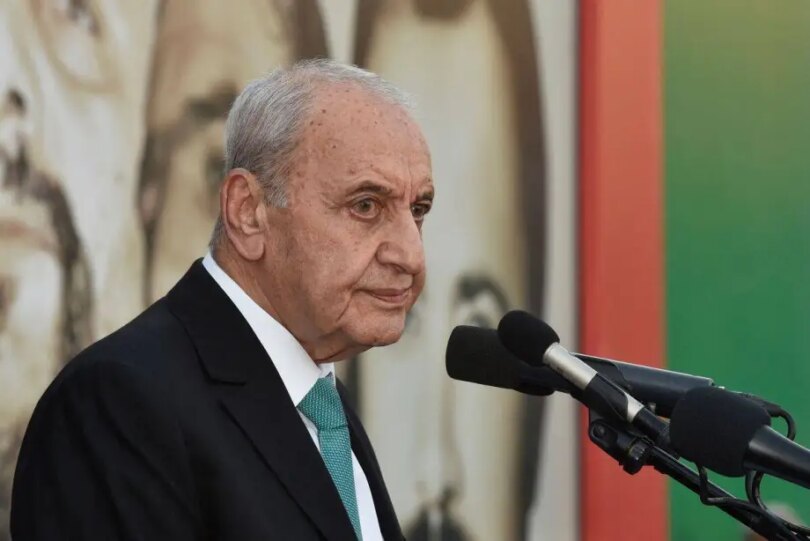
Lebanese Parliament Speaker Nabih Berri has warned that Israel is attempting to provoke a confrontation between the Lebanese Armed Forces and Hezbollah, saying such a scenario would deepen internal divisions but insisting that it “will not happen.”
In an interview published on Thursday by the Lebanese newspaper Al-Diyar, Berri said Israel’s objective is to draw the Lebanese army into clashes with what he referred to as “the resistance.”
“Israel is seeking to draw the Lebanese army into clashes with the resistance, and this is its true objective,” Berri said. “This will not happen.”
Berri also criticised the framework agreement signed between Lebanon and Israel in Washington, describing it as “an agreement of sedition.”
He stressed his opposition to any developments that could fuel internal conflict, saying Lebanon’s immediate priority is preserving civil peace and preventing political disagreements from spilling into the streets.
READ: Israel to keep troops in Lebanon, Syria and Gaza indefinitely
Addressing efforts to resolve the country’s political and security crisis, Berri said Lebanon requires broad international support to reach a sustainable settlement.
He argued that any effective international framework should include the United States, Saudi Arabia and Iran, describing those countries as essential guarantors of a viable agreement.
Berri also welcomed ongoing diplomatic initiatives involving Egypt, Qatar and other regional and international actors, saying any effort aimed at uniting the Lebanese people and preventing internal division should be supported.
In earlier remarks on the framework agreement reached through direct negotiations between the Lebanese government and Israel, Berri warned against the dangers of sectarian conflict.
“My people in Lebanon, all of Lebanon, this is sectarian strife,” he said, urging Lebanese citizens not to become instruments of division.
His comments come as political debate continues in Lebanon over the framework agreement and its implications for the country’s security, sovereignty and relations with Israel.
READ: UN peacekeepers in Lebanon say they face movement restrictions in southern Lebanon