The best selling point for President Trump’s memorandum of understanding with Iran was that at least it opened the Strait of Hormuz. Well, now the regime is trying to nullify those terms by using force against commercial vessels, Gulf states and U.S. bases. All of this violates the deal and calls into question why Mr. Trump signed it.
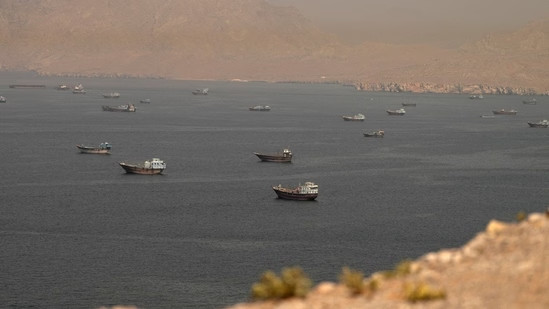
Vessels at the Strait of Hormuz on June 18.
On Thursday Iran struck a container ship transiting the Strait with a drone. The U.S. responded on Friday with strikes on Iranian missile and drone storage sites and coastal radars. It announced the strike after markets closed as if to demonstrate the economic constraints on U.S. military action.
Iran then hit a tanker carrying Qatari crude. The U.S. retaliated again against Iranian military sites and has escorted oil tankers with heavy air cover. Iran then fired drones and missiles at civilian targets and U.S. bases in Bahrain and Kuwait.
“It is very possible that they will never learn,” Mr. Trump wrote of Iran’s regime on Saturday night. Or is it U.S. decision makers who never learn? Vice President JD Vance has been touting Iran’s “transformed” Islamic Revolutionary Guard Corps leaders ready to “turn over a new leaf” with the U.S. He even reached “gentlemen’s agreements” with them outside the memorandum, Mr. Vance assured critics.
Well, these are no gentlemen. It’s the same terrorist regime, and this is the Battle of Hormuz that Mr. Trump thought he had ducked. In case there was any doubt, foreign minister Abbas Araghchi said Sunday that Iran is solely responsible for managing the Strait under the memorandum. He said “no other country has any responsibility in that regard.” Mr. Araghchi is Iran’s chief negotiator with Mr. Vance.
It wasn’t enough that Mr. Trump gave Iran an oil sanctions waiver without safeguards, promised billions of dollars in frozen assets and stopped sanctions enforcement. The regime wants to conquer the Strait and turn it into a toll booth, with transit by permission only. On a ship-by-ship basis, Iranian foreign policy would determine who crosses. This is the opposite of free navigation and provides no security for energy flows.
Force is the regime’s means to make the world bend. Without it, shippers refused to heed Iran’s dictates for Hormuz during the deal’s early days. Vessels sailed out via the Strait’s southern, Omani lane. Tehran’s demands that ships transit only through the Iranian lane, request access two days in advance, and sign up for special Iranian “insurance” were ignored. Oil prices fell far faster than most experts expected.
In short, the Strait wasn’t going Iran’s way. It was becoming free again—hence the regime’s resort to force. Iran is intimidating Oman and other Gulf states. It may also offer them a cut of the spoils from a tolled Strait, but that hardly sweetens the foul deal for the rest of the world.
The question is why Iran still gets the cash, selling its oil free of sanctions and repatriating the revenue to fund its Revolutionary Guard. If Mr. Trump isn’t ready to resume the U.S. blockade, he can amend Treasury’s sanctions-relief license to require that all proceeds from Iranian oil sales be placed in escrow.
The U.S. needs the leverage for nuclear negotiations, and it was never wise to give Iran a blank check. All the more so now that the regime isn’t respecting the deal, which mandates a cease-fire as well as Iran’s “best efforts for the safe passage of commercial vessels.” That means don’t shoot at them, for starters.
More U.S. “love taps” against Iranian targets won’t impress the hard men in Tehran. They behave as if they have escalation dominance because they think Mr. Trump won’t return to war before the midterm elections. They don’t believe Mr. Trump’s social-media bluster because they see his reluctance to enforce the cease-fire terms.
In the bigger strategic picture, the regime is leaving the President a choice: surrender Hormuz to Iranian terror or fight for it, like he always should have once he started the war, and reopen the Strait by force.