
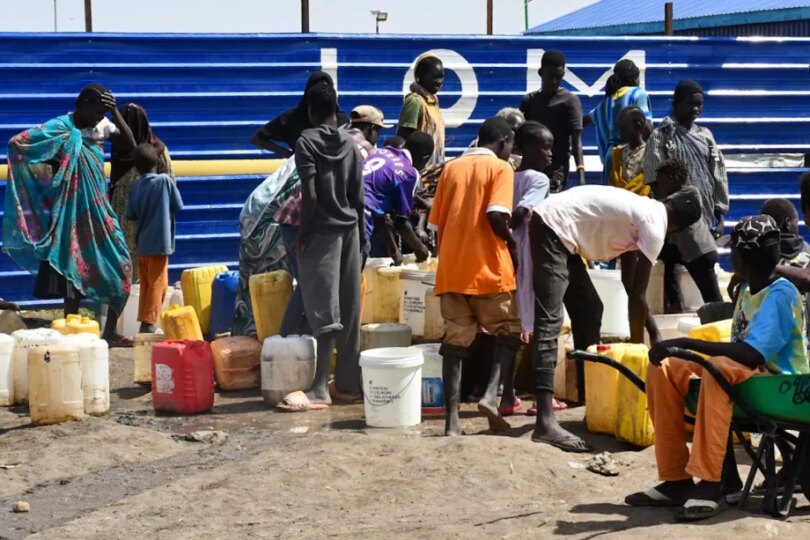
The humanitarian crisis in Sudan continues to worsen more than three years after the outbreak of war, with millions of civilians facing mounting hardship amid soaring food prices, collapsing public services and a rapidly depreciating national currency.
UN agencies have repeatedly warned of a deteriorating humanitarian situation, citing an increasing risk of famine, rising civilian casualties and the continued displacement of millions of people as fighting persists across the country.
For many Sudanese, the impact of the conflict is no longer measured solely by battles or military advances, but by the struggle to obtain food, clean water and electricity, and by the steady decline in the purchasing power of the Sudanese pound.
Since the conflict erupted on 15th April 2023, Sudan has experienced one of the most severe economic and humanitarian crises in its modern history, with the collapse of essential services, widespread displacement and deepening poverty affecting communities across the country.
In the capital, Khartoum, where the Sudanese army and allied forces regained control of large parts of the city last year, many returning residents have found neighbourhoods struggling with prolonged electricity outages, severe water shortages and unstable markets.
Bread has become one of the clearest indicators of the country’s economic crisis.
Local reports indicate that dozens of bakeries have closed in recent months because of rising operating costs, fuel shortages and unreliable electricity supplies, reducing bread production and driving prices higher.
The rising cost of living extends far beyond staple foods.
According to the Sudan Joint Market Monitoring Initiative, the national minimum monthly cost of living increased to more than 551,000 Sudanese pounds in May, up from approximately 540,000 pounds in April, reflecting continuing inflationary pressures and a widening gap between household incomes and the cost of basic necessities.
The Sudanese pound has also continued to lose value, with the exchange rate on the parallel market approaching 6,000 pounds to the US dollar, according to foreign exchange traders and local economic reports.
The sharp depreciation has triggered another wave of price increases for essential commodities, including rice, sugar and flour, placing additional pressure on households already struggling to meet basic needs.
As inflation accelerates and purchasing power declines, shortages of water, electricity and other essential services continue to deepen, particularly in Khartoum, compounding what humanitarian organisations describe as one of the world’s most severe humanitarian emergencies.