
Oil prices fell sharply again on Wednesday as worries about supply disruptions eased. International benchmark Brent crude dropped about 4% to around $73 per barrel, its lowest level since before the U.S. and Israel launched airstrikes against Iran earlier this year. U.S. West Texas Intermediate (WTI) crude also fell about 4% to around $70 per barrel.
The drop in oil prices came as U.S. President Donald Trump increased pressure on major oil companies. Trump said he has directed the Department of Justice (DOJ) to immediately investigate whether oil companies are unfairly keeping gasoline prices high for consumers, according to a post on Truth Social.
Oil companies under pressure
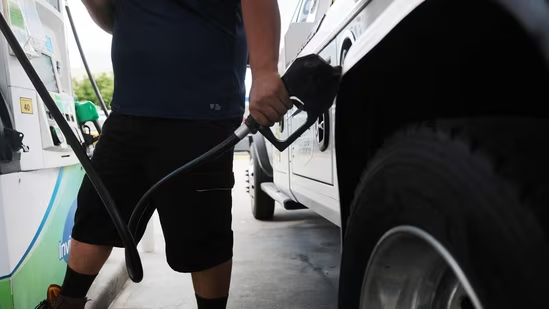
Trump accused oil companies of not passing lower crude oil prices on to drivers. He said oil companies are paying much less for crude oil but are not cutting prices at gas stations fast enough. The president claimed consumers are being “gouged” at the pump. Trump further mentioned that customers are being overcharged because gasoline prices are not falling in line with the sharp decline in oil prices.
Also read: Stock market today: S&P 500, Nasdaq edge higher as tech stocks rebound and oil prices fall ahead of Micron earnings
Trump warned that gasoline prices should fall much faster. He said he instructed the DOJ to begin looking into the issue immediately and suggested gas station prices should already be moving lower. The pressure comes as Americans continue to deal with higher fuel costs linked to the Iran conflict. The effective closure of the Strait of Hormuz, one of the world’s most important oil shipping routes, created fuel supply concerns and pushed energy prices higher.
US gas prices fall
Gasoline prices surged earlier in the conflict. Average U.S. gasoline prices climbed above $4 per gallon at the end of March as fuel shortages and supply concerns spread, as noted by The Hill. Gas prices have started to come down, but remain elevated. The average price of regular gasoline in the United States was just below $4 per gallon on Wednesday, compared with about $4.50 per gallon a month earlier, according to AAA.
Trump approval rating drops
The Iran conflict has hurt Trump’s public approval ratings. Rising fuel costs and broader economic pressures have become a concern for many Americans during the war. A recent survey shows many Americans believe U.S. military action has gone too far. About 59% of U.S. adults said American military involvement in the region had “gone too far,” according to an Associated Press-NORC survey released last week.
Trump’s ratings on economic issues have also weakened during the conflict. His approval rating on handling the economy fell to 30% in an April AP-NORC poll, via The Hill. Public views on the economy have become more negative. The poll found Americans have grown increasingly concerned about economic conditions as the conflict and higher energy costs continue.
White House defends economy
The White House has repeatedly argued the economic pain is temporary. Trump administration officials have said the short-term costs are necessary to prevent Iran from developing a nuclear weapon. Trump has dismissed concerns about rising prices. He rejected a Labor Department report showing higher consumer prices, calling it a “fake inflation report”. The president insisted economic data remains strong. Trump argued that overall economic numbers were positive despite concerns about inflation and fuel costs.
For markets, the biggest immediate story is the sharp fall in crude oil prices. Brent crude near $73 per barrel and WTI near $70 per barrel suggest traders are becoming less worried about severe oil supply disruptions than they were earlier in the Iran conflict. The key issue now is whether lower oil prices will translate into cheaper gasoline. Trump’s DOJ probe threat is focused on exactly that question; whether oil companies will quickly pass lower crude costs on to American consumers.