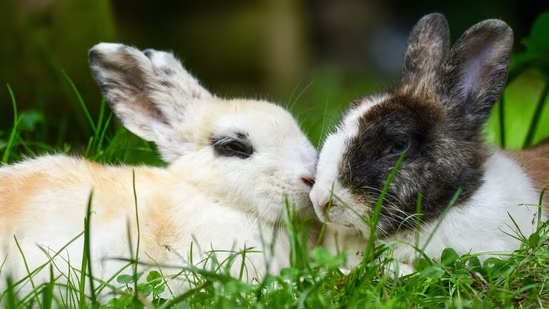
Cottontail rabbits in Colorado with dark, twisted growths erupting from their skull have left people unnerved. Similar photos have emerged from Wisconsin, Minnesota, and New York. The rabbits are being referred to as “Frankenstein rabbits” on social media for their appearance.
However, wildlife agencies do not believe there is any reason to be alarmed. What we are seeing in the photos is Shope papillomavirus, which is a rabbit-specific disease that scientists have known about since as early as the 1930s.
What is Shope papillomavirus?
According to petMD, the Shope papillomavirus is also known as cottontail rabbit papilloma virus (CRPV), and is a “viral disease that causes dark, wart-like growths or tumors on the rabbit’s neck, head, and abdomen.” While the virus is typically found in wild cottontail rabbits, it can infect domestic or pet rabbits too.
The outlet said that outbreaks of this disease are often seen during the summer and fall, when populations of disease-carrying insects are the highest – such as ticks and mosquitoes. “When an insect bites a rabbit infected with Shope papilloma virus, it can then spread the virus to other rabbits with subsequent bites,” petMD says.
Also Read | Viral video: Australian woman spots mysterious wild animal in Dubai, asks ‘What the hell is that?’
It adds, “Papillomas, often called “rabbit warts,” can be benign and either regress spontaneously within six months or be externally removed. However, if they persist beyond this period, they can transform into malignant squamous cell carcinomas. This progression occurs in roughly 75% of domestic rabbits and 25% of cottontails who contract the disease and do not have spontaneous regression.”
Should you be worried?
Humans do not need to worry, as SPV is specifically a rabbit problem. SPV infects rabbits and hares, and there are no documented cases of human transmission.
Domestic rabbit owners must pay attention. The virus typically spreads between rabbits primarily via mosquitoes, ticks, and fleas rather than direct contact.
If you are a rabbit owner, you can reduce your rabbit’s exposure by keeping it indoors or in screened enclosures in affected regions, controlling mosquitoes and ticks around your yard, and avoiding any contact between your rabbit and wild cottontails. If you notice wart-like growths on the head or neck of your rabbit, consult a vet immediately. While surgical removal is an option, some growths regress on their own.