
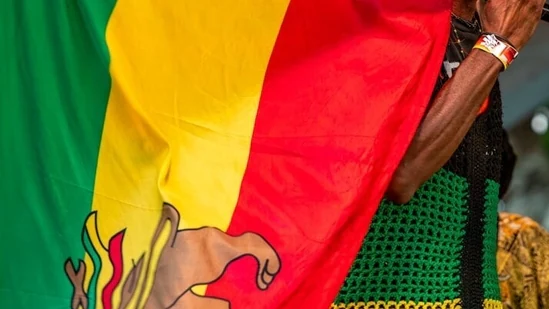
Damon Landor, a former prisoner following Rastafari, a spiritual and religious movement that emerged out of Jamaica with singer Bob Marley as its most well-known follower, tried to sue prison officials in 2020 for cutting his dreadlocks – an integral part of Rastafarianism. On Tuesday, the Supreme Court quashed the case in a significant 6-3 landmark ruling.
The court said that Damon Landor lawsuit against prison officials for cutting his dreadlocks would not hold as local authorities were not aware of the federal law protecting religious rights of inmates. CNN reports that it is a rare instance when the conservative majority of the Supreme Court sided against a religious claim.
The decision, however, has faced major criticism from the three liberal judges who sided with Landor. They have argued that the ruling makes it difficult for prisoners to sue officials for alleged mistreatment.
“Prisoners like Landor who suffer violations of their religious freedom in state prisons – no matter how blatant – will often be left remediless,” Justice Ketanji Brown Jackson, one of the liberal judges on the bench, wrote in the judgement’s dissent note.
“And encroachments on prisoners’ statutory rights are likely to happen with fair frequency, as state-empowered prison officials will have little incentive to abide by federal law, even if it is handed to them on a piece of paper.”
In this article, we will take a look at Damon Landor, the sentence against him, and the suit he tried to file against prison officials.
Also read: Nancy Guthrie update: Savannah Guthrie makes another emotional plea as new information surfaces, ‘I’m not involved’
Who Is Damon Landor?
Damon Landor describes himself as a devout Rastafarian who grew his dreadlocks for over 20 years as part of his religion. A Louisiana resident, he was at the end of his prison sentence in 2020 when, at the Raymond Laborde Correctional Center, his dreadlocks were shaved off by prison officials.
Landor had explained to the prison officials the details of his religious observances and produced a copy of a decision of the Louisiana fifth circuit court that barred prison officials from cutting dreadlocks of Rastafarians under the Religious Land Use and Institutionalized Persons Act.
However, Landor said that he was handcuffed to a chair and was held by two prison guards as his hair was shaved off. After his release, he sued the prison officials and the Louisiana Department of Corrections in the Middle District of Louisiana.
His case reached the Supreme Court in June 2025 and was argued in the Supreme Court’s October 2025 term. A verdict eventually came on the case Tuesday, June 23.