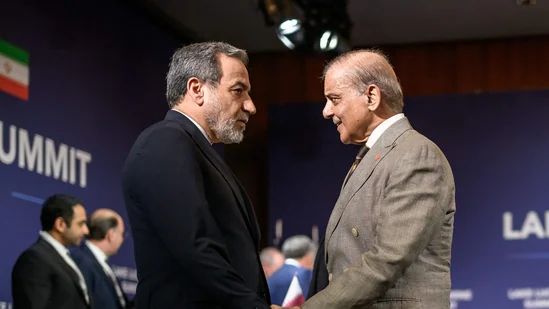
Iran and the US completed the first round of peace talks in Switzerland early Monday despite a brief disruption after Iranian negotiators protested American President Donald Trump’s threat of renewed military action against Tehran.
Pakistan and Qatar, which are mediating the negotiations, said technical talks between the two sides would continue through the week. Get LIVE updates here
The talks at the Bürgenstock resort, being held under the framework of the Islamabad Memorandum of Understanding agreed last week, entered a tense phase after Trump warned Iran to rein in its allies in Lebanon or face fresh US strikes.
Also read | High-level panel for final deal, Lebanon truce, Hormuz safety: Takeaways from Round 1 of US-Iran talks
Iranian state media said the delegation temporarily left the negotiating venue in protest and raised objections directly with the American side over the remarks.
Trump’s remarks trigger diplomatic turbulence
The negotiations entered what Iranian state media described as a “difficult phase” after Trump issued a warning to Tehran through a social media post.
“Iran must immediately stop their highly paid PROXIES in Lebanon from causing trouble. If they don’t, we’ll hit Iran very hard again, just like we did last week, only harder!!!” Trump wrote on Truth Social.
The remarks came while Iranian and American negotiators were engaged in discussions aimed at implementing a 14-point memorandum intended to guide future engagement between the two countries.
Also read | US-Iran war underlines India’s need for a Gulf doctrine: Arrive earlier, act faster, absorb less damage
Iranian media reported that the delegation viewed the remarks as offensive and incompatible with the ongoing diplomatic process. State media said the talks were recessed following the “publication of an insulting message by the US president”.
Iranian delegation leaves venue in protest
According to reports from Iranian media outlets, members of the Iranian delegation raised objections directly with the American side over Trump’s latest comments before leaving the negotiating site.
A source quoted by Press TV said, “The Iranian delegation has raised its objections to the American side and is currently assessing the conditions to give a proper response to Trump’s verbal threats.”
Also read | Who won the West Asia war? 92% Israelis say Iran, majority reject Netanyahu’s victory claims
The Iranian delegation departed the venue in protest over the threat and also refused to participate in a planned handshake and joint photo opportunity with US negotiators, as per Tasnim news agency.
Key outcomes of the first round of US-Iran talks
High-Level Committee established: Qatar and Pakistan announced the creation of a High-Level Committee that will provide political oversight to the mediation process and supervise future negotiations.
Roadmap for a final deal in 60 days: The committee approved a framework aimed at reaching a comprehensive agreement within the next 60 days, setting a timeline for the next phase of diplomacy.
Communication channel for Strait of Hormuz: The parties agreed to set up a direct communication line to prevent misunderstandings and incidents during negotiations and help ensure the safe movement of commercial shipping through the Strait of Hormuz.
Lebanon de-confliction mechanism created: A new de-confliction cell involving the parties and Lebanon, facilitated by Qatar and Pakistan, will work to ensure compliance with the agreed cessation of military operations in Lebanon.
Mediation continue engagement
Despite the disruption, mediators Qatar and Pakistan continued diplomatic engagement.
Iranian representatives reportedly held discussions with Qatari mediators following the walkout, while negotiations continued at the leadership level.
By the early hours of Monday, the first round of talks had formally concluded, with both mediating countries announcing that technical discussions between the two sides would continue for the remainder of the week.
According to Iranian accounts, the US president’s warning contradicted provisions of the MoU that require both sides to refrain from initiating military action or threatening the use of force against one another.