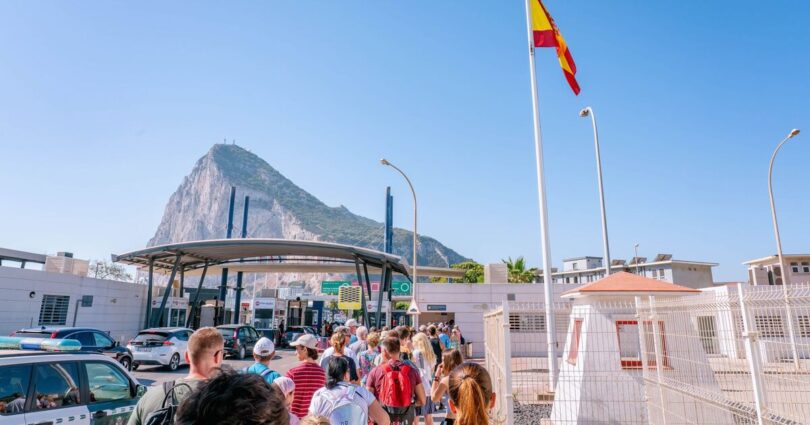
For the first time in over 300 years, there are no border checkpoints between Spain and Gibraltar as Spanish workmen were seen tearing down the barriers. As part of the post-Brexit deal, machine operators removed police auxiliary buildings from the Spanish side of the border crossing in preparation for the introduction of a frictionless land border with no checks on July 15.
The deal abolishes the land border between Gibraltar and Spain, allowing around 15,000 cross-border workers to move each day freely without routine checks. Instead, Gibraltar’s new external border will be shifted to the territory’s airport and port. Under the agreement, Brits arriving at Gibraltar Airport will have to pass through checks by both Gibraltar and Spanish officials, with the latter having the final say on entry. The same arrangements will apply to passengers arriving by sea.
Video footage captured workers dismantling border buildings and removing checkpoints on the Spanish side just days before the 10th anniversary of the Brexit referendum, The Telegraph reported. Across the frontier, scaffolding has been erected around Gibraltar’s border canopies, which are also due for dismantling.
The wire fence stretching across Gibraltar’s narrow isthmus – long regarded as a symbol of the dispute between Britain and Spain – is also expected to be completely removed.
Royal Gibraltar Police inspection booths will disappear as part of the agreement, which effectively brings Gibraltar into the EU’s Schengen free-travel area.
In the wake of the Brexit referendum, Gibraltar faced the prospect of becoming a hard external EU border, raising fears of severe economic disruption, particularly given that 15,000 people cross into Gibraltar every day to work.
After four years of negotiations, the UK and the European Commission reached an agreement last June. The treaty is expected to receive final approval from the European Council in the coming days. Spanish reports suggest the deal could be formally signed in Brussels on July 13 by Foreign Secretary Yvette Cooper and European Commissioner Maroš Šefčovič.
While sovereignty was not discussed during negotiations, Gibraltar has accepted a greater Spanish role in several areas. Alongside border checks at the airport and port, Madrid will gain veto powers over future Gibraltar residency permits. As a result, the Gibraltar Government has reported a surge in applications as people rush to secure their status before the agreement takes effect.
The Rock has also agreed to align tobacco prices more closely with Spain and introduce a VAT-style sales tax. In return, Gibraltar residents will regain some rights lost after Brexit, including the ability to work freely across EU member states. However, they will not recover their former rights to live and study throughout the bloc.
Chief Minister Fabian Picardo has described the agreement as “truly historic”, calling it Gibraltar’s most important international accord since the Treaty of Utrecht in 1713, which ended the War of the Spanish Succession.