LONDON – Emotional testimonies, legal arguments, and political interventions marked a high-profile solidarity event held at SOAS University of London on Friday evening, as speakers warned that the situation of Palestinian hostages held in Israeli detention has reached what they described as “unprecedented levels of brutality” amid the ongoing war on Gaza.
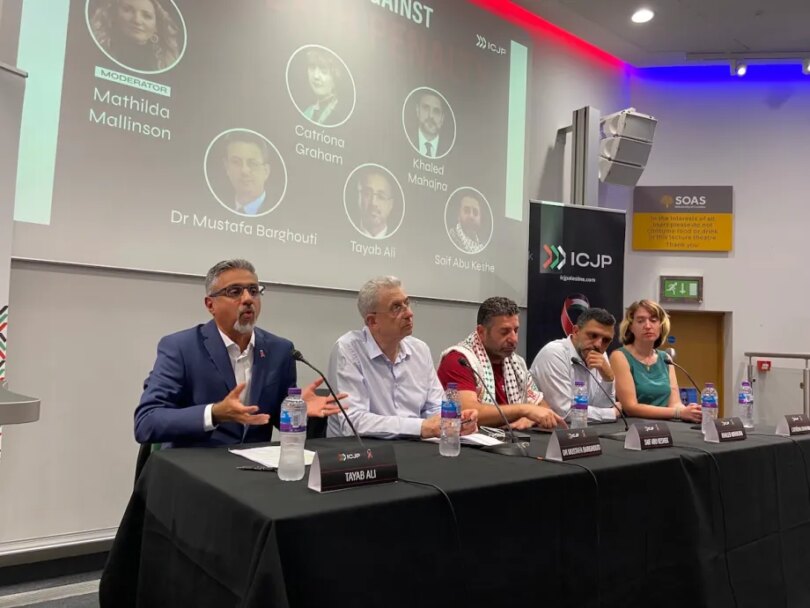
The event, organised by the International Centre of Justice for Palestinians (ICJP) in partnership with the Red Ribbons Campaign, brought together campaign coordinator Adnan Hmidan, ICJP director Tayb Ali, lawyer Khaled Mahajneh, Palestinian activist Saif Abu Keshek, campaigner Katrina Graham, and Independent MP Jeremy Corbyn. The discussion was chaired by journalist and activist Matilda Mallinson.
Speakers repeatedly argued that while global attention remains focused on Gaza, conditions inside Israeli prisons and detention facilities have deteriorated sharply since October 2023, with thousands of Palestinian hostages held outside the reach of international monitors.
Opening the event, Red Ribbons Campaign coordinator Adnan Hmidan said the initiative was created to ensure that Palestinian hostages “are not erased from international consciousness”.
He stressed that those held in Israeli detention include journalists, doctors, students, women and children, many of whom are detained without charge under administrative detention orders.
Palestinian lawyer Khaled Mahajneh delivered one of the most emotionally charged interventions of the evening, describing what he called a “parallel war” being waged inside Israeli prisons alongside the military assault on Gaza.
Mahajneh said conditions for Palestinian hostages have deteriorated significantly, citing widespread reports of starvation, medical neglect, prolonged isolation and systematic humiliation.
Mathilda Mallinson at the Red Ribbons event in London on 19 June 2026
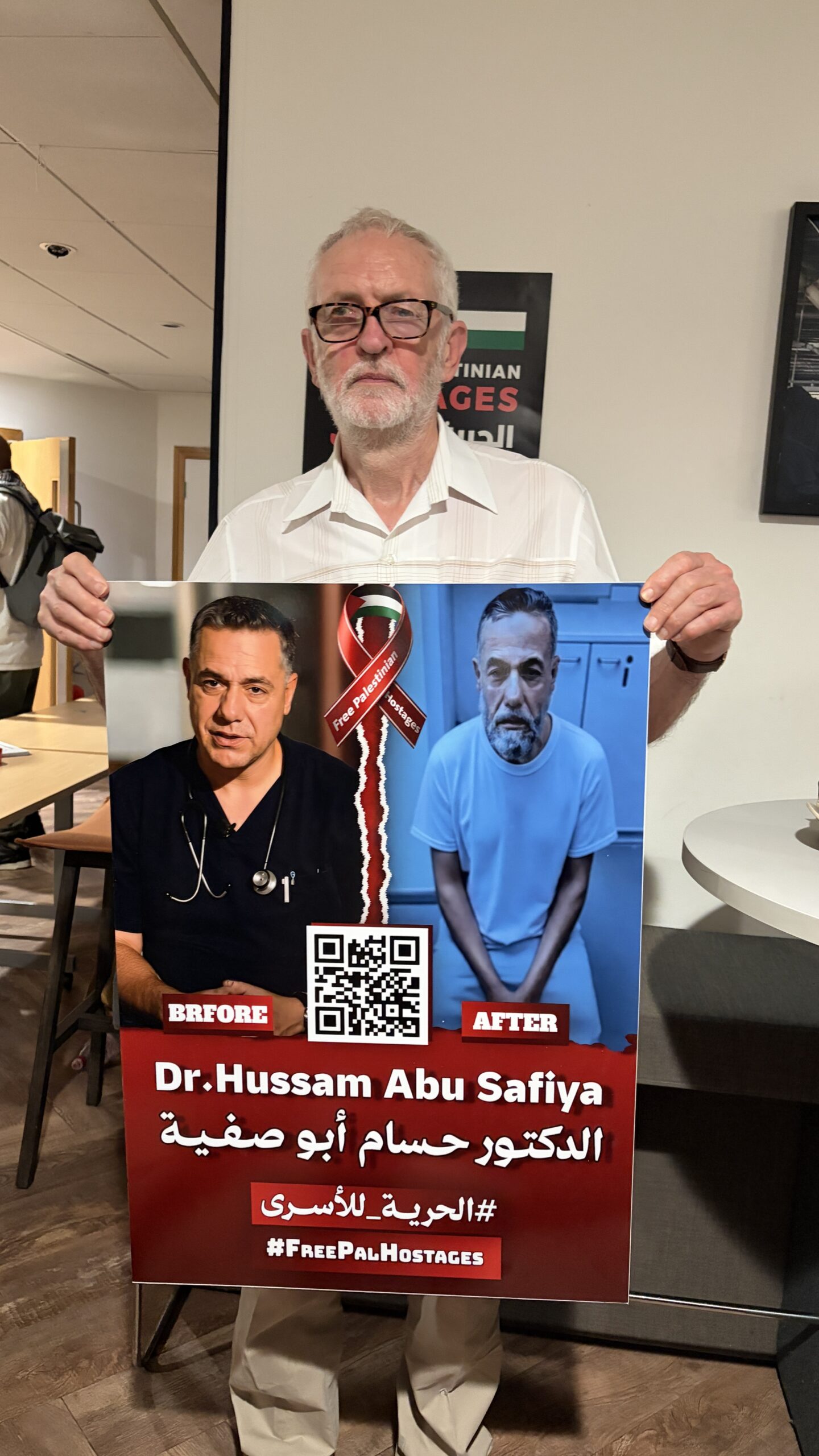
Jeremy Corbyn at the Red Ribbons event in London on 19 June 2026
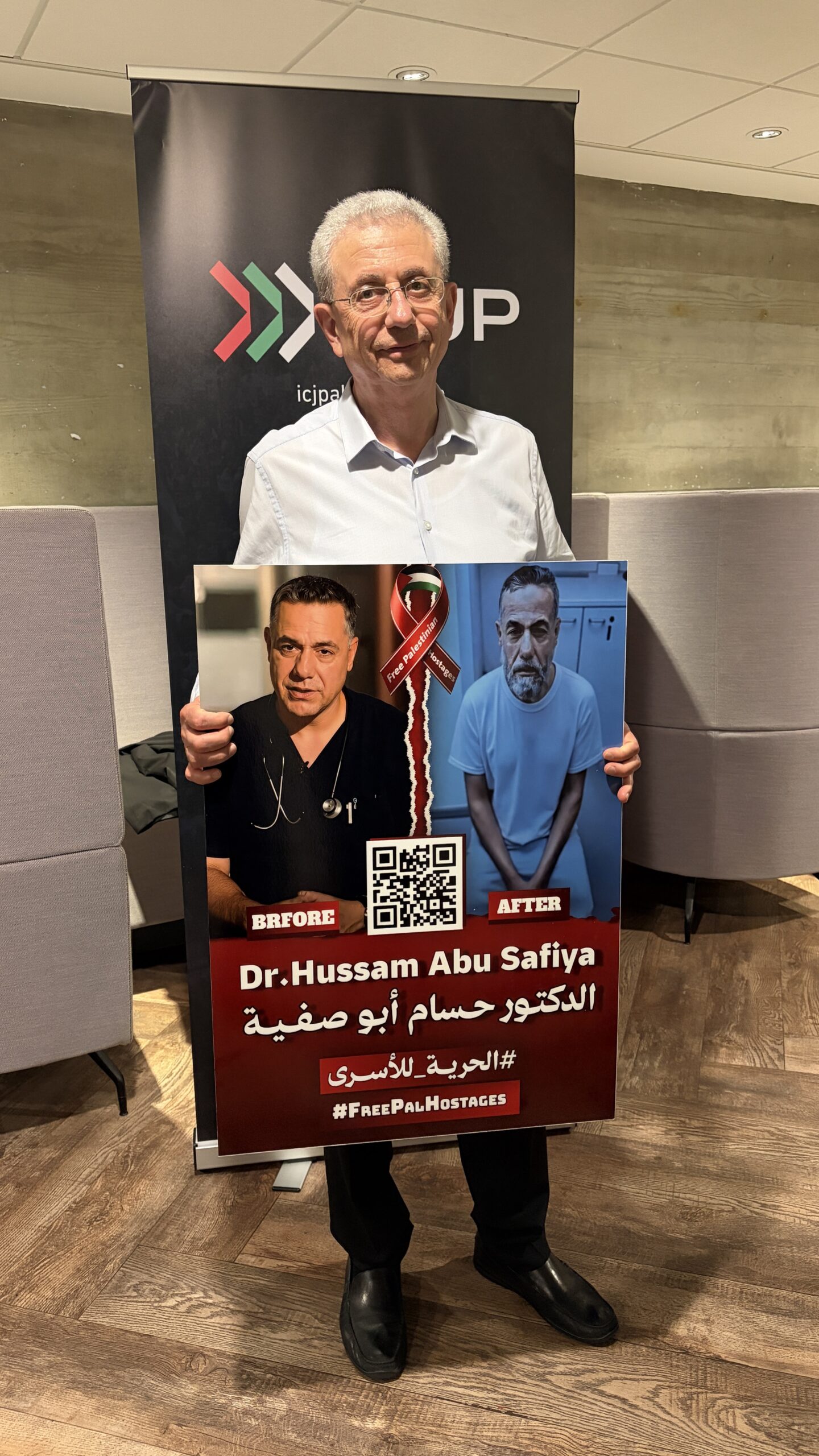
Dr Mustafa Barghouti at the Red Ribbons event in London on 19 June 2026
He also described a recent visit to imprisoned Palestinian leader Marwan Barghouti, noting that Barghouti appeared deeply concerned with the condition of other detainees despite his own long-term isolation. Mahajneh said the repeated message he hears from inside detention facilities is simple: “Save us.”
Dr Mustafa Barghouti argued that new Israeli legislative measures should be understood within what he described as a wider apartheid system. He said the laws establish separate legal frameworks for Palestinians and Israeli Jews living under the same authority, entrenching structural discrimination.
Barghouti warned that the proposals reflect an escalating political culture of revenge following 7 October, and what he described as a widening acceptance of extreme policies within Israeli political discourse.
ICJP director and lawyer Tayb Ali focused on the legal implications of the proposed legislation, describing it as a “structural departure from fundamental principles of justice”.
He said the laws appear designed to target Palestinians as a collective category, removing judicial discretion through mandatory sentencing provisions in certain cases.
Ali criticised the reliance on military courts, noting their high conviction rates and the admissibility of evidence that would not meet standards in ordinary criminal justice systems.
He warned that accelerated procedures risk undermining the right to appeal and meaningful judicial review, effectively eroding basic due process protections.
Palestinian activist Saif Abu Keshek said Israel is not only targeting Palestinians but also attempting to criminalise solidarity movements internationally. He argued that authorities seek to fragment the Palestinian cause into separate issues—prisoners, Gaza, refugees, and settlements—thereby obscuring its historical and political roots.
Campaigner Katrina Graham recounted her experience aboard the Sumud flotilla attempting to challenge the blockade on Gaza, including her detention by Israeli authorities. She referenced encounters with Israeli officials and described mistreatment during her detention, while emphasising that her experience was minor compared with the daily reality faced by Palestinian hostages.
Independent MP Jeremy Corbyn also took part in the event, expressing solidarity with Palestinian hostages and calling for greater international scrutiny of their conditions.
His participation reflected growing concern among sections of British political and civil society over reports of abuses in Israeli detention facilities and the continued denial of basic rights to detainees.
Speakers throughout the evening stressed that while global attention remains focused on Gaza, the situation of Palestinian hostages inside Israeli prisons continues largely out of sight.
They urged international institutions, governments and civil society organisations to take urgent action to address what they described as a deepening humanitarian and legal crisis.