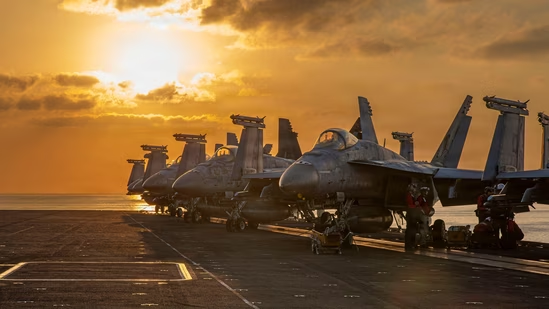
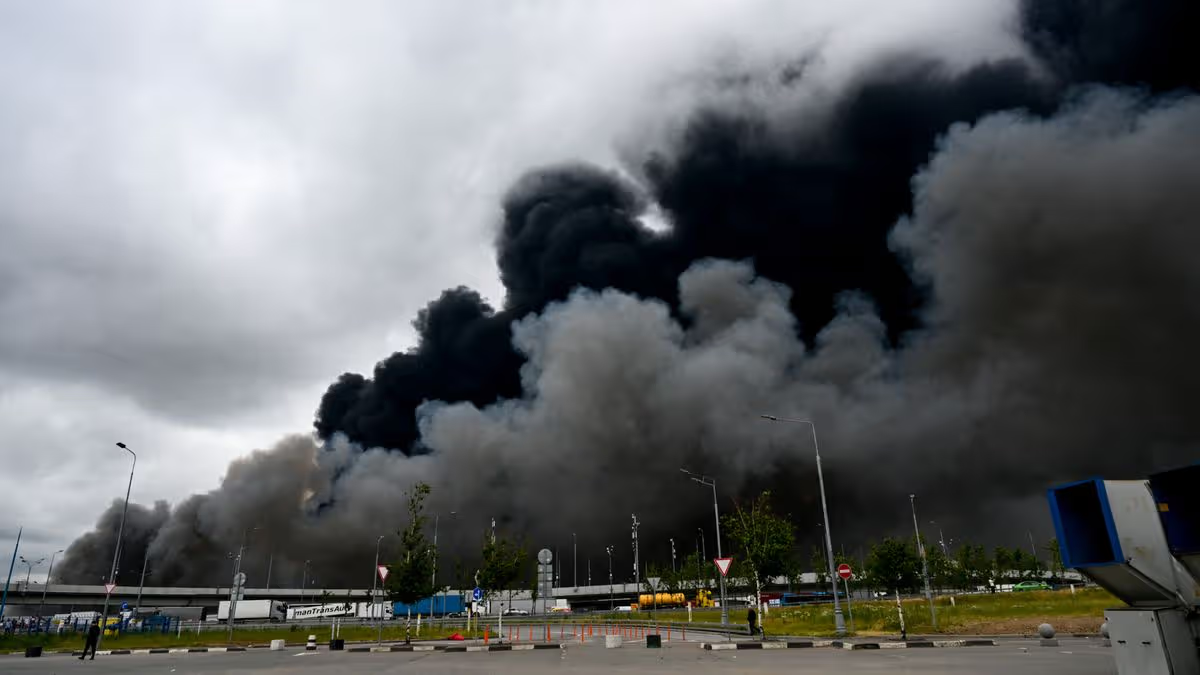
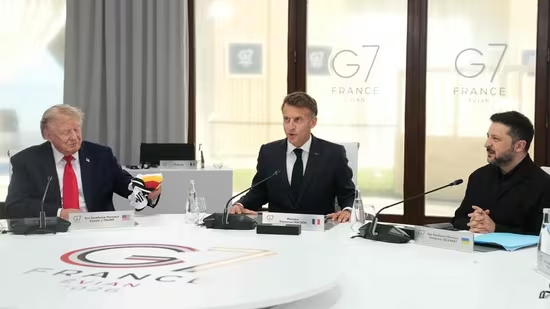
November’s midterm elections were always going to be difficult for Republicans. The last time the incumbent president’s party gained seats in Congress in a midterm election was in 2002, when Americans rallied around George W. Bush after the September 11th attacks. Donald Trump’s war in Iran will have a different impact. That’s in part because Mr Bush’s “war on terror” eventually left many Americans sceptical of foreign entanglements. It’s also because this particular entanglement has been phenomenally unpopular, and will have stubborn after-effects.
The war has come at a cost to American treasure and prestige. Having burned through munitions, America’s ability to deter other enemies has been weakened.
Questions about the deal remain, but a few things have become clear. The war has come at a cost to American treasure and prestige. Having burned through munitions, America’s ability to deter other enemies has been weakened. The conflict has frayed its alliances and shocked global oil markets. For many on Capitol Hill, there is also the vexing question of how the war’s end will affect their job prospects.
Just 27% of voters thought America should attack Iran, according to an Economist/YouGov poll conducted a week before the first strikes. Mr Trump’s magnetism within MAGA is such that Republican approval for the strikes jumped from 56% to 76% in the week after the attacks. However, wider support failed to materialise. By early June approval of the war was negligible among Democrats (7%), low among independents (18%) and had even slackened among Republicans (59%). A poll conducted on the eve of the deal’s announcement showed that more than half of self-identified MAGA supporters thought the country should push for one as soon as possible.
However, the deal gives Republicans on Capitol Hill little relief, as a matter of policy or politics. A handful are blunt in their assessments. “Reagan is rolling over in his grave”, said Bill Cassidy, an outgoing Republican senator. “Giving billions of dollars to theocratic lunatics who want to murder us is not a good idea,” observed Ted Cruz, another Republican senator. Many Republican colleagues share their concern, more quietly. MAGAsphere critics are less shy. On June 17th Ben Shapiro, an Iran hawk, called the deal “a disaster”. Tucker Carlson, another right-wing commentator, said the conflict was ending “not a moment too soon”, but that the agreement made Iran a “major player”.
The biggest concern, for vulnerable Republicans, is the war’s effect on prices. News of a deal sent average petrol prices falling by about 12% from their peak in May, but they remain 35% higher than before the war. It will take time to clear Hormuz of mines and return crude output to pre-war levels. America also has fewer buffers against another supply shock. Since March the administration has tried to blunt high oil prices by releasing barrels from the Strategic Petroleum Reserve. It is now emptier than at any point since 1983, leaving Mr Trump less able to respond should talks with Iran falter or a summer hurricane disrupt American refineries.
For Democrats, this is a political gift. “It combines both an unwanted foreign military adventure with a direct hit to household finances,” enthuses a senior Democratic aide. “I can’t overstate how big of a political disaster this is for any Republican.” Republican strategists remain optimistic, at least on the record. “Politically, the midterms are light-years away,” insists Charlie Gerow, a Republican strategist from Pennsylvania. “If it’s off the front pages for four or five months, I don’t think this is going to have a political impact,” says Ford O’Connell, a Republican strategist. The party’s best hope may be a big new distraction. Mr Trump has many talents, but that is his speciality.
Stay on top of American politics with The US in brief, our daily newsletter with fast analysis of the most important political news, and Checks and Balance, a weekly note that examines the state of American democracy and the issues that matter to voters.