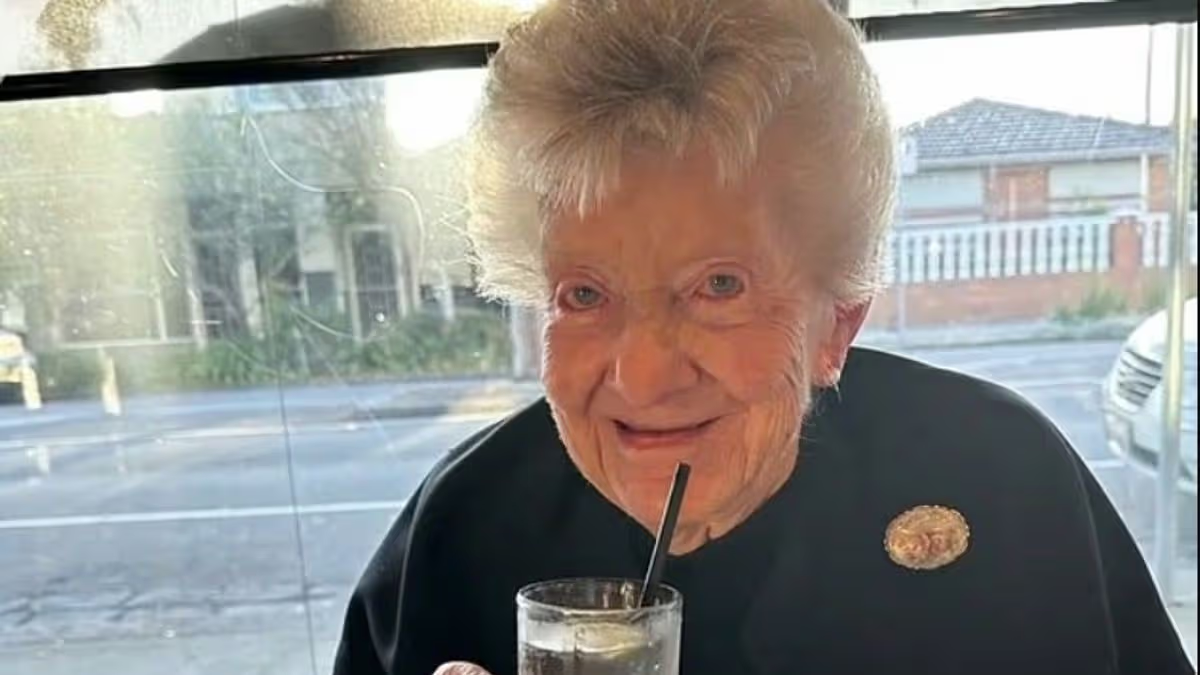
The body of Lolene Whitehand was dumped in a river in 2024 before her killer went on a shopping spree using her funds – she has avoided a murder conviction
A woman who stuffed a tea towel down the throat of an 85-year-old and threw her body in a river has been allowed to plead guilty to a charge of manslaughter.
The body of Lolene Whitehand was found floating in the Maribyrnong River in Melbourne, Australia by a fisherman on July 14, 2024.
On Thursday, June 18, her killer Milena Bogojevska, 51, faced a pre-sentence hearing in the Supreme Court of Victoria after she was allowed to plead guilty to a charge of manslaughter rather than murder.
It is unclear why the Director of Victoria’s Office of Public Prosecutions, Brendan Kissane KC, did not proceed with a murder trial. The court heard that it was likely to do with unanswered questions about the Ms Whitehand’s precise cause of death.
The court was told that Ms Whitehand had been brutally beaten before she was smothered and dumped in the river wrapped in plastic, a blood-soaked tea towel rammed into her mouth.
Ms Whitehand was last seen alive entering Ms Bogojevska’s Glamis Street home on July 12 at about 4pm, two doors down from her own home. Her disappearance immediately sparked concerns among neighbours, who had come to adore the Glamis Street resident of 40 years.
Ms Whitehand’s body was found wrapped in blue plastic sheets, her head covered by a blue bag with the name “Anton” – Ms Bogojevska’s 15-year-old son’s name – written in a marker.
An autopsy revealed her cause of death as upper airway obstruction and signs of blunt force trauma to her face.
Ms Bogojevska had been receiving a disability support pension of $778 a fortnight after supposedly hurting her back while working as a cleaner, but CCTV footage obtained by police suggested she was able to drag the body out of a car boot and roll it into the river.
According to the prosecution’s summary read in court, Ms Bogojevska burgled Ms Whitehand’s home shortly after, stealing money, jewellery, personal documents and her debit card. She subsequently embarked on a spending spree using Ms Whitehand’s money.
“I got no money … Give me money and I’ll shop,” Ms Bogojevska later told police as they were uncovering the stolen goods hidden in her home.
Her son Anton, then aged 15 and on school holidays, was unaware of what his mother was doing. When police arrested Anton in connection with the case, he was interviewed and completely cleared.
Ms Bogojevska was arrested on July 16 and claimed she had not seen Ms Whitehand for a week. She denied entering her home, using her card and faked a limp when brought into the station – despite striding normally in CCTV footage captured at the time of the crime.
“I don’t know anything about it. I’m hearing now from you. I never heard of it,” she told police.
When asked about the bag found on Ms Whitehand’s head bearing her son’s name, Ms Bogojevska insisted she discarded of it “a long time ago, ages ago”.
Forensic evidence shared in court to linked Ms Bogojevska to the death.
Ms Whitehand’s neighbour Kirraly Schumann told the court her family had treated Ms Whitehand like one of their own.
She said outside court that Ms Bogojevska should still face a murder charge.
“It shouldn’t be manslaughter… it wasn’t an accident,” she said.
Ms Bogojevska’s barrister Amy Brennan told Justice Jacinta Forbes her client’s crime did not fall into the worst category of manslaughter and asked she be imposed the minimum term of imprisonment necessary.
While the motive for Ms Bogojevska’s actions remain unclear, the prosecution suggested it was motivated by opportunistic greed.
Ms Bogojevska will be sentenced at a date to be fixed.