Colombia stopped energy exports to Israel – so why did South Africa and Brazil not do so?
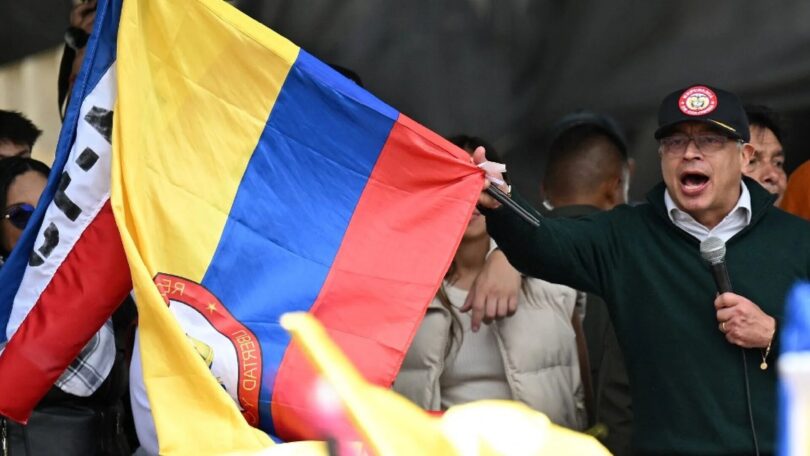
In July 2025, Colombian President Gustavo Petro ordered his navy to block all coal supplies to Israel in response to the genocide in Gaza.
Only hours earlier, coal-laden vessel, the Maltese-flagged Fortune headed out from Puerto Drummond, taking supplies, mined by US company Drummond, to the Israeli port of Hadera, despite a decree Petro had issued in 2024, banning all exports.
It was able to do so because that earlier order contained a loophole that allowed mineral multinationals to honour existing contracts.
And so, on 28 August, a second decree took effect, choking off coal to Israel completely.
Petro was not taking any chances. “Not a ton of coal leaves for Israel, and I take responsibility,” he pledged. Exports from Colombia, Israel’s biggest supplier of coal, dropped to zero within months.
In March the following year, Colombia co-chaired a meeting of 40 countries in The Hague under the auspices of The Hague Group, the umbrella organisation that seeks to enforce international law amid Israel’s genocide in Gaza.
There, governments as diverse as China, Saudi Arabia and Spain committed to banning fuel exports to “prevent the transfer, transit, or carriage of arms, munitions, military fuel, and dual-use items to Israel – including through export restrictions, port controls, and flag-state responsibilities”.
‘I think most of all, [coal-producing countries] are afraid of the backlash that could come from Israel’s biggest partner in crime, which is the US’
– Badra El Cheikh,
Palestine Institute for Public Diplomacy
Yet exports to Israel have continued, including from countries whose officials signed the agreement.
They include South Africa, which co-chaired the meeting in The Hague and is the claimant in the landmark genocide case against Israel now before the International Court of Justice.
As Colombia cut its coal exports, South Africa stepped in to fill the gap, and its shipments to Israel soared by 87 percent.
Pretoria is not alone. Other signatories included Brazil, which indirectly funnelled 2.7m barrels of crude oil to Israel in 2024.
Campaigners pushing for a fuel embargo against Israel point to Petro’s ban as evidence that halting Israel’s supply of fuel is a matter of political will.
Badra El Cheikh, a representative of the Palestine Institute for Public Diplomacy (PIPD) based in Brazil, told MEE: “Without fuel the machine does not go on, there’s no bombing. There’s no fuel for the illegal settlements.
“I think most of all, they are afraid of the backlash that could come from Israel’s biggest partner in crime, which is the US. They’re afraid of sanctions, and afraid of anything that the US might do against their economies.”
Ana Sanchez, general coordinator at Global Energy Embargo for Palestine (GEEP), says that energy deals face less regulation under international law than arms sales, which have more of a tangible link to war crimes and are at least controlled by the Arms Trade Treaty.
“Governments and officials have said, if you impose an energy embargo, you are somehow targeting the civilian population,” she told MEE.
Colombia: How activists pushed for coal ban
Colombia has always been integral to Israel’s energy supplies, exporting coal for its electricity grid, which powers, among other things, illegal settlements in the occupied West Bank.
Weeks after the start of Israel’s genocide in October 2023, Palestinian trade unions called for Bogota to halt energy exports, a demand backed by Sintracarbon, Colombia’s largest mineworkers’ union.
Exports were banned but coal giants, including Drummond and Anglo-Swiss coal company Glencore exploited the loophole in Petro’s ban and continued exporting.
The alarm was raised by a broad coalition including union workers, indigenous groups and BDS activists, which identified 28 Drummond ships that had beaten the ban and headed to Israeli ports between October 2024 and April 2025.
‘In Colombia, we have one of the most progressive governments, not only in Latin America, but probably worldwide, with a strong commitment to justice’
– Ana Sanchez, Global Energy Embargo for Palestine
The second, decisive ban in August 2025 halted the flow of Colombian coal to Israel “without exception” as Petro put it. The government cited the UN Charter, the Convention on the Prevention and Punishment of the Crime of Genocide and the regulations of the World Trade Organisation as legal backing for the decree.
Indigenous groups have been integral to the anti-export campaign. In late May 2025, two months before Petro’s blockade call, they picketed coal mines under the banner “No more coal for genocide”.
Indigenous leaders have highlighted how the extraction of Colombian coal to fuel Israel’s onslaught on Gaza represents a “double genocide” for both Palestinians and themselves.
In La Guajira, the Wayuu people have long accused the Cerrejon mine, run by Glencore and one of the world’s largest open-pit sites, of contaminating their air with poisonous dust and filling their rivers with toxic waste.
The Global Legal Action Network (GLAN) has documented more than 336,000 respiratory symptom cases in the region directly attributable to the mine, and highlighted that air pollution puts the population at elevated risk of cancer, DNA damage, and chromosomal instability.
Glencore has said that it is “dedicated to enhancing living conditions of neighbouring communities through voluntary and culturally appropriate programmes focusing on access to water, capacity-building and development of income generation projects”, and that it is “committed to uphold respect for human rights in accordance with international best practice”.
In 2017, the Colombian constitutional court ordered the suspension of work to expand Cerrejon, which would have diverted the Bruno Stream, an essential tributary for the Wayuu. In response, Glencore launched an arbitration claim against the Colombian state seeking millions in compensation. The case is ongoing.
There is also Colombia’s bloody history against mining unions, including death threats and violence at the hands of paramilitary groups. Overall, Colombia is the deadliest country for organised labour, with more than 3,000 trade unionists murdered since the 1970s.
Drummond and Glencore, via its subsidiary Prodeco, are alleged to have financed, or colluded with, paramilitary groups, including the AUC and the Juan Andres Alvarez Front, between 1996 and 2006.

Read More »
A 2014 report detailed testimonies by ex-paramilitaries, victims and former employees alleging that the companies fed intelligence to the groups about trade unionists within their workforce.
Both Drummond and Glencore have denied the allegations, saying that the testimonies were unreliable and contradictory.
In 2023, Colombia’s attorney general’s office announced it would be trying the current Colombia Drummond chief executive and his predecessor for conspiring to finance a paramilitary group.
Drummond issued a statement reiterating “that it has never supported illegal armed groups”.
Campaigners have also pointed to the role of Israeli mercenaries in arming and training right-wing Colombian paramilitaries in the 1980s, including Yair Klein, who was convicted by a Colombian court in 2001 of providing military training to the AUC.
But the ban faces legal pushback. Aside from Colombia’s right seeking its annulment, Colombia holds its second round of presidential elections on 21 June.
Ivan Cepada Castro, widely viewed as Petro’s successor, faces a tight contest against far-right Abelardo de la Espriella, who unexpectedly secured 43.7 percent of the vote in the first election and has also pledged to restore ties with Israel and open an embassy in Jerusalem.
Campaigners pointed to Petro’s radicalism, and the grassroots momentum holding him to account, as the reason for the embargo’s success.
Sanchez points to a mix of political momentum, and the role of trade unions and civil society pushing for change in Colombia in a way other countries lack.
“We cannot ignore the fact that in Colombia, we have one of the most progressive governments, not only in Latin America, but probably worldwide, with a strong commitment to justice.”
South Africa’s failure to halt exports
South Africa, like Colombia, is a mainstay of The Hague Group, and the African National Congress (ANC), which has dominated politics since the first free elections in 1994, has always backed the Palestinian cause.
In the first six months of 2024, Pretoria was Israel’s second biggest coal supplier after Colombia, accounting for 60 percent of Israel’s coal imports.
But as Colombia’s exports plunged to zero by November 2025, shipments from South Africa picked up the slack and soared by 87 percent.
‘There is a direct contradiction between South Africa’s international position, its legal obligations and its domestic trade’
– South Africa BDS Coalition
South African activists have called for the trade to halt, highlighting that while it is only a fraction of the country’s overall coal exports, it accounts for much of the supplies that power Israel’s electricity grid.
Attorney Sirhaan Che Khan, from the South African Boycott, Divestment and Sanctions (BDS) coalition, told MEE: “That grid supplies power to IDF military bases, weapons production facilities, surveillance systems, command centres and illegal centres built on occupied Palestinian land, all while Israel cuts electricity to Palestinians in Gaza and the West Bank.”
Roshan Dadoo, BDS Coalition coordinator in South Africa, said it contacted relevant government departments and ministers about the exports, without response.
They include the Department of Trade, Industry and Competition (DTIC) and the Department of Transport, which allows coal to travel from the mines through state-owned freight company Transnet to the port, and the privately owned Richard’s Bay coal terminal from where shipments depart.
BDS activists say the state is obliged to ensure private companies do not encourage international crimes.
In May, the coalition met Parks Tau, the minister at the DTIC, but he said he was unable to commit to using his powers to stop coal exports to Israel.
“There is thus a direct contradiction between South Africa’s international position, its legal obligations and its domestic trade,” the coalition said in a statement afterwards.
Dadoo said that South Africa had breached the very legal obligations it had cited in the Genocide Convention case before the ICC.
“We want to know why this is seemingly not being discussed or discussed openly with us as to what the challenges might be.”
Khan suggested that the government could use the International Trade Administration Act to ban or restrict imports and exports of certain goods without parliamentary approval, much as it did during the Covid 19 pandemic, when certain medical supplies were banned to prevent shortages.
MEE contacted the DTIC for comment but did not receive a reply by the time of publication.

Read More »
Khan also argues that all parts of the South African state, as as well as entities like corporations, are bound by the country’s Bill of Rights, which states that fundamental human rights are cornerstones of the constitutional order. “Our government is very much empowered to take action.”
Tau has warned that if Pretoria introduced sanctions against Israel, then it could face a legal challenge under the World Trade Agreement (WTO).
Yet the WTO trade framework has “security exceptions” which can be applied “in pursuance of obligations under the United Nations Charter for the maintenance of international peace and security”. And Colombia, also a WTO member, has not been challenged since it halted exports.
MEE spoke to a source close to a senior South African government official. They said Pretoria morally supports Palestine but cannot take economic action against Israel without parliamentary legislation. Without that, the source said, businesses hit by a ban could sue the government, which would have no legal defence.
The source also said that an embargo would need political consensus – tough, given that the Government of National Unity consists of the ANC and its rival, the Democratic Alliance, which has long criticised its partner’s support for Palestine.
But Khan says that there is no need for a separate legislative process – it’s already in place.
“It is just a matter of the minister publishing export restrictions against Israel.”
Brazil: Crude oil exported via third country
In February 2024, Israel declared Brazilian President Lula a “persona non grata”, after he accused it of genocide and compared its actions to the Nazi extermination of Jews.
And in July 2025, Brasilia announced it was formally backing South Africa in its genocide case against Israel. It has also recalled its ambassador to Israel.
But in 2024, amid such tensions, Brazil quietly became the fourth largest exporter of crude oil to Israel, accounting for nine percent of its imports, according to a report by Oil Change International.
Data from the Brazil’s Ministry of Development, Industry and Foreign Trade and the National Agency for Petroleum Natural Gas and Biofuels (ANP) indicate that Brazilian crude exports to Israel ground to a halt between January and August 2025.
‘Of course Petrobras knows who their clients are’
– Leandro Lanfredi, National Federation of Oil Workers
Petrobras, Brazil’s state-owned petroleum giant, has repeatedly insisted that it has not directly delivered crude shipments to Israel, saying it has only sold to foreign refineries and that it has no control over the final destination of the resulting refined products.
In May 2025, two of Brazil’s largest oil worker federations wrote to the government, citing Lula’s increasing criticism of Israel and urging an embargo. They received no reply.
According to Leandro Lanfredi, a leader of the National Federation of Oil Workers (FNP), Brazil’s crude oil exports were redirected to refineries in Italy, which then exported the oil to Israel.
“Of course Petrobras knows who their clients are,” he said.
According to data accessed by Lanfredi in June and July 2025, the Saras refinery in Sardinia, Italy, exported an estimated 45,000 tons of refined petroleum to Israel.
Historical data, Lanfredi says, puts the baseline average of Brazilian oil in the Saras refinery petroleum blend at seven percent. But then, in June 2025, that figure soared to 47 percent, just as Israel’s crude oil imports collapsed and imports of refined petroleum surged.
At the time, Israel was desperate for energy supplies. Bazan, its largest refinery in Haifa- which is responsible for roughly 64 percent of the country’s crude processing capacity- was struck by Iranian drones in June 2025, taken fully offline and had to to operate below capacity for months.
And a refinery at Ashdod was closed for maintenance in June 2025. Its CEO reported two months later that it was unlikely to resume full operations until the fourth quarter of 2025.
Middle East Oil & Gas News and Analysis reported in December that after the attack on Bazan, Israeli refinery output hit a multi-decade low and had to boost imports to meet demand.

Read More »
Lanfredi highlights that the state owns more than 50 percent of voting shares in Petrobras. “But the government is resistant to taking a stance that will create friction with private companies and investors in Petrobras.”
This is despite all activities within the Brazilian oil industry needing to be regulated by the national energy agency, ANP.
MEE contacted Brazil’s foreign ministry for comment. It had not responded by time of publication.
When The Hague Group met in July 2025, the Brazilian foreign ministry backed measures including the suspension of arms exports to Israel, and withdrawing from the IHRA definition of antisemitism.
“But the main thing now is cutting the oil,” says El Cheikh, who points out that Brazil has done so previously.
In a 1985 decree, Brazilian President Jose Sarney imposed sanctions on apartheid-era South Africa, including a full oil and arms embargo.
“Sarney was not a very left-wing president. So if it was possible for him to do it, it is more than possible for President Lula.”