Qiddiya City, a new city being built in Saudi Arabia, is set to be the Middle Eastern nation’s capital of entertainment, sport, and culture – and it will have a National Tennis Centre inspired by the iconic All England Club at Wimbledon
The oil-rich state of Saudi Arabia’s construction boom shows no signs of slowing down, with ambitious plans for an entire city “built for play” set to rise approximately 30 miles south-west of the Middle Eastern nation’s capital, Riyadh. Qiddiya City, scheduled for completion in 2031, is being marketed as Saudi Arabia’s entertainment, sport, and culture capital.
Once finished, the £260bn city will be three times the size of Paris, with a projected population of roughly 500,000 residents.
Some attractions, including the Six Flags and Aquarabia theme parks, are already welcoming visitors. The Qiddiya Speed Park Track is anticipated to host the Saudi Arabian Grand Prix from 2028, while the Prince Mohammed bin Salman sports venue is due for completion in 2029, ahead of hosting matches at the 2034 World Cup.
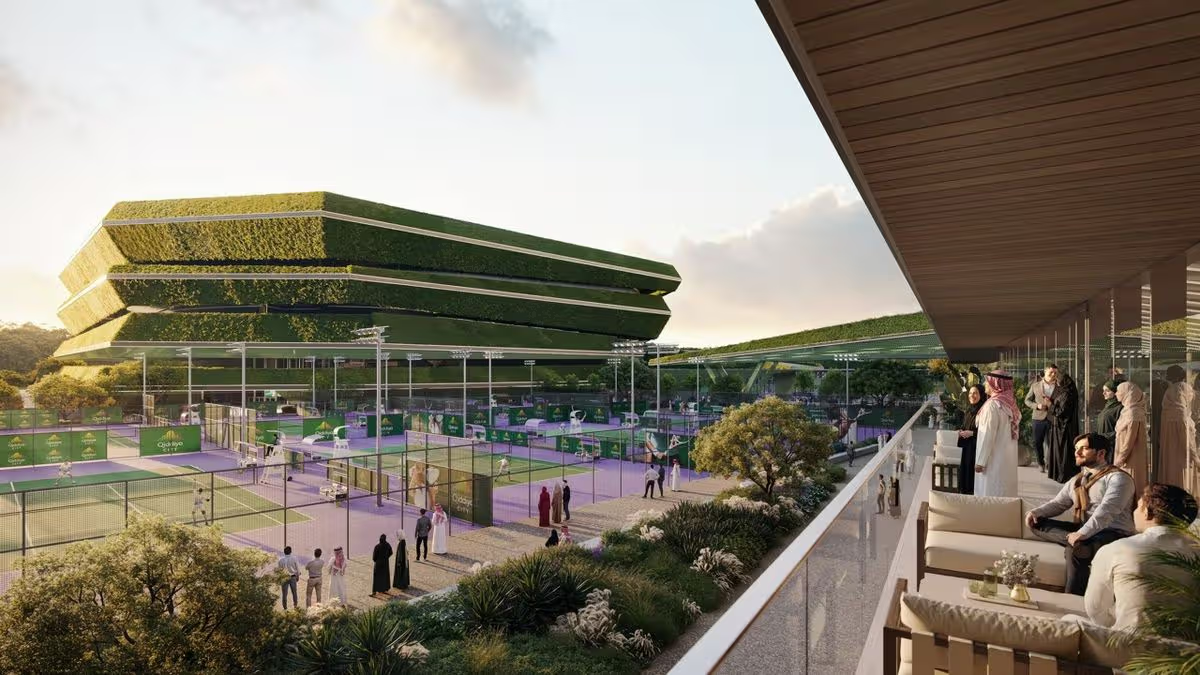
However, one aspect of this mega-project may seem rather familiar to British visitors. Qiddiya Investment Company has recently unveiled plans for its National Tennis Centre – and the design appears heavily inspired by the All-England Tennis Club at Wimbledon.
The 30-court facility is even being designed by Populous – the same architecture firm responsible for the iconic retractable roof over Wimbledon’s Centre Court.
Saudi Arabia’s National Tennis Centre, according to developers, will provide “world-class competition infrastructure with elite training and wellness facilities, a vibrant public realm, and two multi-purpose arenas with retractable roofs for climate control which can host concerts and major events beyond tennis.”
The complex will feature 30 tennis courts altogether, though unlike Wimbledon’s notoriously unpredictable grass surfaces, 28 will be hard courts, with the remaining two being clay. Its Centre Court will accommodate approximately 15,000 spectators and will be able to “host events beyond tennis,” according to planners.
The 8,000-capacity Court Three will also include a retractable roof, although in the region’s notoriously scorching temperatures this will serve to keep players and spectators cool rather than preventing rain from halting play.
Qiddiya City, alongside the Neom smart city and the highly ambitious Red Sea tourism project, forms part of Saudi Arabia’s Vision 2030 initiatives to diversify the Saudi economy beyond fossil fuels. “The National Tennis Centre will play a major role in the broader ambitions led by the Ministry of Sports to further elevate sports in the Kingdom and encourage increased participation,” planners state.
“The National Tennis Centre will support all levels of the game, from grassroots initiatives introducing tennis to children for the first time, to supporting Saudi Arabia’s elite talent.”
They add that the National Tennis Centre, much like the neighbouring 18-hole championship golf course designed by Sir Nick Faldo, will mark a significant milestone in Qiddiya City’s quest to establish itself as a world-renowned destination for entertainment, sport and culture.
Abdullah Aldawood, Managing Director of Qiddiya Investment Company, said: “At Qiddiya City, we believe in the Power of Play; the idea that play, in all its forms, has the ability to transform lives, build communities and inspire generations. The National Tennis Centre demonstrates this philosophy.
“We are building a world-class home for tennis at every level, where the world’s best players can compete, the next generation of Saudi talent can reach their potential, and families and communities across Saudi Arabia can experience this great sport. The National Tennis Centre is for Saudi Arabia, supporting Vision 2030 by driving sports participation and tourism, and it is open to the world.”
Eno Polo, CEO of international tennis organising body ATP, added: “The National Tennis Centre at Qiddiya City is a remarkable addition to the global tennis landscape.
“As the largest tennis facility of its kind in the region, it reflects a bold vision for the future of tennis and a commitment to creating more opportunities for people to engage with our sport, whether as players, fans or members of the wider community.
“Facilities of this scale and quality play an important role in the continued growth of tennis. By providing a world-class stage for competition alongside opportunities for participation at all levels, the National Tennis Centre has the potential to make a lasting impact on the sport across the region for years to come.”