At least 31 people have been killed and 33 others injured after a bus plunged into a ravine in Ethiopia early on Monday, police said
At least 31 people have been killed and 33 others injured after a bus plunged into a ravine in Ethiopia, police said.
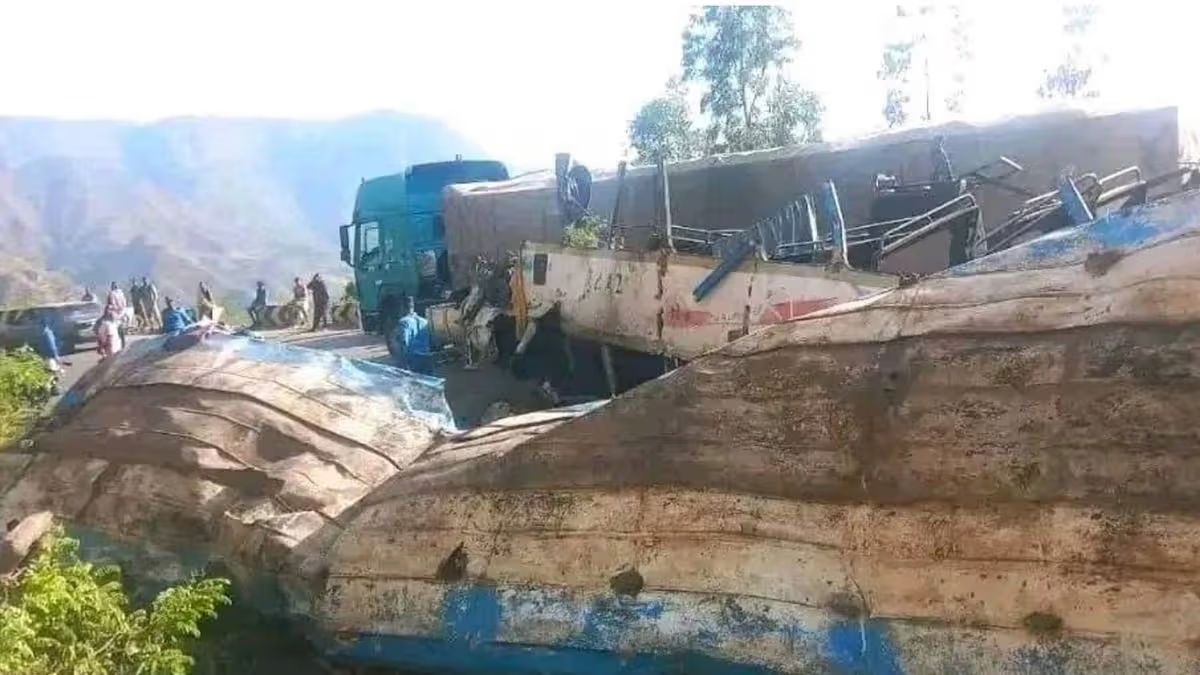
The bus was travelling from Dessie to the capital, Addis Ababa, early on Monday when it veered off the road and fell down a cliff in the northern Amhara region, state-run Amhara Media Corporation reported.
The crash took place in an area that leads to Kombolcha, according to commander Getachew Muhiye, who was quoted in a statement from the regional government’s communications bureau. Among the 31 people killed was the driver, while 33 others suffered a range of serious and minor injuries, Mr Muhiye told state media. The death toll had previously been reported as 28.
Many of the victims are believed to have died because of delays in emergency response efforts. The area lacks basic infrastructure and ambulance services, forcing survivors to be transported in public vehicles.
The road where the crash occurred winds through hilly terrain and is widely regarded as dangerous. The cause of the accident remains under investigation.
It comes months after 71 people were killed in Ethiopia’s southern Sidama region when a truck plunged into a river in December 2024. The overcrowded vehicle fell from Gelan Bridge while travelling on a route that local residents said had a history of serious accidents.
Delays in rescue efforts in the remote area were blamed for the high death toll. Villagers said they had only sticks to try to rescue people from the fast-flowing river.
One resident, Serak Boko, told The Associated Press at the time that music had been blasting out of the truck and people dressed in suits had been dancing and waving moments before the crash.
In rural Ethiopia, trucks are often hired instead of buses for social events such as weddings because they are cheaper and can carry more passengers. Most of those on board were men, who traditionally escort the bride from her family home to the groom’s house.
“The area always has regular accidents around the river as it is poorly constructed,” resident Fasil Atara said, adding that the road lacked speed bumps and warning signs.