The World Cup is coming to Central America’s doorstep.
On Thursday, Mexico, alongside the US and Canada, will kick-off the largest tournament in football history, drawing millions of fans and generating an estimated $11bn in revenue for Fifa.
Just south of the host nations lies a region where football is woven into daily life, where children play on dusty pitches and national team victories can bring entire cities to a halt.
But Central America will once again watch from the sidelines.
Only Panama has qualified for the tournament. But more importantly, no Central American country will host a single match. And despite the region’s passion for the sport, economists say none are likely to host a World Cup anytime soon.
CLICK FOLLOW: TO FOLLOW US
Sign up to get the latest insights and analysis on
Israel-Palestine, alongside Turkey Unpacked and other eSPORTY
The reason has little to do with football and everything to do with money.
As Fifa’s flagship tournament grows larger and more lucrative, the cost of staging it has risen beyond the reach of most developing nations.
Central American countries lack the stadiums, transport networks and broader infrastructure Fifa requires. More importantly, in a region where poverty rates reach 50 percent in some countries, they lack the fiscal capacity to fund the billions of dollars in investment demanded of host nations.
‘Fifa will do what is best for Fifa, and that is unlikely to involve giving hosting duties to small, developing countries’
– Dennis Coates, University of Maryland
“Because of the need for a large number of quality stadiums that can generate commercial returns in terms of tickets, sponsorships, concessions (even parking and transportation), it is difficult for smaller developing nations to host,” Daniel Rascher, a sports economist at the University of San Francisco, told Middle East Eye.
“Fifa requires the nations to indemnify it against losses.”
Fifa requires a minimum of 14 stadiums with capacities of at least 40,000 seats, alongside hotels, training facilities and logistics capable of accommodating hundreds of thousands of visitors.
The challenge is compounded by Fifa’s hosting model. Although the organisation earns billions from broadcasting rights, sponsorships and commercial partnerships, it does not fund the infrastructure required to stage the tournament.
Fifa’s Host City Agreements state that host cities “shall be responsible to bear all costs and expenses incurred to fulfill hosting obligations and waive any and all claims of liability against Fifa”.
What Fifa returns to hosts is comparatively limited: stadium rental fees and prize money distributed to participating teams. Neither helps pay for roads, airports or the broader public infrastructure required for a World Cup.
The infrastructure gap
Each host city is expected to spend between $100m and $200m on infrastructure, security and logistics alone.
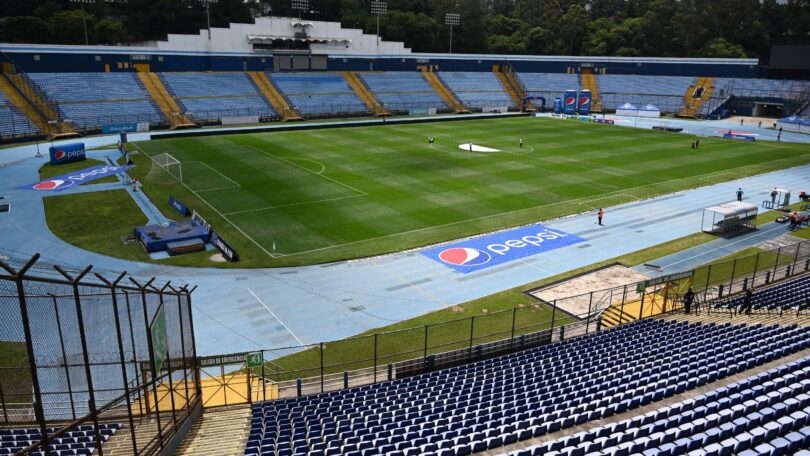
“There is only one stadium in Central America that has the capacity to host like a couple of matches maybe, which is the national stadium in Costa Rica, but that’s about it,” said Victor Umana Vargas, a researcher at INCAE Business School’s Latin American Centre for Competitiveness and Sustainable Development in Costa Rica.
The obstacles extend beyond infrastructure. Costa Rica and Panama enjoy significantly higher living standards than some of their neighbours, making regional coordination difficult.
Vargas, who was CEO of the Local Organising Committee for the Fifa U-20 Women’s World Cup Costa Rica 2022, said that because most Central American countries are democracies, financing a World Cup bid would likely require broad public support, making such spending politically difficult to justify.
As World Cup host, the US is sportsmaxxing through war and genocide
Read More »
Even if Central America could afford to host, economists question whether the investment would make sense.
Qatar spent an estimated $220bn on the infrastructure for the 2022 World Cup, the most expensive tournament in history. According to the International Monetary Fund, the economic return from tourism and broadcasting revenue was between $2.3bn and $4.1bn.
Brazil offers another cautionary example. The 2014 World Cup cost an estimated $15bn, including at least $3.6bn spent on 12 new or renovated stadiums.
Tourist revenue generated by four million visitors accounted for only a small fraction of that cost.
Moody’s estimated the tournament’s overall economic stimulus at $11.1bn, projecting it would add just 0.4 percent to GDP over a decade.
Brazil’s stadium legacy proved particularly problematic. Several venues fell into financial difficulty after the tournament, with local authorities struggling to find uses for arenas built far beyond local demand. Stadiums with capacities approaching 50,000 were handed to fourth-division clubs averaging just 1,500 spectators per match.
The intangible dividend
Some economists argue that hosting can deliver benefits that are difficult to measure.
“There is at least some evidence, although I think it’s pretty weak, that big events like the World Cup bring people together in a way that later causes business leaders to come together, allowing for future trade negotiations and other things,” Victor Matheson, a renowned sports economist at Massachusetts’s College of the Holy Cross, told MEE.
“If you have a South African World Cup and Costa Rica is in it, you see at least some increase in bilateral trade between South Africa and Costa Rica that you don’t see with otherwise similar countries like Honduras or Nicaragua. But that doesn’t make it right.”
‘Fifa positions football as a global public good, but its business practices are not in line with that sentiment’
– Nikolas R Webster, University of Michigan
Still, Matheson and other economists argue such benefits rarely offset the financial burden.
The challenge has become even greater with the expansion to 48 teams.
The 2026 tournament will require more stadiums, more training facilities and more logistical capacity than any World Cup before it.
The scale of those demands increasingly favours only the world’s largest and wealthiest countries, raising questions about whether the World Cup remains a truly global event or has become one that only a small group of nations can realistically host.
Awarding the 2010 tournament to South Africa was widely celebrated as recognition of Africa’s contribution to football. But it also left a relatively poor country carrying substantial costs while Fifa collected billions in revenue.
“What we saw in Brazil – maybe the world’s most soccer crazy country – [was] protests against the World Cup because money was redirected from things like public transportation to expensive stadiums, bus fares were doubling, and I literally saw people marching through the streets,” Matheson noted.
“And this is not in a country that doesn’t care about football.”
‘Fifa cares about itself’
The contrast between Fifa’s rhetoric and its business model remains striking.
Its official motto is “Football Unites the World”, while its broader slogan, “For the Game. For the World”, presents the organisation as a force for global development.
Fifa has also committed itself to supporting the UN Sustainable Development Goals, including reducing inequality and promoting inclusive economic growth.
But under its current hosting model, even staging a handful of World Cup matches requires investments beyond the reach of most developing countries.

Illegal wars, racism and genocide: USA World Cup 2026 should be boycotted
Read More »
“Fifa will do what is best for Fifa, and that is unlikely to involve giving hosting duties to small, developing countries,” Dennis Coates, a sports economist at the University of Maryland, told MEE.
“Fifa probably does not put much weight on greater international visibility, national pride, optimism, etc, for potential host countries, nor do I think they should since those are all impossible to measure.”
Fifa is projected to generate $11bn in revenue from the 2026 tournament. During the same four-year cycle, each national federation receives just $5m. Meanwhile, Fifa’s reserves have grown from $1.5bn in 2014 to nearly $4bn in 2022.
“Fifa positions football as a global public good, but its business practices are not in line with that sentiment,” Nikolas R Webster, clinical assistant professor of sport management at University of Michigan, told MEE.
For critics, the conclusion is simple: football’s governing body extracts billions from a global sport while investing relatively little in helping poorer nations meet the standards required to host its biggest event.
“Fifa cares about itself and Infantino is an insult to Fifa,” Andrew Zimbalist, an economist at Smith College and one of the world’s foremost experts on the economics of mega sporting events, told MEE.
For Zimbalist, the verdict is unequivocal: “Hosting the World Cup is not a development opportunity, it is a development retardant, especially in countries that don’t have stadiums and infrastructure that meet Fifa’s requirements,” he says.
“The US, Mexico and Canadian hosts will all be hurt from hosting.”