As US-Iran tensions intensify, one expert believes the next 24 hours could shape the course of the crisis (Image: Getty)
The next 24 hours could prove decisive in determining whether the US and Iran move towards de-escalation or a more dangerous phase of conflict, according to a security and intelligence expert. Professor Anthony Glees of The University of Buckingham said recent Iranian military actions had raised the prospect of a stronger American response, despite ongoing efforts to negotiate an end to hostilities.
“I believe the next 24 hours will be crucial in determining whether the US and Iran are going to de-escalate again or whether, given Iran’s strikes last night, the Americans will feel obliged to hit Iran much harder than they have so far,” he told the Express. According to the professor, understanding the current situation requires examining three key factors – the extent of the damage inflicted on Iran, the political dynamics of the conflict and the position of US President Donald Trump.

Washington underestimated Netanyahu’s strategic objectives, the expert claims (Image: Getty)
“First, assessing the actual damage that has been done to Iran to date, second, to realise that Iran is currently winning this war because Trump is so keen to end it, and third, realising that Trump is no longer in control of the narrative,” he explained.
Professor Glees argued that President Trump was increasingly struggling to shape events and public perceptions of the conflict: “He’s spinning like a top, contradicting himself on an hourly basis. We don’t know what he’s thinking and neither does he”.
He claimed the conflict had exposed the limits of American military power and suggested that Washington had underestimated both Israeli Prime Minister Benjamin Netanyahu’s strategic objectives and Iran’s willingness to continue fighting despite heavy losses.
“What we are all seeing is the limit to American power and it’s not a pretty sight,” he said.

Operation Epic Fury failed to destroy Iran’s Revolutionary Guard or topple the country’s leadershi (Image: Getty)
He added: “Trump never understood that Netanyahu had him by the short and curlies, never understood that Iran is a revolutionary and fanatical Islamist regime who even if its cities are destroyed and its missiles and drones put out of action will fight on, out of caves and with kitchen knives.”
Professor Glees argued that recent US military operations had failed to achieve some of their stated objectives. He said evidence suggested Iran retained significant military capabilities despite sustained attacks.
“It’s clear that Midnight Hammer, June 22, 2025, did not ‘obliterate’ Iran’s nuclear capacity or destroy its 11-ton stockpile of enriched uranium,” he said. “How do we know? Because the USA is negotiating right now to de-enrich it, so it exists.”
Professor Glees further contended that Operation Epic Fury in February 2026 had failed to destroy Iran’s Revolutionary Guard or topple the country’s leadership. Citing intelligence assessments, he said large portions of Iran’s missile infrastructure remained intact, including most underground stockpiles, mobile launchers and launch sites along the Strait of Hormuz.

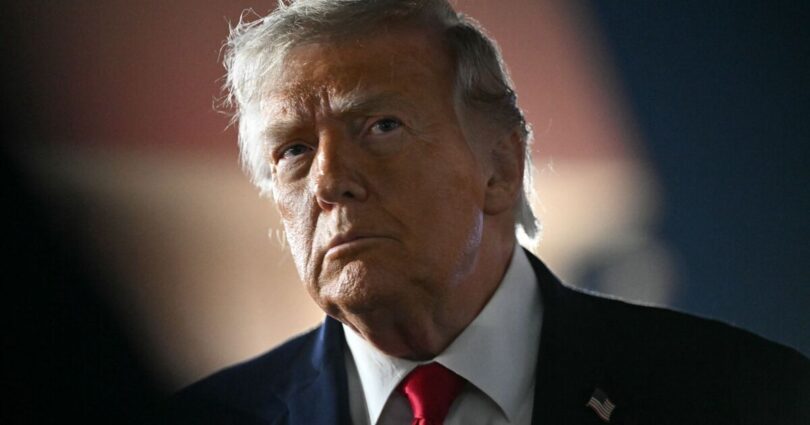
Professor Glees said the President’s rhetoric had shifted noticeably in recent weeks (Image: Getty)
According to the expert, Iran’s continued ability to launch drone and missile attacks against US-linked targets in Jordan, Kuwait and Bahrain demonstrated that it remained a significant military force. He argued that such operations would not be possible if Iran had been “militarily obliterated”, as some earlier US statements had suggested.
He contrasted those developments with Mr Trump’s previous claims that Iran had been “totally defeated” and “begging us to make a deal”. He said the President’s rhetoric had shifted noticeably in recent weeks from threats of overwhelming force to discussions of diplomacy and a potential settlement, which he described as “not a sign of strength, it’s a sign of weakness”.
While acknowledging that the US retained overwhelming military superiority, Professor Glees said he did not believe Washington would resort to nuclear weapons or commit substantial ground forces to the conflict. In his view, Mr Trump was seeking a negotiated exit rather than a military escalation.
Professor Glees said ongoing talks appeared to be progressing and could ultimately lead to an agreement under which sanctions and economic restrictions on Iran would be eased in exchange for limits on Tehran’s nuclear programme, the dilution of enriched uranium stockpiles and enhanced international inspections.

The expert urged Trump to accept that, like Vietnam, ‘this war is lost’ (Image: Getty)
“There clearly is a deal to be done not least because Trump is gagging for one,” he said.
The professor argued that the conflict had become a growing political burden for the US President, claiming opposition to the war within Trump’s political base was increasing and creating pressure for a diplomatic resolution. Mr Trump, he said, “desperately needs that off-ramp”.
Concluding his assessment, Professor Glees compared the conflict to previous American military setbacks and argued that Washington should move quickly to end hostilities.
“Trump needs to accept that, like Vietnam, this war is lost and the sooner it ends, the better for him – and the rest of us,” he said.