The footballer was able to walk off the pitch himself, unlike a similar collapse he suffered five years ago
Danish footballer Christian Eriksen collapsed during a friendly match between Denmark and Ukraine just days before the start of the men’s FIFA World Cup. The 34-year-old was able to walk off the field and is reportedly doing well, but the moment felt eerily reminiscent of his cardiac arrest during a European championship match in 2021 when his heart stopped beating.
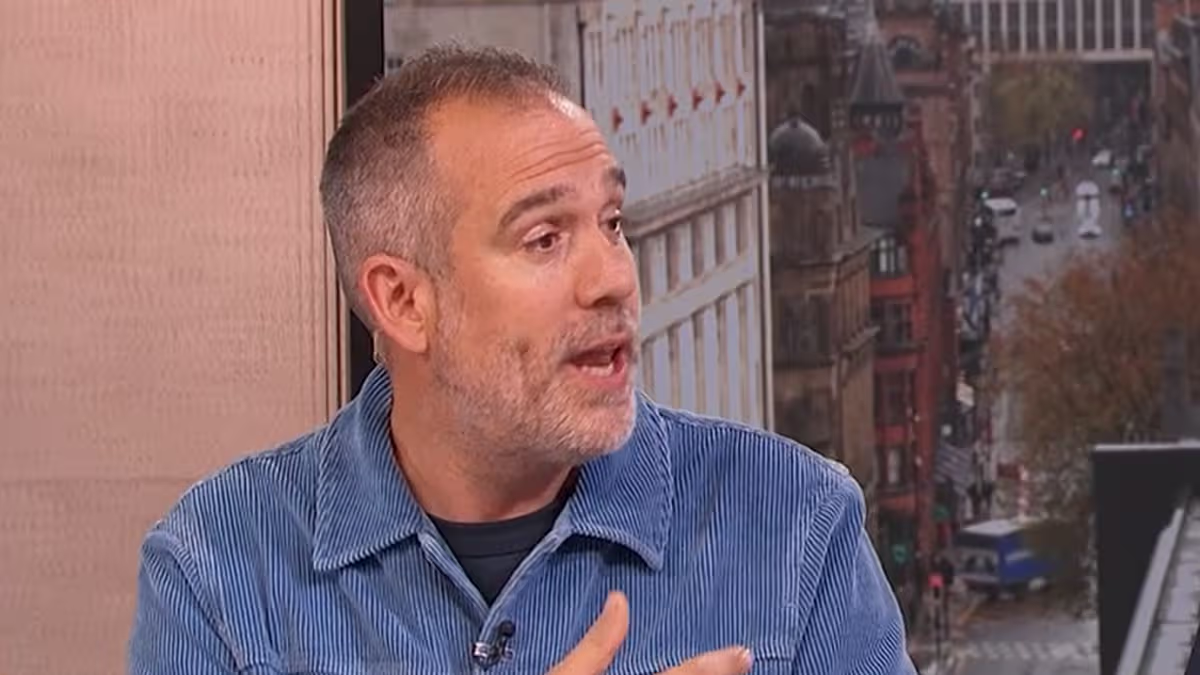
BBC’s Dr Xand took to Morning Live to explain what happened on Sunday, how it was “different” to that scary moment in 2021 and why defibrillators can be such a vital tool in saving lives. After the 2021 incident, Eriksen got an ICD implanted, which Dr Xand said is also known as a “shock box”.
This Implantable Cardioverter Defibrillator is a type of pacemaker that monitors the heart rate 24/7 and if it detects a dangerous rhythm, it delivers a shock much like any other defibrillator would to get the heart back into a safe rhythm.
Dr Xand said: “It basically gives his heart a shock if it stops beating. So he hasn’t had a heart attack, he’s had what’s called a ‘cardiac arrest’ meaning, his heart has gone into a rhythm that is potentially life-threatening and could be fatal.”
Dr Xand likened it to medical dramas when they take the defibrillator pads, “they go clear – ‘chujung’ – and they restart someone’s heart”.
Dr Xand praised Eriksen for setting such a “great” example of how life can continue after getting an ICD, as he recalled early on in his own career doctors would warn ICD patients to avoid even a round of golf.
However, he admitted these shocks will be “very disruptive” for the footballer, especially if it happens in the middle of a match. But the doctor added: “It is an incredible reminder of the life-saving power of these defibrillators and it actually allowed him to get up and walk off the pitch.
“The crucial thing is; the closer you are to a defibrillator, the more life-saving it is.”
It’s this last reason why heart attack survival rates can differ so greatly depending on where you are when it occurs. Around 5 to 10% of people who have a cardiac arrest outside of a hospital survive.
This catapults to 50-70% of people surviving if they get a defibrillator in time. There are hundreds of thousands of defibrillators across the UK and Dr Xand urged anyone that is responsible for one in their community to ensure it’s always charged and maintained as it can “massively save lives”.
Later on in the Morning Live programme, Dr Xand answered a viewer question assuring that a defibrillator can be used on someone who has a pacemaker or similar devices.
He shared: “A pacemaker is not a barrier to defibrillation but you don’t have to learn.
“Any of these portable defibrillators do all the work for you. You attach the pads according to the diagram, press the button, and it will say ‘analysing patient’ and it will figure everything out. But yes, a pacemaker is not a barrier to defibrillation but you don’t have to learn.”