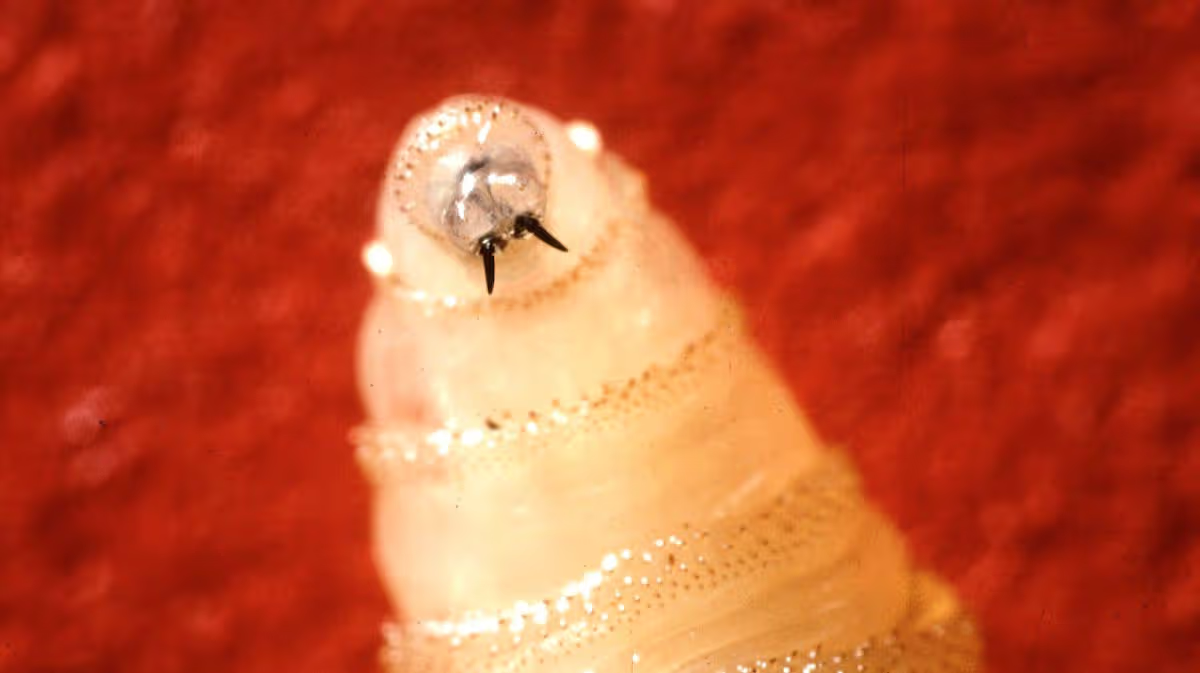
New World screwworm infestations in humans are rare, but they can be fatal if left untreated. A female fly lays eggs in open wounds or body openings.
The US Department of Agriculture (USDA) has confirmed the first case of the New World screwworm in New Mexico, taking the total number of known US cases to five.
Officials said the parasite was discovered in a dog living in Lea County, close to the state’s border with Texas, where four cases have already been identified over the past week.
The New World screwworm is one of the world’s most feared parasites. Female flies lay hundreds of eggs in open wounds on animals – and in rare cases humans – with the larvae hatching within hours before feeding on living flesh.
Left untreated, infestations can create deep, agonising wounds, trigger serious infections and ultimately prove fatal.
Confirming the latest discovery, the USDA said: “This situation is evolving, and we expect new information to emerge as our investigation continues.”
It added: “We are working closely with our partners in New Mexico, Texas and across the region to ensure we identify, contain and respond to any potential cases as swiftly as possible.”
The first US case was detected last week in a three-week-old calf in Texas, with another young calf found infected just miles away only a day later.
Since then, three Texas counties – Kinney, Jim Hogg and Uvalde – have declared local states of disaster over the threat, while similar emergency declarations are pending in Webb, La Salle and Val Verde counties.
Local officials have urged President Donald Trump to declare a national emergency, arguing that frontline communities urgently need extra funding, personnel and resources to stop the parasite establishing itself in the US.
The outbreak follows cases detected in southern Mexico last year, where infestations were confirmed in the states of Chiapas, Oaxaca and Veracruz.
Scientists have warned the insects could become an increasing threat as temperatures rise, with research suggesting Gulf Coast states including Texas, Florida and Louisiana could be vulnerable to widespread infestations by 2055.
Texas Governor Greg Abbott said: “The protection of our ranchers, livestock producers, deer breeders and the Texas economy from this pest is a top priority.
“We have eradicated this pest before, and we will do it again in close cooperation with our federal partners. Texans should stay alert, check animals daily for wounds and report any suspected cases immediately.”