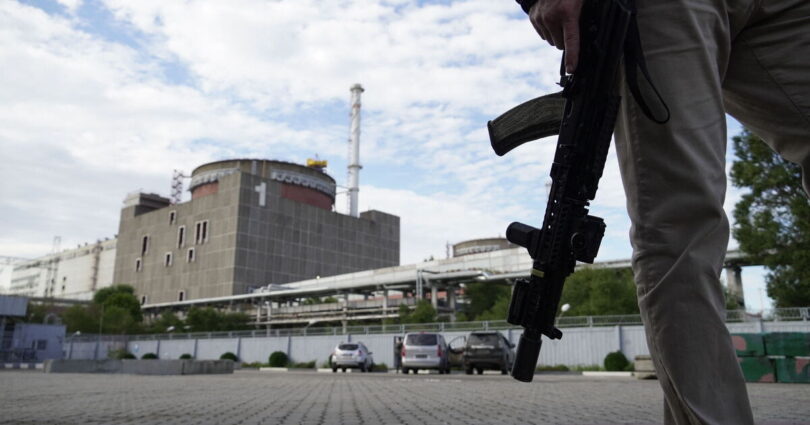
A serious incident has been declared at the Zaporizhzhia nuclear power plant as the International Atomic Energy Agency warns of the risk of “nuclear accident.” The warning is likely to revive fears of a “second Chernobyl” at Europe’s largest nuclear power station, which has repeatedly been caught in the crossfire since Russia’s invasion of Ukraine.
Earlier this year, experts warned that attacks near Ukraine’s nuclear infrastructure could trigger a disaster on a scale comparable to the 1986 Chernobyl catastrophe. Ukrainian electronic warfare expert Serhiy Beskrestnov warned that missiles had landed within hundreds of metres of nuclear reactors and said: “A miss by an Iskander or Kinzhal [missile] could turn into a second Chernobyl.” An alleged drone strike was reported at the plant last week, which the IAEA said would mark the first attack within the facility’s perimeter since April 2024 if confirmed. The latest alarm came after the UN nuclear watchdog said it had been informed of a “serious incident” during today’s de-mining phase of an agreed localised ceasefire near the Zaporizhzhia Nuclear Power Plant (ZNPP), in which some Russian military personnel were injured.
The localised ceasefire had been brokered by the IAEA to allow de-mining operations and repairs to critical power infrastructure serving the plant.
The incident occurred as efforts were underway to clear mines and repair a key power line serving the facility.
While the circumstances surrounding the incident remain under investigation, Ukraine has informed the IAEA that it remains committed to the ceasefire agreement brokered by the agency after weeks of negotiations with Russia.
IAEA Director General Rafael Grossi called for “maximum military restraint and full adherence to the ceasefire so that the power line repairs can proceed as planned in coming days”, adding that they are “crucial for efforts to prevent a nuclear accident at the ZNPP”.
The urgency of the repairs was underlined by another loss of off-site power at the plant today – the 18th such event since the war began.
Nuclear power stations require a constant supply of electricity to power cooling and safety systems, meaning repeated losses of off-site power are regarded as one of the most serious threats to nuclear safety.
The ZNPP was reportedly forced to switch to emergency diesel generators after its sole remaining external power line, the 330 kilovolt (kV) Ferosplavna line, was disconnected following reported attacks on two electrical substations across the Dnipro River.
With its main 750kV Dniprovska line out of service for more than two months, the plant has been relying on a single backup connection, leaving it increasingly vulnerable to conflict-related disruptions.
The 330kV line has been disconnected repeatedly in recent weeks, including during today’s outage, highlighting the fragility of the plant’s remaining external power supply.
Mr Grossi said: “The restoration of the 750 kV Dniprovska line would be an important positive step for nuclear safety, which is in everybody’s vital interest.”
The Zaporizhzhia plant has been under Russian control since 2022 and remains one of the most sensitive flashpoints in the war, with international watchdogs repeatedly warning of the dangers posed by military activity around the site.