Airlines and aviation authorities have strict rules on how much alcohol passengers can carry on flights
Bringing home a bottle of local spirits is a cherished holiday ritual for many travellers. However, some passengers could encounter an unwelcome surprise at the airport if they fail to check one crucial detail on the label.
The problem centres on alcohol strength. While numerous alcoholic beverages can be transported in hand luggage or hold baggage, airlines and aviation authorities ban passengers from flying with drinks containing more than 70 per cent alcohol by volume (ABV).
According to the UK Civil Aviation Authority (CAA), alcoholic beverages containing more than 24 per cent but no more than 70 per cent ABV are allowed up to a maximum of five litres per passenger in retail packaging. Anything above 70 per cent ABV is forbidden.
While the majority of mainstream spirits remain below the limit, certain high-strength products can surpass it.
Examples include particular overproof rums, grain alcohols such as Everclear (reaching up to 95 per cent ABV in some markets), Spirytus Rektyfikowany (96 per cent ABV) and certain absinthe varieties, which can contain more than 70 per cent alcohol by volume.
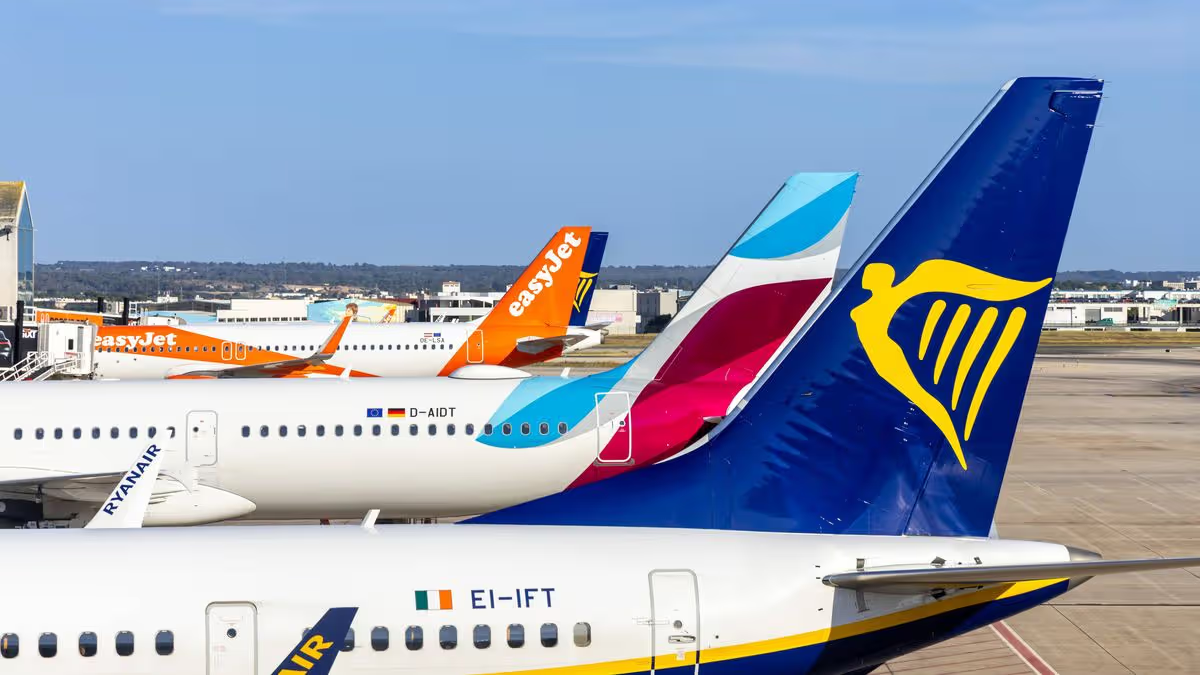
Holidaymakers buying local spirits overseas are therefore urged to verify the strength before packing for their flight. But which UK airlines prohibit it, and what are their regulations? Here’s everything you need to know.
Jet2
Jet2 requires passengers to adhere to dangerous goods regulations while travelling. The airline states that safety is its “top priority” and follows industry guidelines governing what may and may not be brought on board.
Under those regulations, alcoholic drinks stronger than 70 per cent ABV are banned outright. Drinks falling between 24 per cent and 70 per cent ABV are generally restricted to five litres per passenger.
British Airways
British Airways explicitly warns passengers: “Drinks above 70 per cent alcohol volume are not permitted on board our aircraft in either checked baggage or hand baggage.”
The airline permits customers to carry up to five litres of alcohol containing between 24 per cent and 70 per cent ABV, provided it satisfies packaging requirements.
easyJet
easyJet’s dangerous goods policy permits “alcoholic beverages containing more than 24 per cent but not more than 70 per cent alcohol by volume” up to a total of five litres per passenger.
Its baggage guidance also sets out the rule plainly, stating: “Alcohol must be lower than 70 per cent ABV.”
Ryanair
Ryanair’s conditions of carriage list “Alcohol stronger than 70 per cent ABV (140 proof)” amongst prohibited substances. The airline also forbids passengers from consuming any alcohol they have brought on board themselves.
TUI
TUI adheres to international dangerous goods regulations governing alcohol transported by passengers. Under these guidelines, drinks with an ABV exceeding 70 per cent are strictly banned, while lower-strength alcoholic beverages may be permitted subject to quantity restrictions.
Why does the rule exist?
The limitation is rooted in aviation safety requirements. High-strength alcohol is deemed significantly more flammable than standard spirits and is therefore subject to far stricter transportation rules.
For those planning to bring a bottle back from their holiday abroad, checking the ABV before setting off to the airport could save you from a nasty shock at check-in or security.