
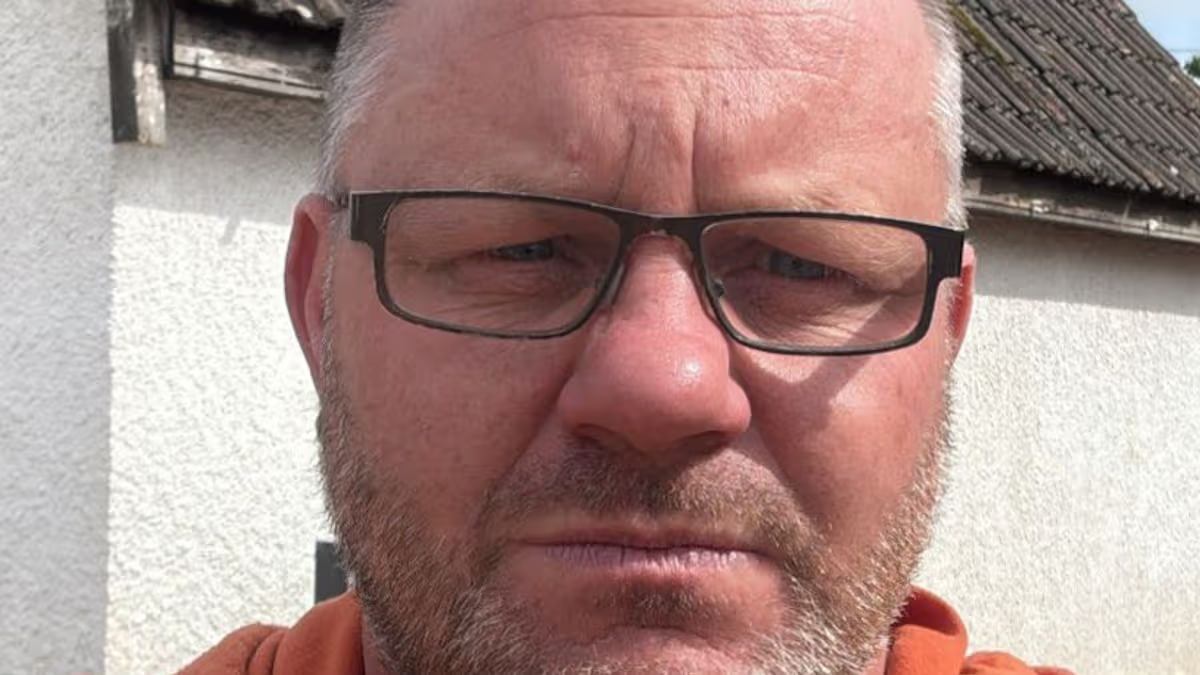
Dad-of-four Wayne Luxon said he went to a ‘dark place’ after losing £140,000 in a cryptocurrency scam, which he had seen advertised on Facebook with a fake video showing an AI-generated Martin Lewis
A dad who lost £140,000 after falling for a deepfake Martin Lewis video on Facebook has slammed the social media giant for failing to ‘stop’ scams.
Wayne Luxon, from Taunton in Somerset, said he went to a “dark place” after he was conned into investing into a clone website by the fake AI-generated advert – and watched the money in his account vanish to zero. The dad-of-four is now taking part in a multi-billion pound group legal action against Meta, owner of Facebook and Instagram, accusing the social media giant of allowing the advertisements to appear on its platforms.
The 43-year-old’s ordeal began in 2020 when he saw the video on Facebook, which claimed he could earn extra income by investing as little as £250 into cryptocurrency.
“It looked totally legitimate,” he said, “and when my £250 turned into £500, I wanted to take it out so that I knew I could get money back out.”
When he received payment, he believed there was no way it could be a scam, so he added three further payments from his savings totalling £16,000.
He said: “I was watching this online platform and seeing the money go up and up and you think ‘oh my God’, I’ll leave it in there – why wouldn’t I?”
But when it came to getting his money out, with his fictitious account showing more than £800,000, he was asked to pay a tax based on a percentage of the amount he would withdraw. Wayne, who is self-employed, took out personal loans and raided his business bank account with Barclays to get together more than £100,000 to pay the ‘tax’.
On the day he was told the money would be transferred, he checked his balance on the platform.
“The platform was live but everything went to zero,” he said. “I looked at and thought ‘oh my God’. It sent me to a really dark place – I nearly lost myself, if it wasn’t for my wife being so strong, though obviously I got called a few names.
“It was horrible. I was stressing really badly about it, and I was worried I would lose the house. I was having to earn so much money so I could pay these loans off, nearly £800 a month.”
Barclays agreed to refund half of his initial investment, but refused to return any of the fake tax he paid. Now, by joining the group action against Meta, he hopes to get more of his money back.
He said: “Facebook should be stopping these adverts straight away. It’s not fair to the people that get conned into investing, and once you click on one advert there’s another and another. They are constantly coming up on your feed.”
Jakub Siwiak, another victim who was conned out of nearly £15,000 after responding to a scam advert on Facebook, has said the social media platform needs to take more responsibility. The 51-year-old from Worksop was plunged into debt when he was hoodwinked by a criminal posing as an investment broker in June last year.
The advert on Facebook had promised good returns on the foreign exchange market, but when it became clear he had been conned, Jakub was left paying £1,300-a-month for loan repayments he could barely afford.
Jakub, a crane operator and supervisor, had been looking online for investment opportunities, which led to Facebook’s tracking algorithms inundating his feed with money-making adverts. When he clicked on one such ad, a man impersonating a real broker coached him through a series of fake investments, before stealing his money.
Jakub, who has signed up to join the group action against Meta, said: “I got scammed because of Facebook. A lot of adverts were showing up, and that’s all done by Facebook.”
“When something is suspect, they should take it off and give fair play to all of its customers, which we are, even if we don’t pay (to use the service).”
The legal claim is being launched by law firms, Humphries Kerstetter and Richardson Hartley Law, who say they to aim to “recoup the billions of pounds that are lost each year in online scams” through the two social media platforms.
The Mirror has approached Meta for comment.