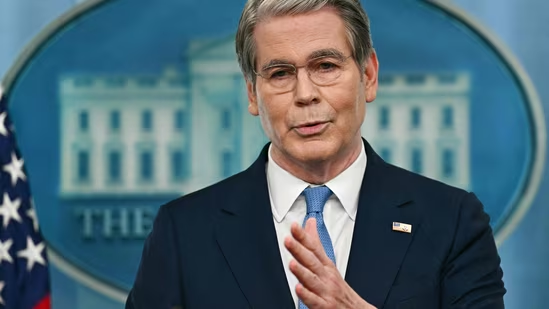
A day after US President Donald Trump warned Oman against interfering in negotiations over the Strait of Hormuz, his treasury secretary Scott Bessent on Thursday threatened aggressive action against any actors allegedly involved in helping Iran impose tolls on ships passing through the strategic waterway.
In a post on X, Bessent specifically named Oman while warning that the United States “will not tolerate any effort to impose a tolling system in the Strait of Hormuz.”
He went on to say, “Oman, in particular, should know that the US Treasury will aggressively target any actors involved – directly or indirectly – in facilitating tolls for the Strait and any willing partners will be penalised. All nations should reject outright any efforts by Iran to disrupt the free flow of commerce,” the post read. Track US Iran war news live.
Bessent also accused Tehran of attempting to disrupt global maritime trade and said: “Tehran’s days of terrorising the region and the world are over.”
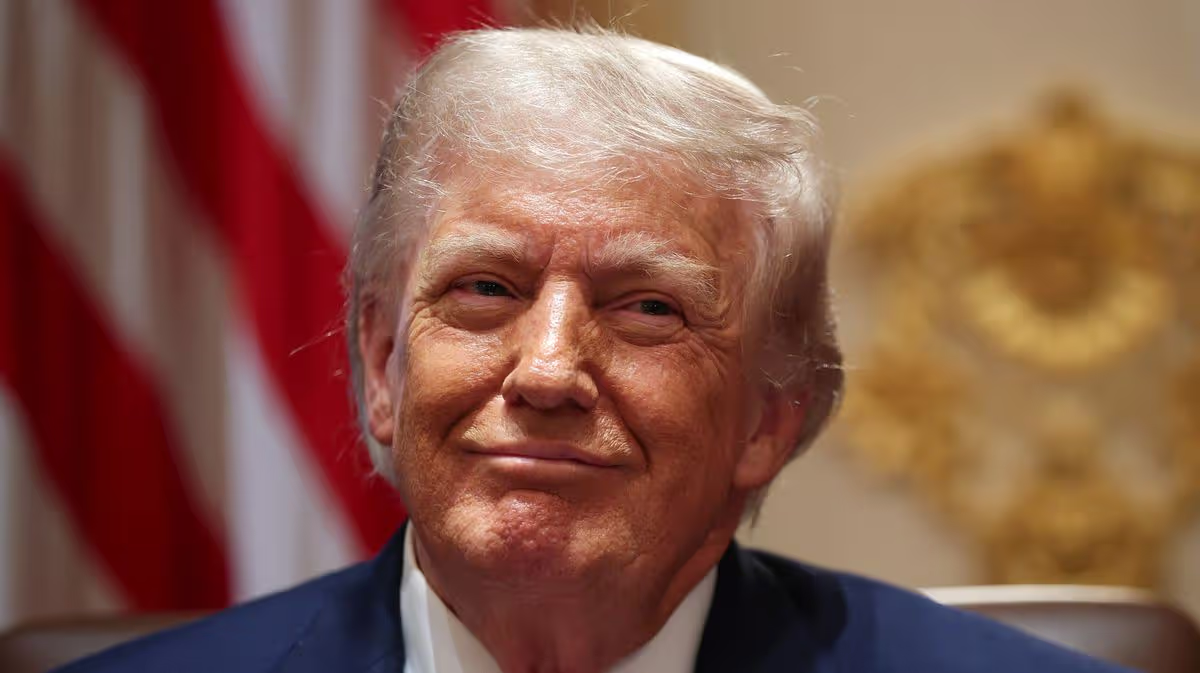
Trump’s ‘blow up’ warning
The latest warning came after Trump on Wednesday rejected the idea of any temporary arrangement that would allow Iran and Oman to jointly oversee movement through the Strait of Hormuz.
Trump warned Oman against interfering in discussions linked to the strategic waterway.
“Oman will behave just like everybody else, or we’ll have to blow them up,” he said while talking to reporters at the Camp David meeting.
The Strait of Hormuz has remained at the centre of tensions between Iran and the United States throughout the West Asia conflict because of its importance to global energy shipments. A major portion of the world’s oil and gas supplies passes through the narrow maritime corridor.
Iran’s big move
On Monday, Iranian foreign ministry spokesperson Esmail Baghaei said Tehran was working with Oman to establish a mechanism to ensure the safe passage of ships through the Strait.
Baghaei described the efforts by Iran and Oman to develop a maritime safety protocol as a “responsible step”. He also said it was “natural” for maritime safety and environmental protection services to involve certain fees.
The remarks came days after Iran announced the launch of a new regulatory body to oversee operations linked to the Strait of Hormuz.
Iran launches new Strait authority
Last week, Iran’s Supreme National Security Council reposted a statement announcing that the official X account of the Persian Gulf Strait Authority (PGSA) had gone live.
The newly introduced body has been presented by Tehran as a mechanism to manage and monitor maritime traffic through the strategically important waterway.
“In the Name of God. The official X account of the Persian Gulf Strait Authority (#PGSA) is now live. Follow us for real-time updates on the Hormuz Strait operations and latest developments,” the statement posted by the official account of the Persian Gulf Strait Authority said.
Meanwhile, the US on Wednesday imposed sanctions on the PGSA, accusing Iran of attempting to “extort” commercial vessels travelling through the Strait of Hormuz and funnel revenues to the Islamic Revolutionary Guard Corps (IRGC).
According to the Treasury Department, the PGSA was created to handle requests from ships seeking transit through the Strait. US officials alleged that the authority works closely with the IRGC and the IRGC Navy to direct vessel traffic and impose what Washington called “illegitimate tolls” on international maritime commerce.
“The Iranian military’s latest attempt to extort global maritime trade is proof that Economic Fury has left the regime desperate for cash,” Bessent said in a statement released by the Treasury Department.