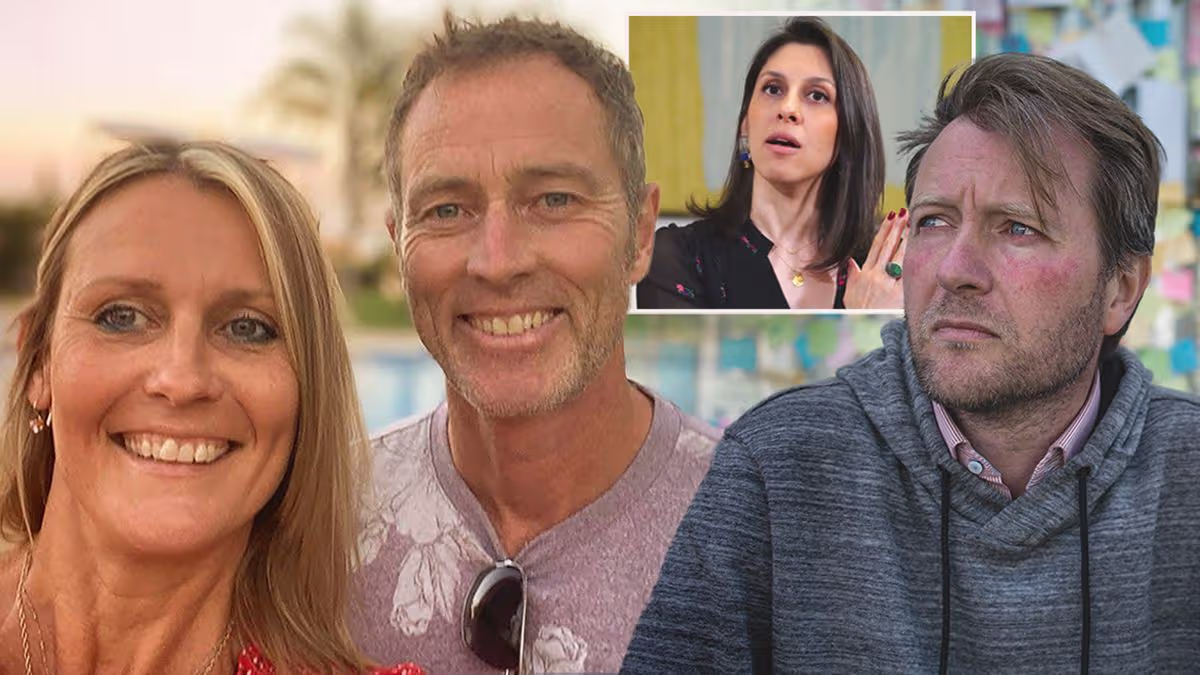
As Lindsay and Craig Foreman enter the third week of their hunger strike in Iran’s notorious Evin prison, Richard Ratcliffe tells the Mirror about his own experience undertaking his own dangerous and desperate strike
Richard Ratcliffe has revealed the gruelling consequences that hunger strikes have on the mind and body, as a jailed British couple reach a terrifying milestone in their starvation protest.
Lindsay and Craig Foreman, 53, from East Sussex, have been detained in notorious Iranian prisons for more than 500 days on espionage charges, after a ‘sham’ trial with no legal representation. The UK government say they are nothing but “innocent tourists,” but the parents are still languishing in jail – all while watching fellow inmates walk to their executions.
Earlier this month, their only slither of hope – phone calls with their family – were ripped away as a punishment for speaking out about the horror conditions inside Evin prison. Now the couple are on hunger strike in a extreme boycott to restore contact with their loved ones.
READ MORE: Children of British couple held in Iran hand in petition at Downing Street as parents spend 500 days in jailREAD MORE: Son of British couple locked in Iran prison admits he doesn’t know if they are alive in tragic update
Linday’s son Joe Bennett, 32, says one of the last things he heard his mum say was: “We are not very valuable as hostages if we’re dead, so they’d better open up a channel”.
The couple’s family has been left frantic as Craig enters the third week of his hunger strike. He will reach his 20th day tomorrow – a grim milestone that can prove deadly. From neurological symptoms to potential organ failure, the carpenter is risking a myriad of health issues in an attempt to be heard.
Richard, husband to Nazanin Zaghari Ratcliffe – who was held hostage in Iran for nearly six years – knows all too well what the couple are going through, having conducted his own 21 day hunger strike outside the Foreign Office in London in an attempt to get his wife released. The 50-year-old dad lives with permanent health damage as a result.
“I think every hunger strike is an act of desperation,” he tells the Mirror. “When you start, you often don’t know what it entails, or the impact it will have inside your body as well as on the outside world. You normally just start, because there is nothing else left.”
Explaining the toll it took on his body, Richard says: “The first couple of days were really tough. I was hungry and grumpy, and had all these strange headaches, and really wondered how I would manage. And then after about three days it got much easier, and I didn’t really feel hungry again. It started to get tougher again after about 10 days, but even then it wasn’t linear. Some days would be fine, some I felt terrible and weak, with no obvious reason.
“The main thing I noticed was how much slower I got, and how I really started to feel the cold. By the end I could never get my feet warm. They still now hurt in cold weather. Generally the risks of permanent damage are much more pronounced after 20 days, and they are exponential with each passing day.
“I got off lightly compared to others – cold feet, permanently red cheeks, and a prematurely aged digestive system. But the longer it goes on, the more the family will worry. Even if the middle of it, you block out all thoughts of the consequences, and live it day to day.”
He admits: “I could see the stress in my family’s eyes. Lots of people kept worrying and asking what I hoped to achieve. But the longer it goes on, the more you withdraw into yourself mentally as well as physically as the body starts to shut down. You tell yourself just a couple more days until breakthrough. After all that abuse and powerlessness, this is the moment of power.
“You lose the ability to discuss, and determination becomes stubbornness, driven on by a sense this is your only chance, and you can’t give up now. By about 20 days, I became almost completely unpersuadable. It caused huge distress among the family whenever they tried to discuss what comes next, or if this really is the hill to die on.”
Sharing his fears for Lindsay and Craig, Richard adds: “In Nazanin’s case, I felt that it was the only thing that would cut through the government’s drift and empty platitudes. They were just postponing the decisions they knew would get Nazanin home, and waiting for Iran to do the next horrible thing. This looks very similar in the Foremans’ case.”
“I don’t envy Linday’s son Joe. Her desperation will give way to something implacable, while his fears grow and grow, and the government continues to insist nothing can be done.”
In early May, the couple spoke out about the brutal conditions in their first interview since being detained. According to their family, the outcry was sparked by a ‘disheartening’ conversation Lindsay and Craig had with the British Ambassador to Iran, which left them believeing that British authorites saw no way to secure their release.
In retaliation for discussing their dire situation publicly, it’s understood that their phone cards were taken away as punishment. Joe says of the prison conditions: “It’s horrific. They’ve described witnessing executions, violent punishments and an environment built around fear and intimidation. As a family, it’s deeply traumatising to know that these are the conditions they are living in every day.
“You try to stay strong publicly because you have to keep campaigning and pushing forward, but privately it takes a huge emotional toll. Every phone call, every silence, every piece of news carries anxiety with it because you know the environment they’re trapped in.”
Joe tells us “it was devastating to hear,” his mum’s comment that they were not valuable hostages dead. “As a son, hearing your mum speak in those terms is something that stays with you. But I understand where that feeling comes from. They feel abandoned, isolated and unheard. They’ve spent well over a year trying to endure this with patience and dignity, and from their perspective they’ve reached the point where they feel they have nothing left to lose.
“That’s the reality of arbitrary detention. It strips people down psychologically as much as physically. Nobody wants this situation, least of all the family, but I also understand why they feel driven to such desperate measures.”
Lindsay is on day nine of her own hunger strike, Joe explains. “One of the cruellest aspects of this situation is that Lindsay and Craig have often been prevented from seeing or communicating with one another, so neither fully knew what the other was doing. Our understanding is that Lindsay initially began a hunger strike around the same time as Craig, but prison authorities persuaded her to stop.
“They reportedly showed her a letter they claimed was from Craig saying he was not on hunger strike and asking her not to continue. She only saw it briefly before it was taken away. A few days later she discovered that Craig had in fact been on hunger strike the entire time and realised she had been misled.
“That understandably left her feeling deeply hurt and betrayed again by the system around her, and from that point she became even more determined to continue.”
The Mirror understands the Foreign, Commonwealth & Development Office (FCDO) are working to get the couple’s phone cards reinstated and are working with the family. They advise against all travel to Iran.
A spokesperson said previously: “Since Lindsay and Craig’s arrest last year, Britain’s Ambassador to Tehran, diplomats and officials in London have been working to provide consular assistance. This includes the ambassador visiting them in prison and facilitating calls with their family back in the UK.”
Support the campaign to Free Lindsay and Craig by signing the petition, and donating to the GoFundMe