Every year, millions of Muslims make the ultimate journey of a lifetime to Mecca. But while modern pilgrims use high-tech apps and air-conditioned trains, the breathtaking story of the Hajj actually stretches back four millennia.
From a desperate mother stranded in a scorching desert to a historic final sermon, this is the extraordinary story of how the world’s most famous pilgrimage came to be.
A mother’s desert miracle (c. 2000 BCE)
The story begins with a heartbreaking test of faith. According to Islamic tradition, the Prophet Ibrahim (Abraham) was commanded by God to leave his wife, Hajar, and their baby son, Ismail, alone in the brutal, barren valley of Mecca.
Stranded in the blistering heat, a desperate Hajar sprinted between the hills of Safa and Marwah seven times searching for water. Just when all hope seemed lost, the Angel Jibril (Gabriel) scraped the earth—and a miraculous spring, the Well of Zamzam, gushed from the sand.
Years later, Ibrahim returned. Together with his son, they built the Kaaba—the iconic black cube structure—as the first house dedicated to worshipping one God, inviting the world to visit.
The age of idols
Over the centuries, the original spiritual message was lost. During a chaotic era known as the “Age of Ignorance,” pagan tribes took over Mecca and filled the sacred Kaaba with hundreds of idols. The holy pilgrimage was completely distorted, turning into a mix of pagan rituals, poetry competitions, and noisy trade markets.
The Islamic blueprint (632 CE)
Everything changed in 630 CE when the Prophet Muhammad reclaimed Mecca, destroying every single idol to rededicate the Kaaba to one God.
In 632 CE, just months before his death, the Prophet led tens of thousands of followers on The Farewell Pilgrimage. Here, he locked in the permanent blueprint for the Hajj. He personally demonstrated the exact rituals used today—including circling the Kaaba (Tawaf) and walking between the hills (Sa’i).
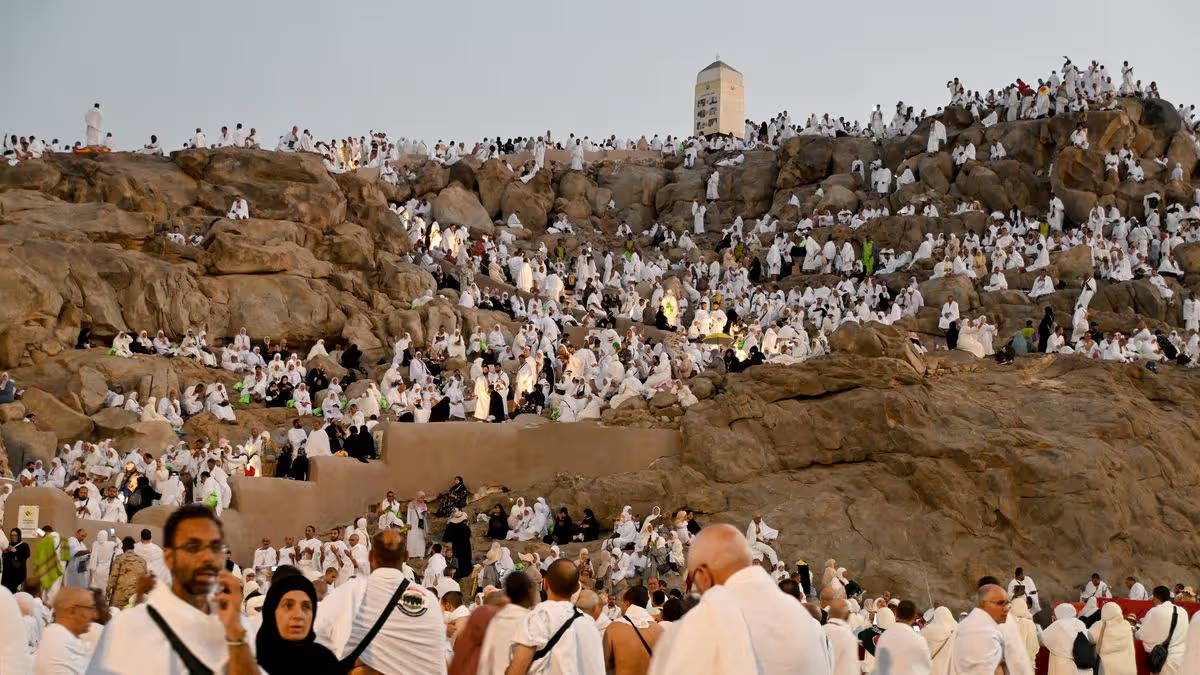
Standing before the crowd, he delivered a powerful final sermon demanding global unity and equality—establishing a sacred tradition that remains completely unchanged to this day.