We are told that Israeli diplomats have launched an intense campaign briefing Washington figures that financial relief will go straight into Hezbollah’s coffers – and Donald Trump’s advisers are becoming increasingly wary
As tensions escalate across the Middle East in the past 24 hours there is increasing strain between Israel and Washington, as previously predicted.
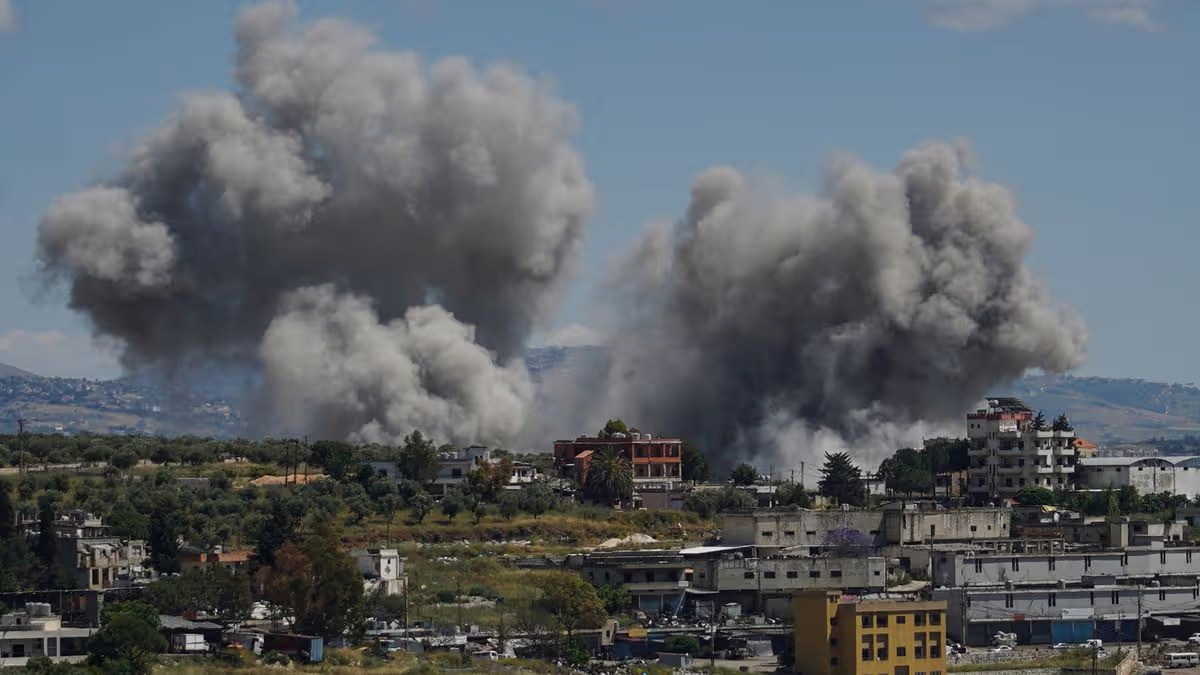
This against a violent backdrop of vicious Hezbollah – Israeli forces exchanges in recent hours and US attacks on southern Iran, prompting Tehran’s forces to respond in kind. It is hard to believe both wars are under what counts for a ceasefire in the conflict-battered region – whose fires Trump is desperate to claim to have put out rather than having poured petrol on.
Sources now suggest Washington is becoming increasingly wary of the Israeli Foreign Ministry’s warnings against offering sanctions and frozen asset relief to Tehran. We are told that Israeli diplomats have launched an intense campaign briefing Washington figures that financial relief will go straight into Hezbollah’s coffers. And President Donald Trump ’s advisers are becoming increasingly wary of the warnings, knowing any peace settlement on Iran will depend on financial relief.
One source says: “Trump’s people are being made more than aware of Israel’s concerns about this money going to Hezbollah and this might usually hold back the talks. But they are becoming increasingly nervous about taking this at face value because they know Trump has fallen for this kind of talk in the past.
“This is causing tension as Trump is demanding solutions to the Iran war and desperately needs his off-ramp soon.” This has long been a source of intense debate in Washington, as Trump further muddies the waters by insisting the entire Middle East embrace his Abraham Accords.


READ MORE: Clock ticking on Middle East ceasefire as spectre of conflict hangs over peace talks
These were key bilateral agreements brokered by the US intended to normalise diplomatic, economic, and security relations between Israel and Arab nations. Just as negotiators are wading through the swamp of demands from Tehran, in a bid to free up the Strait of Hormuz, Trump knows all of his choices present a humiliating nightmare.
Every solution to the Iran conflict, sanctions relief, freeing up frozen Tehran assets, long-term no-attack guarantees etc points towards a humiliating defeat for Trump’s war. The ever elusive prospect of America getting hold of Tehran’s enriched uranium is clearly the big prize, along with guarantees of no further nuclear programme.
All of which is a big demand, when Israel is insisting Tehran’s frozen assets should not be allowed to be released as they will end up in Hezbollah’s war chest for the future. All of Trump’s off-ramps are to varying degrees a defeat so he wants to overwhelm the narrative with some sense of a wider achievement of imposing a new normal on the Middle East with his insistence on embracing the Abraham Accords.
Nobody will fall for it, of course, but at least if several Gulf countries go for it, just to stop the war, this, he senses, might dilute the humiliation in the Iran climb-down. Israeli Prime Minister Benjamin Netanyahu, widely credited with having persuaded Trump to go to war with Iran along with his Mossad chief, does not want Hezbollah included in the deal. Trump may even have the brass neck to spin the crisis into an ‘I brought peace to the Middle East,’ claim.
Meanwhile Tehran is insisting Lebanon is included in any long-term guarantees of no war and this may turn out to be a major sticking point in the negotiations. Meanwhile Tehran is ratcheting up the tension on Trump, claiming that in response to the US attack on IRGC boats and missiles overnight, it shot down a drone.
The fugitive Ayatollah Motjaba Khamenei has warnedWashington with threats to its military as both ceasefires in Israel – Lebanon and US and Iran – have received hammer blows. Trump knows he’s beaten and is trying to hide it whilst emboldened Tehran is now flexing its muscles increasingly by the day.
The next few days could well see an increase in missile exchanges between all parties as ceasefires with outbreaks of violence are normalised.