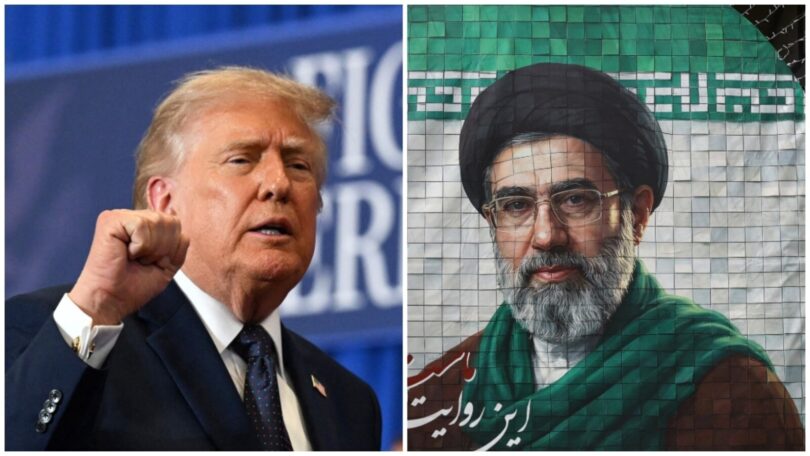
The conversation between Executive Editor Shishir Gupta and Senior Anchor Aayesha Varma on Hindustan Times’ “Point Blank” lays out a stark picture: the Middle East war may be pausing, but none of the core strategic questions around Iran, energy security, Israel’s future, or the Indo-Pacific balance of power have been resolved.
A “deal” with Iran that still isn’t a deal
US Secretary of State Marco Rubio’s visit to India comes with a bold claim: that an agreement between Washington and Tehran is “imminent,” and that America will not allow Iran to acquire nuclear weapons. Yet, as Gupta underlines, nothing is done until it is on paper – and by that standard, the deal remains elusive.
The fundamental problem is the gap between what each side wants. For President Donald Trump, leading with the “Make America Great Again” agenda, any arrangement perceived as softer than Barack Obama’s 2015 nuclear deal would look like a strategic defeat, particularly on Iran’s nuclear programme and its behaviour in and around the Strait of Hormuz. For Iran, the goal is precisely the opposite: to keep its nuclear leverage and its ability to weaponise choke points like Hormuz without conceding on core security interests.
War avoided, objectives unmet
Gupta notes that the immediate danger of a full-scale war has receded; “nobody wants to fight really” after months of escalation in the Gulf. But the reduction in war risk has not translated into the achievement of Washington’s original military aims.
Two key objectives drove the US–Israel posture:
- The “nuclear defanging” of Iran – forcing Tehran to surrender its enriched uranium and back off from the weapons threshold.
- Ensuring freedom of navigation through the Strait of Hormuz – the artery of global oil supplies.
On both fronts, the outcome is ambiguous at best. Sanctions relief, restored oil exports for Iran, and broader economic normalisation – what Gupta calls “part two” of the process – all hinge on a credible settlement of “part one”: the nuclear question, followed by firm arrangements around Hormuz. Those conditions have not been met, even as rhetoric about an imminent deal grows louder.
Why India needs clarity, not ambiguity
For India, the stakes are brutally clear and mostly economic. New Delhi is not invested in the ideological framing of victory or defeat; it wants lower oil prices and predictable energy flows.
Gupta stresses that India’s “basic interest is purely that the oil prices go down,” because elevated crude is already “severely affecting the economy.” Unlike China, which can tap multiple alternative sources and has greater leverage in global energy markets, India faces sharper constraints in securing oil, LPG and LNG at affordable rates. That is why New Delhi is rooting for a concrete, enforceable deal between the US and Iran, and for peace across the Gulf so that regional states are not directly targeted by Tehran.
Energy security here is not an abstract concept; it ties directly to inflation, fiscal space, and the broader stability of the global economy. A durable arrangement in the Middle East would help restore some predictability, which India views as essential for its own growth trajectory.
The danger of a “nebulous solution”
A key theme in the discussion is the danger of what Gupta calls a “nebulous solution” – a ceasefire or partial understanding that allows each side to declare victory, without resolving the underlying issues.
Trump, he notes, could claim he “polarised Iran and won the war,” while Iran can boast that it stood up to “the biggest power in the world for nearly four months,” kept the Strait of Hormuz effectively locked, and avoided regime change. Each can spin the outcome as a triumph of narrative. But that does not make the region safer.
The real risk appears on the day American forces step back from the Gulf of Oman and the northern Arabian Sea. Gupta warns that Iran is then likely to “go after the Gulf states,” whom it holds responsible for its ordeal, regardless of the formal justifications. At the same time, Iran with uranium enriched up to 60% retains the capacity to assemble a “dirty bomb” relatively quickly, keeping Israel and the US under permanent nuclear shadow.
In parallel, the Ukraine–Russia war has re-erupted with new intensity, with Ukrainian strikes drawing Russian ballistic missile retaliation on Kyiv. In such a volatile global environment, Gupta argues, a hazy, half-baked Middle East settlement is “not a deal” – and it certainly does not strengthen Trump’s standing with his MAGA base at home.
Iran’s hardline spectrum and its idea of victory
Part of the complexity lies in Iran’s internal politics. Gupta describes the Islamic Republic as a “hardline regime” with multiple layers: the Supreme Leader at the apex; then figures like Parliament Speaker Mohammad Bagher Ghalibaf; the foreign minister; self-described “moderates”; and the Islamic Revolutionary Guard Corps (IRGC). All of them, however, are variations on a hardline continuum.
For this ecosystem, victory does not mean economic normalisation or Western acceptance. It means not having “yielded to America, the Great Satan.” As long as Tehran can claim it has preserved its nuclear leverage, its regime, and its regional posture, it can present the outcome as a strategic win at home – even if sanctions relief and economic revival remain partial.
Rubio in Delhi: Recalibrating a critical relationship
Against this backdrop, Marco Rubio’s presence in India carries more than symbolic weight. This is his first visit to India as US Secretary of State, and he is in India for four days – a signal that Washington continues to see the relationship as “a huge” and globally watched partnership.
Gupta points out that there have been “misunderstandings” and constraints on both sides over bilateral issues, but Rubio’s visit creates space to “at least hear each other out,” even if no immediate breakthroughs are achieved. The agenda is wide:
- Immigration and visa concerns
- Pakistan and cross-border terrorism
- China’s assertiveness
External affairs minister S Jaishankar has articulated India’s position crisply: “If you are MAGA, we are India First.” That framing captures the current phase – one in which convergences are leveraged pragmatically, but New Delhi is explicit about strategic autonomy.
Rubio’s discussions also come just ahead of a likely meeting between Trump and Prime Minister Narendra Modi at the G7 summit in Paris, underscoring that the top political leadership on both sides is directly invested in the trajectory of ties.
Quad’s role: Indo-Pacific, not Hormuz
One natural question is whether the Quad – involving the US, India, Japan, and Australia – can play any role in the Strait of Hormuz crisis. Gupta is categorical: Quad is restricted to the Indo-Pacific and will not be the vehicle for managing Hormuz; that remains a responsibility for the US and its Middle Eastern allies.
Quad’s primary focus areas include:
- Maintaining freedom of navigation in the South China Sea, where the PLA Navy is expanding and pressure on Taiwan is rising
- Building alternative global supply chains to reduce excessive dependence on any one country
- Coordinating on humanitarian assistance, disaster relief, and keeping critical sea lanes – including emerging northern routes – open
Gupta cautions against oversimplifying Quad as either an anti-China alliance or a mere “talk shop.” It is, he says, “a work in progress,” creating a strategic architecture in which four democracies can “hold each other’s hand” and push for stability in the Indo-Pacific as other powers try to expand their naval reach beyond traditional boundaries.
The upcoming foreign ministers’ meeting in Delhi, with Japan’s Motegi, Australia’s Penny Wong, India’s Jaishankar and America’s Rubio in attendance, will be another step in shaping this framework. The implicit message – that freedom of navigation is non-negotiable, whether in the South China Sea or, by extension, other critical choke points – is one that many in the global South, including India, have a direct interest in reinforcing.
Israel’s existential red line
Varma raises the question of Israel’s position in a scenario where both Washington and Tehran can claim victory. Gupta’s answer is blunt: Israel cannot accept any settlement that leaves Iran’s nuclear threat intact.
Prime Minister Benjamin Netanyahu has conveyed to Trump that the war is “not over” unless Iran gives up its enriched uranium and its ability to move toward a nuclear weapon. For Israel, this is not a bargaining chip but a matter of survival, given that Iran has repeatedly declared its ambition to destroy the Jewish state.
The maximalist Israeli demand would be for Iran to hand over its enriched uranium to either the US or the International Atomic Energy Agency (IAEA), and pledge not to pursue a nuclear weapon for a defined period – a decade or two. Anything short of a serious curtailment of Iran’s nuclear capabilities is, in Netanyahu’s view, a non-solution that Israel cannot endorse.
In other words, any “nebulous” ceasefire or political deal that sidesteps the nuclear core will not only leave the Middle East unstable and oil markets jittery; it will also leave Israel feeling exposed and abandoned, with incentives to act unilaterally.
Taken together, the conversation paints a world where headlines about an “imminent deal” mask a much messier reality. The real struggle now is not over who can claim victory, but over whether the compromises struck in back rooms will be sharp and credible enough to prevent the next crisis from being worse than the last.