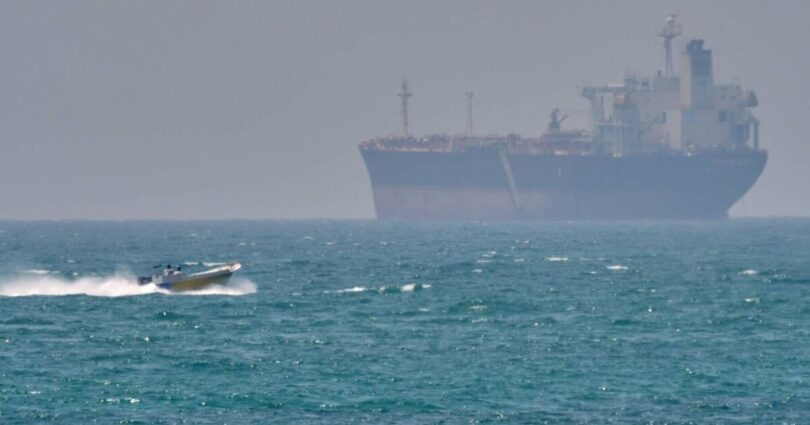
Qeshm island was once a tourist hotspot (Image: AP)
A network of tunnels off Iran’s coast contains a “mighty arsenal of rockets, bunkers, and huge air-raid shelters” designed to defend the nation – and “ignorant” Donald Trump is reportedly failing to take them seriously.
Qeshm Island spans 558 square miles across the entrance to the Strait of Hormuz. Once a tourist destination famed for its lush mangroves and the world’s most spectacular salt caves, Qeshm has been transformed into a fortress, or “missile city”, now at the heart of an escalating global economic crisis and potential World War Three scenario.
Retired Lebanese Brigadier-General Hassan Jouni, a military and strategic expert, told Al Jazeera that Qeshm is home to a “missile city” housing an array of “striking Iranian capabilities”.
The subterranean networks have been established to control the Strait of Hormuz, though precisely what lies within these tunnels remains shrouded in secrecy.
READ MORE: Trump branded ‘pathetic’ as Vladimir Putin arrives in Beijing
READ MORE: Iran issues chilling ‘war beyond the region’ threat to US – ‘Reduced to ashes’

The IRGC released map showing the area of the Hormuz strait it says Iran controls (Image: undefined)
Security expert Professor Anthony Glees told The Daily Star: “There is no reason at all to doubt that Iran has turned centuries old salt mines and caves on the Island of Qeshm in the Strait of Hormuz into a mighty arsenal of rockets bunkers and huge air-raid shelters to protect Iran’s missiles and drones and its Islamic Revolutionary Guard Corps (IRCG) in the event of a US boots on the ground attempt to unlock the Strait.”
Glees drew parallels with Hamas’ tunnel networks beneath Gaza. He said: “That Iran, Hamas’s paymasters, might have learnt from them about the importance of tunnel warfare seems to have escaped the US military planners as they devised their ill-thought scheme to destroy the regime of the ayatollahs and IRGC.”
While Trump promises a “very good chance” of securing an agreement with Tehran, explosions were reported on Tuesday. Local media suggested the sounds were from neutralising unexploded enemy ordnance, according to The Times of Israel, reports the Daily Star.
On 7 March, US airstrikes hit a vital desalination facility on the island. Tehran branded the strike a “flagrant crime” against civilians, as it severed freshwater supplies to 30 nearby villages. Glees argued that Iran’s assets, including Qeshm, undermine Trump’s claims of victory in this conflict.
Pete Hegseth, US Defence Secretary, told a Pentagon briefing in March that the US was “decimating” Iran. Trump has echoed this assertion. In April, Hegseth said: “Operation Epic Fury decimated Iran’s military and rendered it combat ineffective for years to come.”

Negotiations between the US and Iran are ongoing (Image: Getty Images)
Glees suggested the term decimated may not carry the intended meaning. He told the Daily Star: “By ‘decimated’, ignorant Trump meant ‘obliterated’.
But ‘decimated’ actually means ‘one tenth’, which is more or less accurate. About 90% of what Iran has to throw at American forces should they decide to try to take the Strait by force remains intact, and useable.
“Iran still has 30 out of 33 missile firing sites along the Strait of Hormuz, fully functioning. What’s more, 75 per cent of its mobile launchers are in good order and 90 per cent of its underground missile stocks undamaged.
“The broad context here is Iran has not lost the war that Trump and Netanyahu started, and one which neither of them is actually winning.
“Whilst Trump claims all he wants from the war is that there should be ‘NO NUCLEAR WEAPONS FOR IRAN’ he’s also told us that he’d obliterated Iran’s nuclear capabilities last June in Operation Midnight Hammer. Both these things can’t be true.

Glees takes issue with Trump’s claims (Image: undefined)
“Trump and Netanyahu have managed to get themselves and most of the rest of the world, including China, into a desperately perilous situation.
“It’s like we’re locked into a safe for which only Iran holds the combination that could extricate ourselves, and out of which Iran – so far – is not ready to free us.”