
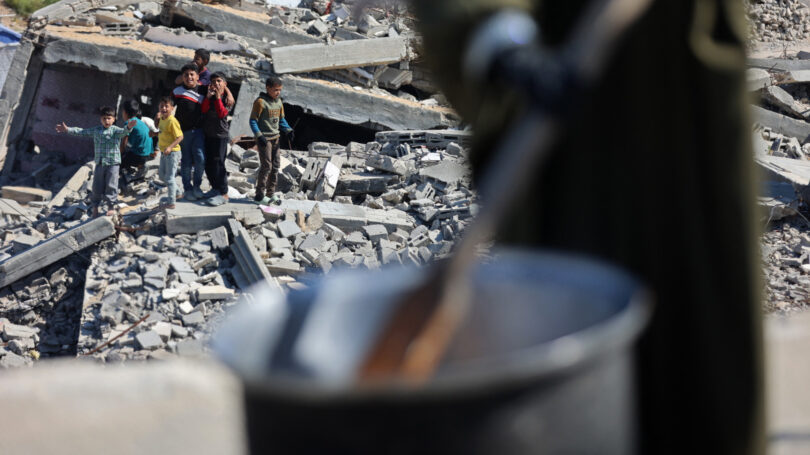
World Central Kitchen (WCK) has cut its hot meal distribution in Gaza by half, citing soaring food and fuel costs linked to the wider fallout from the US-Israeli war on Iran in February.
The organisation, the largest provider of hot meals in the Palestinian enclave, warned that escalating operational costs have made it impossible to maintain previous levels of aid, NPR reported on Thursday.
Daily meal production has fallen from around one million meals to 500,000.
The cuts come as Palestinians in Gaza remain heavily dependent on aid after more than two years of Israeli attacks and blockade, which have devastated the enclave’s food sources and economy.
Earlier this month, WCK said “financial pressure” was already forcing it to scale back operations.
CLICK FOLLOW: TO FOLLOW US
Sign up to get the latest insights and analysis on
Israel-Palestine, alongside Turkey Unpacked and other eSPORTY
“We will still be delivering hundreds of thousands of hot meals every day to families in need and maintaining one of the largest food relief operations anywhere in the world, but at a reduced level,” the group said.
It added that, while it had at times reached a peak of one million meals a day, its capacity could not sustain that output indefinitely.
“We specialise in emergency food relief, not long-term food security. The long-term responsibility of feeding Gaza cannot rest on the shoulders of one organisation alone,” it said.
“The people of Gaza have lost their homes and their economy. The world must step up – not just talk about the plight of the Palestinians. Governments, institutions and international partners need to commit the sustained, secure funding that this crisis demands.”
It remains unclear whether other aid organisations will be able to fill the gap.
The United Nations has warned that its agencies are also facing funding shortages and rising costs, while one in five people in Gaza is now surviving on just one meal a day.
Gaza has been pushed into severe food insecurity and a humanitarian crisis by Israel’s genocide since October 2023.
A US-backed ceasefire announced this past October was intended to halt the war and lift the siege, allowing flows of aid, food and medicine into the territory.
However, Israel has consistently breached the agreement and largely maintained the blockade, keeping fuel, food and medical supplies critically scarce.
Air strikes and shelling have also continued, with more than 800 people killed since the ceasefire. Overall, Israeli forces have killed more than 72,700 people since October 2023, with more than 172,000 others wounded.