The peace deal between the United States and Iran may be announced soon, with both US President Donald Trump and Secretary of State Marco Rubio confirming the progress made in talks.
Speaking at a press conference in New Delhi, India, Marco Rubio said “good news” is expected soon on the Iran situation.
These remarks from Rubio come after Trump took to Truth Social to announce that the peace deal with Iran has been “largely negotiated.”
Follow LIVE updates on the US Iran war
“Final aspects and details of the Deal are currently being discussed, and will be announced shortly. In addition to many other elements of the Agreement, the Strait of Hormuz will be opened,” Trump wrote further.
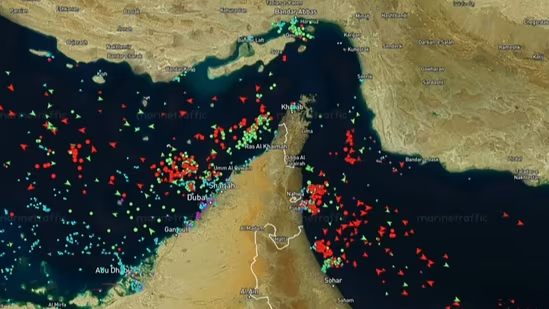
The key sticking points in the peace negotiations between Washington and Tehran have been its nuclear programme and control over the Strait of Hormuz, which continues to be under a blockade by the US and Iran.
What would be inside the peace deal?
As per an Axios report, the deal will set a 60-day truce in place between the United States and Iran.
While Trump has stated that the first phase will involve the reopening of the Strait of Hormuz, Iran has stated that any mechanism regarding its reopening should be agreed between Iran, Oman and other bordering countries.
The Strait of Hormuz, which is a key passage for around 20 per cent of the world’s oil and gas shipping, was closed after the US and Israel launched their war against Iran on February 28.
Despite a ceasefire on April 8, the key route remains disrupted, especially after the US announced a naval blockade of Iranian ports on the strait. In response to this, Iran resumed its blockade.
With the deal expected to be announced shortly, European leaders have welcomed the progress towards an agreement.
Iranian officials have also confirmed that a draft agreement is in place, which also guarantees the end of the US’ naval blockade on Iranian ports.
According to Fars news agency, Washington has agreed to partially release Tehran’s frozen funds under international sanctions.
“According to this draft, passage through the Strait of Hormuz would return to pre-war levels under Iranian management,” reported Fars news, adding that the sanctions on oil, gas and other petrochemicals will also be temporarily lifted so that Iran can sell its products.
Nuclear dispute still a sore point
Iran’s nuclear programme continues to remain a sore point between Tehran and Washington. Citing sources familiar with the matter, CNN reported that the agreement between the US and Iran will include a commitment from Tehran not to pursue nuclear weapons.
Sources added that Iran may also enter negotiations to give up its stockpile of enriched uranium. However, Iranian officials have rejected this.
Sources close to the matter on the Iranian side told Reuters that Tehran has not agreed to give up its stockpile.
“The nuclear issue will be addressed in negotiations for a final agreement and are therefore not part of the current deal. There has been no agreement over Iran’s highly enriched uranium stockpile to be shipped out of the country,” the source told Reuters.
Furthermore, Iranian President Masoud Pezeshkian has stated that Tehran is not seeking nuclear weapons.
“We are ready to reassure the world that we are not seeking nuclear weapons,” Pezeshkian said, according to local media reports, adding that Iran “will not compromise” on its honour and dignity.
What about Lebanon?
Iran has repeatedly stated that in order for a deal with the US, all hostilities in the region must come to an end, including Israel’s ongoing bombardment of Lebanon.
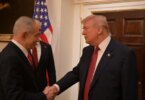
While sharing that the peace deal with Iran has been “largely negotiated,” Trump added that he held a call with Israeli Prime Minister Benjamin Netanyahu, which “went very well.”
Speaking to CNN, Israeli officials stated that Trump told Netanyahu that he supports Israel’s wish to “maintain freedom of action against threats on all fronts, including Lebanon.”
As uncertainty remains over the cessation of hostilities in Lebanon, state media reported that Israel struck the country’s south on Saturday, where fighting has continued despite the extension of the ceasefire.
Since March 2, the Lebanese health ministry has stated that Israeli actions have killed over 3,000 people and wounded around 9,500.