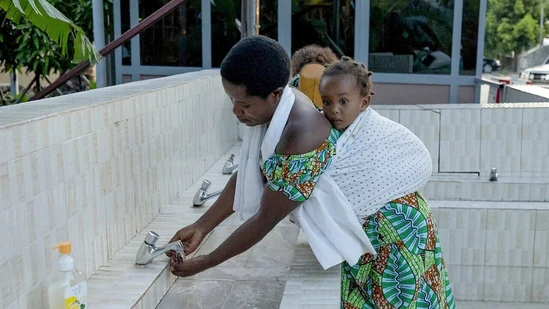
EBOLA IS A terrifying virus that kills 30-50% of the people it infects. Fortunately, the world has been getting better at fighting it. Since 2015 vaccines for Zaire, the most common Ebola strain, have limited its spread whenever hotspots emerged in Africa. Genetic sequencing of that strain has allowed rapid testing, which makes contact-tracing easier. African governments, helped by NGOs, have learned how to triage and isolate patients. Crucially, they have also won the trust of locals, who are horrified by haemorrhagic fevers.
EBOLA IS A terrifying virus that kills 30-50% of the people it infects (Reuters)
But the latest Ebola outbreak is caused by a rarer strain, Bundibugyo, for which there is no licensed vaccine or rapid test. For months it swept undetected through eastern Congo. Aid cuts meant fewer health workers were watching out.
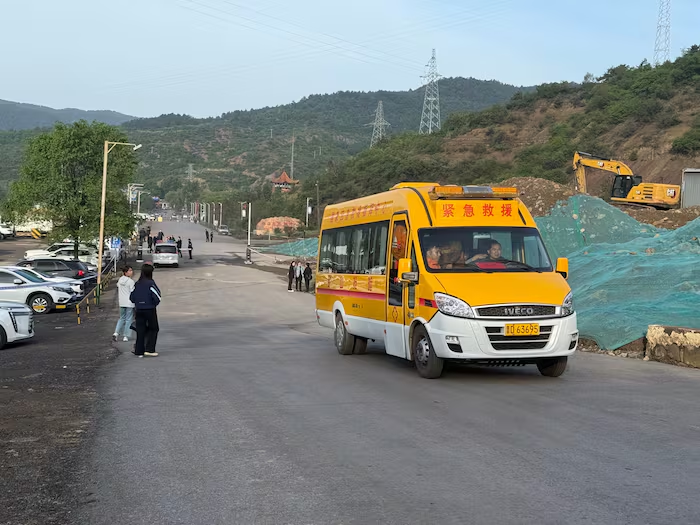
On May 17th the UN’s World Health Organisation (WHO) called the outbreak a public-health emergency of international concern. By May 20th the tally of almost 600 suspected cases and 139 deaths was suggesting that this epidemic will be the worst Ebola emergency since at least 2018, when more than 2,000 people died in the same region. To avoid such a grim death toll—let alone that of 2014-16, when 11,000 perished in west Africa—urgent, co-ordinated action is needed. So far it has been lacking.
To win this fight, scientists need incentives to swiftly make and deploy a vaccine. Donors, especially governments in the rich world, should promise now to buy ample supplies of a vaccine as soon as it is authorised, to encourage drug firms to work faster. On May 20th the WHO said two vaccines are being developed that show promise against the Bundibugyo strain. Although it will be months before either jab is ready, such efforts should be the priority.
Even with a vaccine, stopping Ebola requires co-ordination in different countries. In the past America, through its Centres for Disease Control and Prevention (CDC) and aid spending, would have led this effort. Despite severe cuts under the Trump administration, the CDC still has field offices in Congo and neighbouring Uganda, so it will play a role. But the most important institutions will be the WHO and Africa CDC, which is independent of its American namesake. Africa CDC did well during the covid-19 pandemic and can do so again if given enough outside expertise and funding. Humanitarian NGOs reduced their Ebola-prevention measures last year in Ituri, the province where the outbreak emerged, because of aid cuts. They urgently need funds to pay for protective gear and to recruit more health workers.
All this is made much harder by local politics. Eastern Congo is an ideal place for an epidemic to thrive. The state barely exists, and is often predatory where it does. More than 100 militias terrorise the population. Much of North and South Kivu, two provinces where Ebola has been detected, is under the control of an armed group, M23, that says it wants to topple Congo’s national government. Both the government and the militias have a sorry record of prioritising their own interests above the lives of their compatriots. M23 has resisted calls by NGOs to reopen airports in its territory to let in humanitarian supplies; it accuses the Congolese government of making things worse by keeping banks closed. Mediators, including America and Qatar, should tell both sides to let in supplies and workers; they should also press Rwanda, M23’s patron.
This is Congo’s 17th Ebola outbreak in 50 years. It will destroy both lives and livelihoods before it is contained. Fortunately, the virus is not airborne, so it cannot spread as fast as covid-19. Even so, it is a reminder of the need to prepare for the next pandemic. Vaccine research, the genomic sequencing of viruses and disease surveillance are the world’s immune system, protecting it against wider, deadlier outbreaks. When that immunity is weakened, disaster beckons.
Subscribers to The Economist can sign up to our Opinion newsletter, which brings together the best of our leaders, columns, guest essays and reader correspondence.