A senior UN official said Thursday that a return to full-scale war in the Gaza Strip would have “disastrous consequences” for civilians, while cautioning that worsening violence and illegal Israeli settlement expansion across the occupied Palestinian territory are deepening instability, Anadolu reports.
“As I brief you today, the situation across the Occupied Palestinian Territory is increasingly precarious,” Ramiz Alakbarov, UN deputy special coordinator for the Middle East Peace Process, said at a UN Security Council session to discuss the latest report of the Board of Peace for Gaza.
He said tensions in the occupied West Bank, including East Jerusalem, continue to intensify as “settlement expansion, settler-related violence, and incitement continue to drive tensions.”
Turning to Gaza, Alakbarov said momentum generated by the ceasefire has weakened amid delays in implementing UN Security Council Resolution (UNSCR) 2803 and continued violence.
“In Gaza, delays in the implementation of UNSCR 2803, alongside daily violence and a continuing humanitarian crisis, have replaced the early momentum following the ceasefire,” he said.
As discussions continue advancing to the second phase of the ceasefire deal, he warned against growing calls for renewed hostilities.
“As talks on advancing to Phase II of the ceasefire continue, calls are emerging in some circles for a resumption of widespread hostilities. This would have disastrous consequences for the population of Gaza,” he said. “Let me be clear: the people of Gaza cannot take more war. This scenario must be avoided at all costs.”
READ: Italy requests EU to sanction Israeli minister Ben-Gvir over treatment of Gaza flotilla activists
Alakbarov emphasized that the implementation of Resolution 2803 remains urgent. “The implementation of Resolution 2803 cannot wait. All elements of the Comprehensive Plan are interconnected and must be implemented in full.”
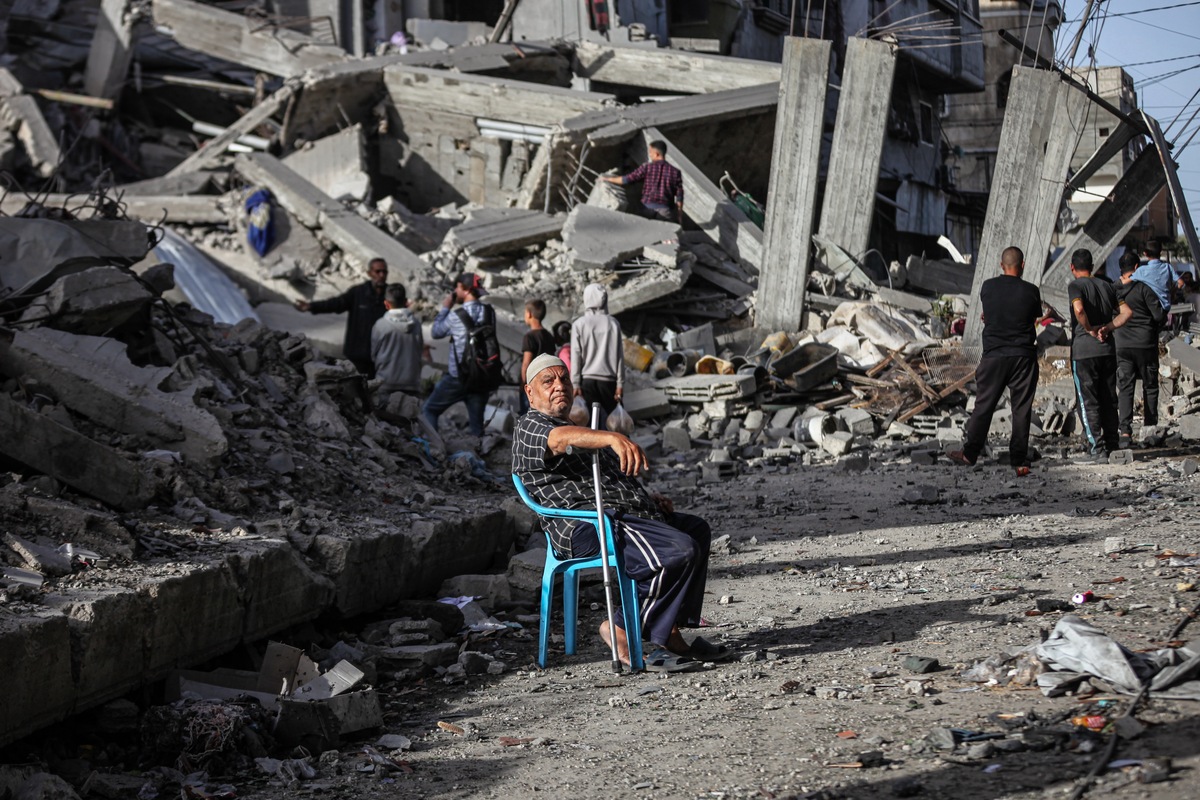
He said civilians in Gaza continue to face uncertainty as Israeli strikes occur “on a nearly daily basis, killing dozens.”
Despite limited improvements, humanitarian conditions remain severe, according to Alakbarov.
“The reopening of Zikim crossing in mid-April and a limited increase in the volume of aid are welcome improvements. However, humanitarian operations remain heavily constrained by limited operational crossings, restrictions on critical humanitarian items that Israel considers ‘dual-use,’” he said.
Alakbarov said he witnessed devastation and resilience among Palestinians during a recent visit to Gaza.
Addressing the occupied West Bank, Alakbarov said Israeli authorities advanced plans for more than 640 housing units in Area C and over 1,620 units in the settlement of Pisgat Zeev in East Jerusalem during the reporting period.
He also said five Palestinians, including two children, were killed by Israeli forces in the West Bank, while 156 others, including 20 children, were injured by Israeli forces or Israeli occupiers.
“Throughout the West Bank, the frequency and severity of settler attacks have significantly increased in 2026, with some 220 Palestinian communities having faced attacks, which are increasingly leading to the displacement of entire communities,” he said.
“We cannot ignore the current alarming trends or their dire implications for Palestinians, Israelis, and the entire region. This is the moment to take urgent steps to reverse these dangerous dynamics,” he added.