The World Health Organization (WHO) has acknowledged that the Ebola outbreak began “a couple of months ago”, after facing sharp criticism from the US. The US secretary of state, Marco Rubio, claimed yesterday (May 19) that the United Nations agency had been “a little late” in detecting the deadly disease.
Rubio told reporters: “The lead is obviously going to be CDC [Centers for Disease Control] and the World Health Organization, which was a little late to identify this thing unfortunately”. At a WHO press conference this morning, a reporter asked how long Ebola had been spreading before it was detected and whether the organisation had any response to criticism from Rubio. Anais Legand, an Academic Researcher from WHO, replied: “Surveillance starts within the communities and starts with the health organisations in every single country.”
She continued: “As soon as WHO was aware, support was provided to DRC to investigate as soon as possible and this ended with the confirmation late last week.
“Investigations are ongoing to assert when and where exactly this outbreak started, given the scale we are thinking it started probably a couple of months ago. But the investigation is ongoing and our priority is to cut the transmission chain.”
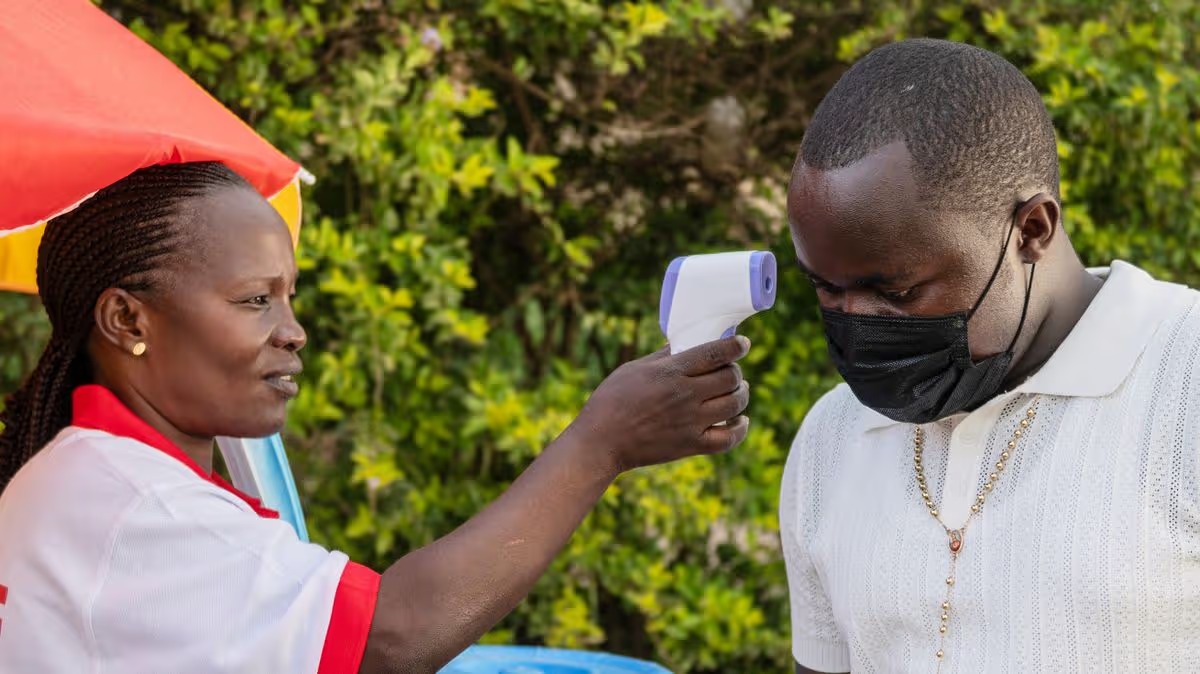
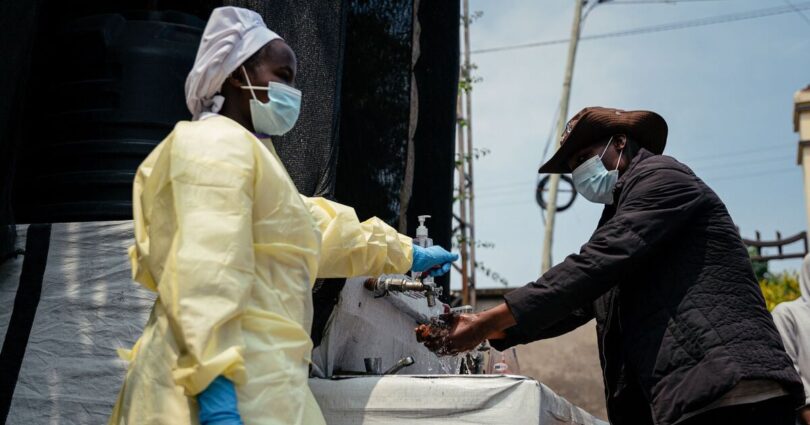
During the briefing, the head of WHO also warned that the number of suspected cases has hit nearly 600 with over 100 suspected dead.
WHO Director-General Tedros Adhanom Ghebreyesus said so far, 51 cases have been confirmed in the Democratic Republic of the Congo (DRC) in the northern provinces of Ituri and North Kivu provinces, “although we know the scale of the epidemic is much larger”.
He said Uganda has also told the UN health agency of two confirmed cases in Uganda’s capital, Kampala. “Beyond the confirmed cases, there are almost 600 suspected cases and 139 suspected,” he said. “We expect those numbers to keep increasing.”
He added that the risk of global spread of the Ebola outbreak in DRC and Uganda is high at national, regional levels but low at the global level.
The new outbreak is caused by the rare Bundibugyo version of the virus, this strain has no approved therapeutics or vaccines.
The Centers for Disease Control and Prevention confirmed Monday the patient had tested positive while in the Democratic Republic of Congo. The American national has now been transferred to Germany.