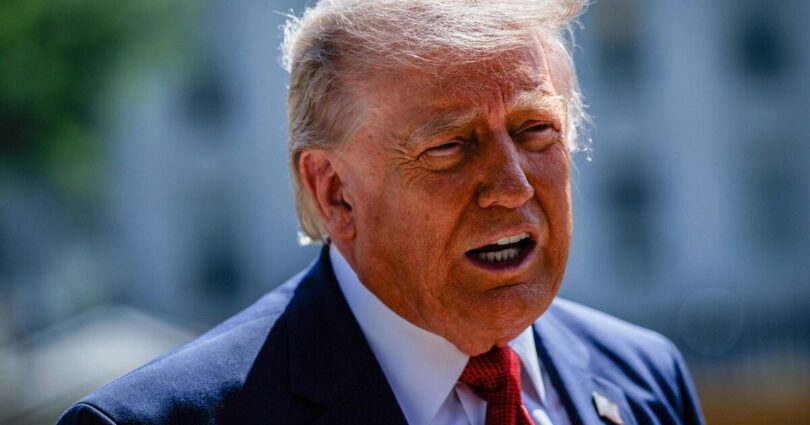
Trump previously complained about NATO’s unwillingness to participate in securing the Strait (Image: Getty)
NATO is reportedly weighing up its military options to support ships travelling through the Strait of Hormuz should the vital waterway remain shut beyond early July.
The proposed military deployment is understood to have support from a handful of NATO member states, although it would need unanimous approval from all allies before proceeding. Bloomberg first broke the story, quoting an unnamed source with knowledge of the discussions.
“First, the political direction is determined, and then formal planning takes place,” said Alexus Hrynkiewicz, Supreme Allied Commander Europe, when asked about this possibility during a Tuesday briefing. “Am I thinking about it? Absolutely. But there’s no planning yet until the political decision is taken.”
Such a move would mark a change in NATO’s stance towards the Iran conflict. Up until now, the alliance has insisted that any involvement would only follow a ceasefire and the formation of a broad coalition including many non-NATO countries.
President Donald Trump revealed on Tuesday that NATO and the majority of allied nations have rebuffed his calls for assistance in securing the Strait of Hormuz, voicing his frustration at his failure to drum up support for the conflict in Iran.
The President has been pressing allies to help safeguard the vital waterway in order to ease the strain on regional oil shipments, complaining the US is not receiving help “despite the fact that we helped NATO so much.”
Read more: Trump gloats after scientists say apocalyptic climate scenario is ‘implausible’
Read more: Trump issues Iran nuclear threat warning about major global city
Trump has sought to make the case that preventing Iran from obtaining a nuclear weapon is firmly in his allies’ interests.
“You would have thought they would have said, ‘We’d love to send a couple of minesweepers.’ That’s not a big deal,” Trump stated. “It doesn’t cost very much money. But they didn’t do that.”
The global economic outlook continues to deteriorate, with the closure of the Strait triggering a steep rise in energy costs and weakening growth projections in major economies.
Trump expressed frustration that NATO allies, who have benefited from tens of billions of dollars in U.S. support to help Ukraine fend off Russia’s invasion, have been reluctant to reciprocate by supporting U.S. and Israeli attempts to neutralise Iran, a nation that has represented a threat to the Middle East and beyond for years.
He also highlighted that the U.S. has spent hundreds of billions of dollars strengthening European and Asian defences. Trump’s relationship with NATO has been stormy since he assumed office last year.

Alexus Hrynkiewicz, the Supreme Allied Commander of Europe (SACEUR), is ‘thinking’ about troops (Image: Getty)
Trump regards the post-World War II security alliance as having become overly dependent on American backing, consistently pushing member states to boost their defence expenditure and even casting doubt on U.S. commitment to the mutual defence clause in NATO’s founding treaty, which declares that an attack on one member is deemed an attack on all.
While NATO functions as a defensive alliance and has indicated it has no intention of becoming involved in the conflict with Iran, the organisation did sustain a military presence in Afghanistan for 18 years and executed an air campaign in 2011 that assisted in overthrowing Libya’s late leader, Muammar Gaddafi.