
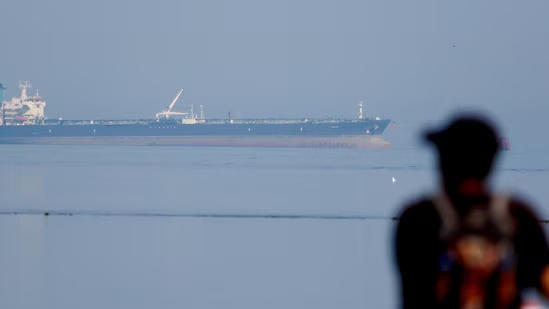
US Treasury Secretary Scott Bessent said the Treasury would extend for 30 days a sanctions waiver allowing trade in Russian seaborne oil after several countries requested more time to continue purchases.
Washington had introduced the exemption to ease oil supply concerns and rising prices after Iran closed the Strait of Hormuz during the US-Israeli offensive, though the move has done little to ease gasoline prices in the United States.
“US Treasury is issuing a temporary 30-day general license to provide the most vulnerable nations with the ability to temporarily access Russian oil currently stranded at sea,” said US Treasury Secretary Scott Bessent.
“This extension will provide additional flexibility, and we will work with these nations to provide specific licenses as needed. This general license will help stabilize the physical crude market and ensure oil reaches the most energy-vulnerable countries. It will also help reroute existing supply to countries most in need by reducing China’s ability to stockpile discounted oil,” he added.
Second waiver by US Treasury
The move marks the second time the Treasury has allowed the sanctions waiver to expire before extending it again.
First introduced in March, the waiver aimed to ease oil supply disruptions and curb price spikes triggered by the US-Israeli attacks on Iran by allowing sanctioned Russian oil and petroleum products stranded on tankers to re-enter the market.
While the measure has had little impact on lowering oil prices, it has benefited India.
India emerged as one of the main beneficiaries of the sanctions waiver. Reports citing government officials said the country ordered around 30 million barrels of Russian oil after the exemption came into force.
Indian refiners, including Reliance Industries, had earlier reduced purchases from Russian energy firms such as Rosneft and Lukoil following US sanctions on the companies.