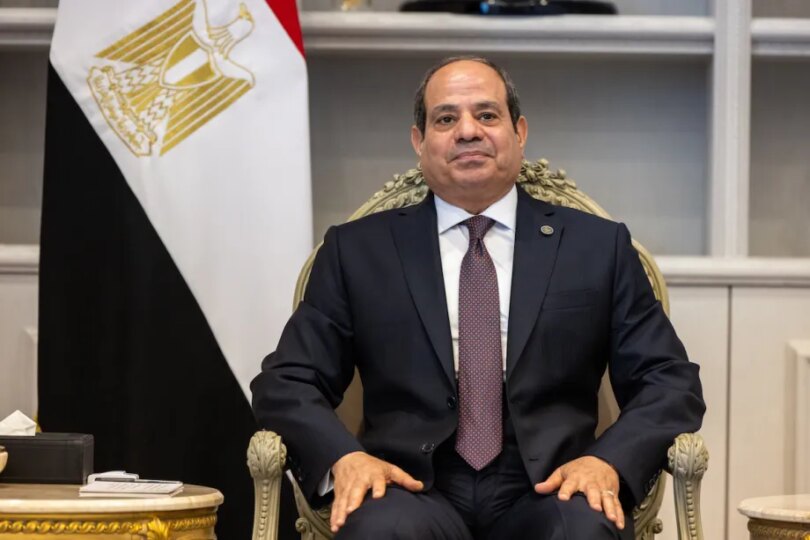
Egyptian President Abdel Fattah al-Sisi inaugurated the “New Delta” agricultural development project on Sunday in northwestern Egypt with total investments estimated at 800 billion Egyptian pounds (approximately $15 billion), Anadolu reports.
The project aims to enhance food security and achieve self-sufficiency in strategic commodities, according to Egypt’s State Information Service.
The project extends across desert hinterlands, linking the governorates of Beheira, Giza, and Matrouh in northwestern Egypt.
The targeted area of the project spans 2.2 million feddans, equivalent to around 15% of Egypt’s current agricultural land, making it “the largest horizontal agricultural expansion in the history of modern Egyptian agriculture,” according to the state body.
The project’s infrastructure includes the construction of 19 major pumping stations to transport water against the natural geographical slope deep into the desert, as well as 150-kilometer (93-mile) channels to transfer treated agricultural drainage water from the Nile Delta region to the New Delta area.
READ: UAE condemns hijacking of oil tanker off Yemen, expresses full solidarity with Egypt
The project has also been allocated 2,000 megawatts of electricity generation capacity.
The production system will focus on strategic crops including wheat, sugar beet, and corn to maximize integration with existing agricultural lands in the Nile Valley and Delta regions.
Speaking during the inauguration ceremony, Sisi said the state is moving rapidly to reclaim and add around 4.5 million feddans to Egypt’s agricultural land, in addition to 450,000 feddans in the Sinai Peninsula.
He said the project aims to create nearly 2 million job opportunities and accommodate around 2 million families in fully planned urban communities.
Sisi also warned that regional and international tensions undermine energy and food security, stressing the need to build strong self-sufficiency capabilities.
READ: Somali pirates raise ransom demand for hijacked tanker carrying Egyptian sailors