
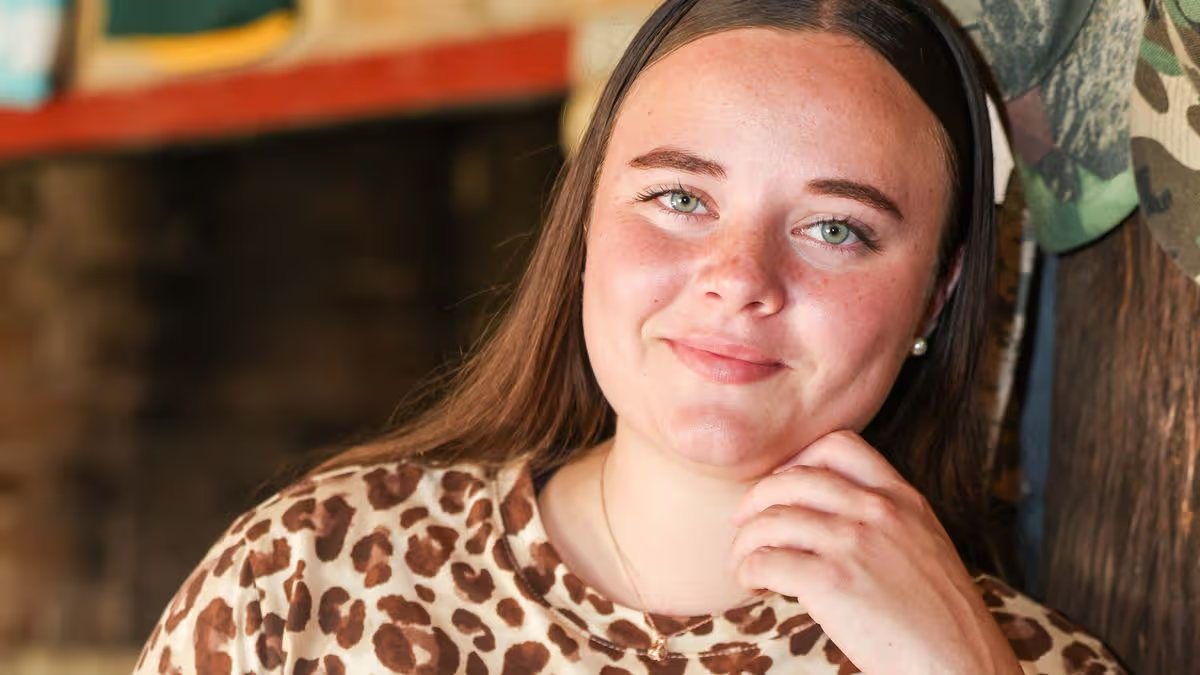
The 17-year-old is raising money to train to be a nurse
A teenager has revealed the unusual side hustle she started to fund her studies – cleaning graves. Sulandri Kotzé dreams of becoming a nurse but says she did not want her parents footing the bill for her future.
So the 17-year-old came up with a business idea that has since become her full-time job – restoring neglected graves. And it has turned into a full family affair. “We joke about everything while we work,” said Sulandri, from Free State, South Africa.
“There are many meerkat holes between the graves. When someone accidentally steps in one and falls we crack up before we go to help them.”
Sulandri first came up with the idea two years ago when she started thinking seriously about life after school. The teenager said the idea to clean graves “just popped into her head” after noticing how many cemeteries had fallen into disrepair.
She recalled seeing weeds growing around gravestones and dirt covering inscriptions on tombstones. Sulandri believed final resting places should be treated with dignity rather than left abandoned and forgotten. Just a month later, her parents Dirk and Andri advertised the business on Facebook, and she quickly landed five jobs.
Now, Sulandri maintains around 75 graves, each cleaned twice a month. Her prices vary depending on the size of the grave, the condition it is in and whether clients want fresh gravel or cement added. She also sends relatives monthly photos or short videos showing their loved ones’ graves after being cleaned.
Her dad Dirk, who works for the Department of Correctional Services, said: “We’ve received letters from people saying they can’t wait for each month’s photo. They say it feels as if they’ve made a visit to the grave themselves.”
Many of Sulandri’s customers live far from Hoopstad Cemetery and are unable to regularly visit family graves themselves. Sometimes the job even turns into a detective hunt, with Dirk relying on vague descriptions from relatives trying to remember where graves are located.
He added: “They’ll give directions like, ‘To get to the grave you go left at the gate, then down to the last row and it’s somewhere near a big tree’. But the cemetery has changed over the years.
“The gate might have moved, or the last row is no longer the last row, or the tree might have died.”
When Sulandri, her parents and often her grandmother Gloudie finally locate the graves, they are frequently badly damaged or overgrown – with some even toppled over. The family first photographs the grave before beginning the restoration work, later sending clients updated “after” photos once the site has been cleaned.
For Sulandri, the business has become about more than just raising money for university. It has also helped her discover her own family history. Last year, while searching for graves, her mum Andri – who works as an inspector at a peanut factory – stumbled across a gravestone bearing a familiar name: Andries de Necker.
The inscription revealed he was born in 1889 and buried in 1971. Next to him was the grave of his wife Martha, who died in 1973. After researching further, Andri discovered the graves belonged to her great-grandparents, who died long before she was born.
Now the family also looks after those graves too. Sulandri’s unusual business has continued to grow steadily, with each family member playing a role. Her dad acts as manager and buys cleaning supplies, while her mum handles the accounts and invoices.
Her boyfriend, Pieter Prinsloo, who lives in nearby Welkom, also chips in whenever he visits at weekends. Sulandri joked: “But shame, I don’t pay them anything!”
Despite the hard work, the teenager says the job feels rewarding because of what it means to grieving families. And while the business is helping fund her dream of becoming a nurse, it is also helping relatives care for loved ones’ graves they can no longer visit themselves.