
Updated: 15 May 2026 14:45 BST |
5 min read

The 2010 FIFA World Cup is remembered as one of the darkest periods in France’s footballing past, but the scars of an era erased by the glory of victory in 2018 have been ripped back open by a Netflix documentary that has rekindled a feud that long seemed dormant.
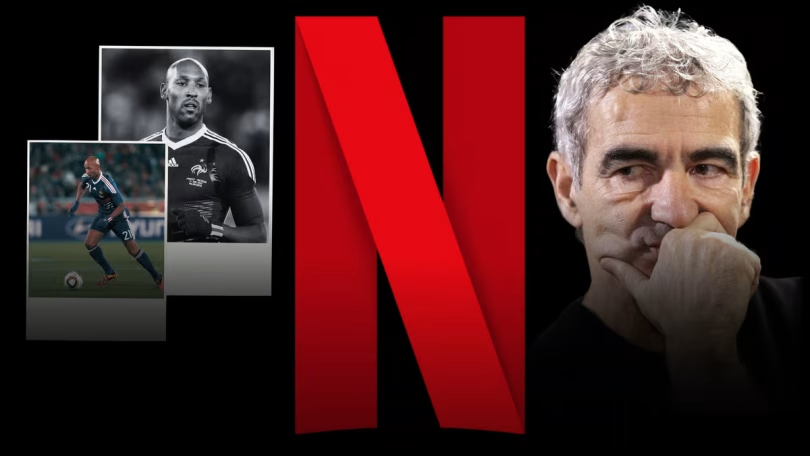
‘The Bus: A French Football Mutiny’ is an 80-minute-long documentary that recounts Les Bleus outrageous World Cup campaign, which was marred by the players going on strike, sitting on the team bus and refusing to train.
Few of the players chose to take part in the program, but Patrice Evra, William Gallas, Bacary Sagna spoke as well as Francois Manardo, who was the team’s press officer.
The real star of the show, though, was mercurial head coach Raymond Domenech. Previously tight-lipped on the incidents, he provided insights via his diary and spoke candidly of his time with the squad.
Domenech was a controversial figure in French football even before the South African World Cup trip – he had previously dropped former Arsenal winger Robert Pires based on his star sign, for example – and his brash manner rarely went down well with a star-studded squad.
Les Bleus had limped along miserably under the coach for years, despite having some of the world’s greatest players. A poor performance at Euro 2008 was followed by a qualifying campaign that required a controversial handball from Thierry Henry to send them through at the expense of Ireland. Things would hit boiling point in South Africa.
France 2010 World Cup: Where it went wrong
After a 0-0 draw with Uruguay to open the competition, Nicolas Anelka clashed with Domenech at half-time during a defeat to Mexico.
“Go f*** yourself, you son of a whore,” the former Real Madrid and Arsenal striker reportedly told the coach, resulting in an early trip home.
Before France’s final game of the tournament, a 2-1 loss against South Africa, the players went on their infamous strike after Patrice Evra clashed with fitness coach Robert Duverne in full view of hundreds of autograph-seeking fans at their training base at Knysna.

The recriminations were severe and would echo through French football until Didier Deschamps finally managed to get a handle on the team when he took over in 2012.
Deschamps has since led Les Bleus back to the summit of the game. Despite France’s World Cup win in 2018 and trips to the final of the European Championship of 2016 and the 2022 World Cup, the memories of Knysna remain among French football fans.
It is a tinderbox of a subject, and the Netflix documentary was all that was required to set it alight once again.
The biggest revelations came from Domenech’s diaries, in which he described Yoann Gourcuff as “mildly autistic to begin with and then an idiot”. He also singled out Thierry Henry for being a “typical self-absorbed Leo”, and William Gallas for always being “in a bad mood”.
Domenech: Netflix betrayed me!
The coach was, naturally, at the heart of the controversy.
“Sixteen years later, it was supposed to be a documentary offering explanation, reflection, and thoughtful analysis. Instead, it became an extraordinarily violent indictment against me,” he declared.
“It was meant to be a well-balanced documentary in which each side would be presented fairly. Instead, it turned into a completely one-sided film of nauseating bias.
“I would never have approved such a version because it reflects neither what I said (pick the juiciest excerpts, cut, edit, rearrange them, and you get a sensationalist film whose only purpose is to “stir up dirt” to boost ratings and discredit a man), nor who I am. I am hurt and betrayed: it feels like a violation of my soul. A theft of my emotions from a moment.”

Anelka had a more positive view of the program.
“I spoke to him on the phone yesterday and he had just watched the documentary. He told me he was blown away by its quality and didn’t expect the atmosphere to be portrayed so well. He found the contributors excellent, even Raymond,” Manardo told RMC Sport.
When asked about Domenech’s social media post, he said: “When I read his indignant message on X, I first thought he hadn’t written it himself. There wasn’t a single mistake… (…) I was stunned when I heard about the diary. Looking back, I think: how could we have hoped to win with a coach who had such bitterness in him?”
France’s World Cup campaign of 2010 was never forgotten, but the memories of it had been suppressed. The old wounds, though, clearly continue to ache.


