
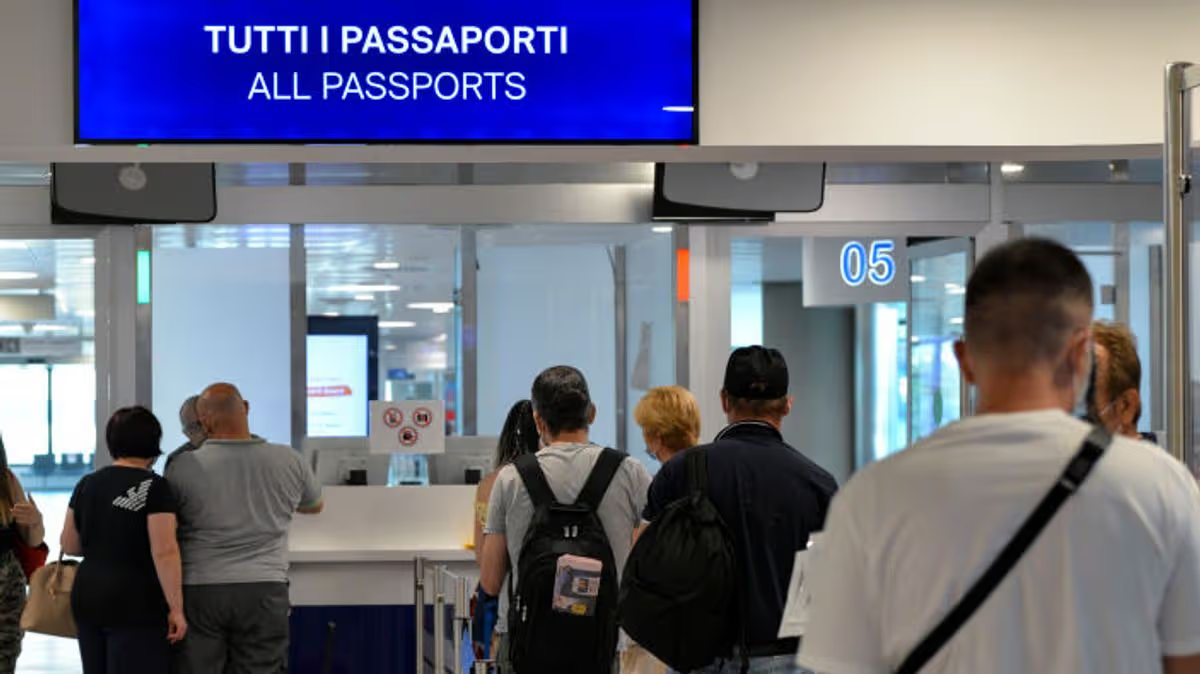
The plan should help but down on lengthy airport queues seen in recent weeks
Brits travelling to Greece are facing changes to the new digital Entry/Exit System (EES). The news will come as a welcome relief to those concerned about how the new system might affect their airport journey.
The EES officially rolled out across parts of Europe on April 10, leaving many Brits facing lengthy waits at EU borders before visiting holiday hotspots like Spain, France, Italy and Greece, among others. In some instances, passengers have even missed their flights after being held up in lengthy processing queues.
EasyJet has issued its own update to passengers, warning them to give themselves enough time at the airport this spring and summer. “The airline may not be able to wait for delayed passengers, even if the wait is longer than usual,” the airline said.
The system has drawn criticism from several countries, including Greek authorities, who pushed back so hard that they suspended the process for British tourists altogether. Rather than digital registration, incoming flights carrying UK passengers will now use manual passport stamping to prevent long airport queues and ensure a smoother entry process, reports the Express.
As reported by the Independent, Greek tourism minister Olga Kefalogianni said: “In the very beginning of the season, we faced some delays in the whole process at the airports. We really want our travellers to have the best experience and we understand that any inconvenience in getting into Greece or exiting would create frustration.
“We really don’t want anyone to have to face a lot of bureaucracy, so we have managed to facilitate the system in order for British citizens not to have any burden, especially at the airports. So it’s just a very easy way to come in and exit the country. Up to now, it’s been like a minute or so just to come in and out.”
The Independent’s Simon Calder claims the move was expected to trigger an immediate demand from the European Commission for Athens to fall into line, but no action has yet been taken (as of May 11). Speaking to the publication, Ms Kefalogianni said: “We are part of the Schengen area. We aim to always abide by the rules, but at the same time, we want our visitors to feel very welcome.
“Having a bureaucratic burden at the airports, we understand, is not really a fuss-free situation. So we just made sure that our visitors have a fuss-free experience, that’s all potential visitors need to know.”
What are EES checks and which countries are still enforcing them?
The EES is an automated system designed to digitally register non-EU nationals entering the Schengen zone for short stays (up to 90 days within a 180-day period). It does away with manual passport stamping, replacing it with biometric verification (fingerprints and facial scans).
The EES captures your name, travel document type, biometric data (fingerprints and photograph), alongside entry and exit dates and locations. This digital record remains valid for three years, which means you’ll only need to provide biometrics once every three years rather than on each trip.
As of April 10, 2026, EES has been rolled out across the borders of 29 European nations. The announcement issued by Greece today (May 11) applies exclusively to the United Kingdom.
- Austria
- Belgium
- Bulgaria
- Croatia
- Czechia
- Denmark
- Estonia
- Finland
- France
- Germany
- Greece
- Hungary
- Iceland
- Italy
- Latvia
- Liechtenstein
- Lithuania
- Luxembourg
- Malta
- Netherlands
- Norway
- Poland
- Portugal
- Romania
- Slovakia
- Slovenia
- Spain
- Sweden
- Switzerland
In Cyprus and Ireland, passports will still be stamped by hand despite both nations being members of the European Union. This is due to the fact that neither country is part of the Schengen area.


