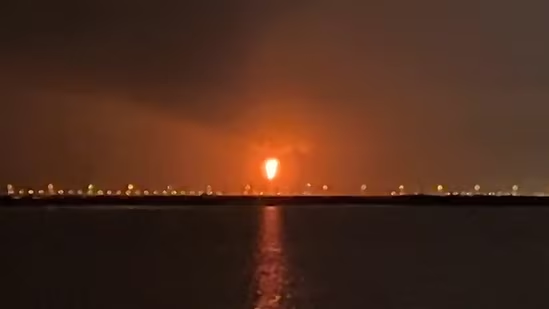
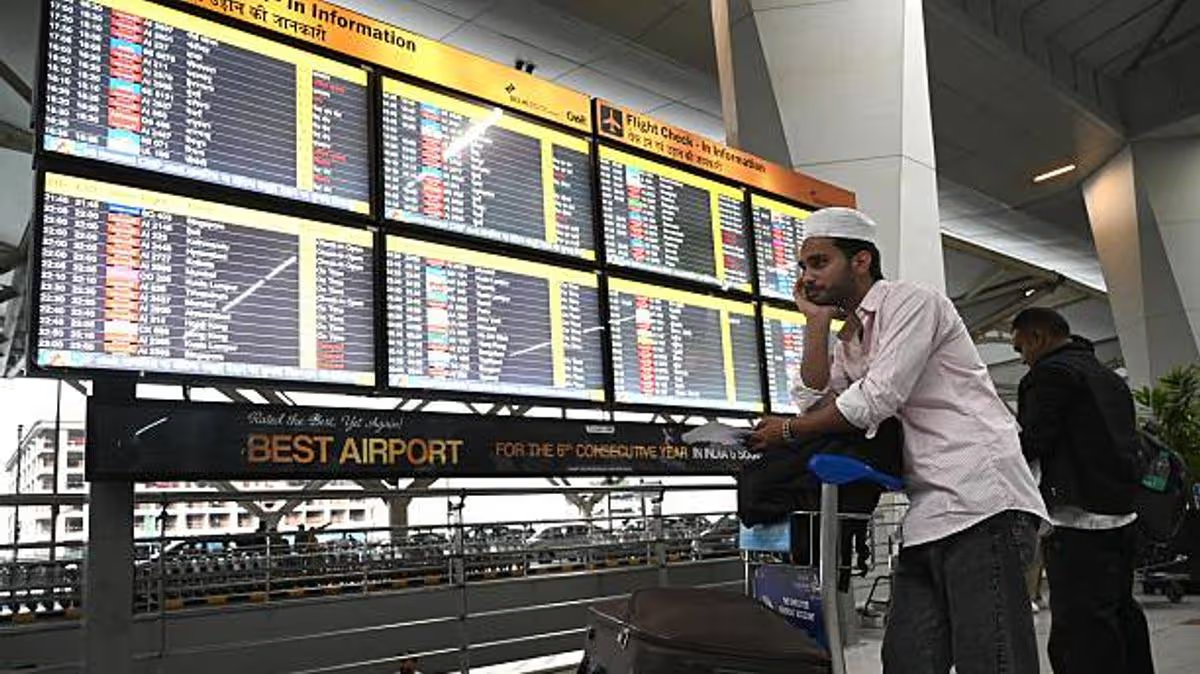
Thousands of people have been affected by the disruptions on Thursday, May 7 and it has been reported that 194 flights were cancelled and 2,603 delayed, sending airports into chaos
Travellers across Asia were left stranded after major airlines cancelled hundreds of flights and delayed thousands of others in single day.
Thousands of people were affected by the disruptions across Thailand, Singapore, India, China, South Korea and Malaysia on Thursday, May 7. It has been reported that 194 flights were cancelled and 2,603 delayed.
Indira Gandhi International Airport in New Delhi, India was the worst-affected by the disruption 365 delays. Haneda Airport in Tokyo, Japan experienced 282 delays, making it one of the busiest disrupted hubs in Asia and the second worst-affected.
Other affectedairports include:
- Chhatrapati Shivaji Maharaj International Airport, Mumbai
- Kuala Lumpur International Airport, Kuala Lumpur
- Suvarnabhumi Airport, Bangkok
- Shanghai Pudong International Airport, Shanghai
- Singapore Changi Airport, Singapore
- Incheon International Airport, Incheon
- Kunming Changshui International Airport, Kunming
Shanghai Airlines was the worst-affected carrier, having to cancel 58 flights.
Other affected Asian airlines include:
- IndiGo
- Air India
- Japan Airlines
- Korean Air
- SpiceJet
- AirAsia
- Singapore Airlines
- Thai Airways
The reason for the major aviation disruptions across Asia is unclear, but airlines across the world have reported concerns over jet fuel costs and supply.
Jet fuel supply has been shocked by the US-Iran war which sparked after the US and Israel carried out joint strikes on several key Iranian sites on February 28.
Iran retaliated by striking sites across the Middle East and closing the critical Strait of Hormuz trade route, through which 20% of global oil traded passes. This has choked global oil supply and impacted flights.
In the UK, travellers could find their flights rescheduled as the Government relaxes a rule that airlines rarely risk breaking.
Transport Department officials say airlines may consider scrapping certain services following the introduction of a temporary rule change that allows carriers to merge flights and combine passengers.
This is meant to cut the total number of aircrafts departing, aiming to preserve jet fuel and provide holidaymakers with reassurance that trips will not be cancelled altogether.
Rather than axing flights at short notice, the idea is to “reduce wasted fuel from flying near-empty planes”.
To maximise the use of airport departures, airlines would reassess their schedules and could transfer passengers from under-booked services that have not sold a decent proportion of seats onto similar flights.