The United Arab Emirates said it came under attack by Iran for the first time since a fragile ceasefire took hold in early April.
The attacks appeared to be in response to US President Donald Trump’s latest efforts to reopen the Strait of Hormuz, a critical waterway for global energy.
The UAE Defence Ministry said Iran had launched four cruise missiles, with three shot down and one falling into the sea. Authorities in the eastern emirate of Fujairah said an Iranian drone sparked a fire at a key oil facility, wounding three Indian nationals.
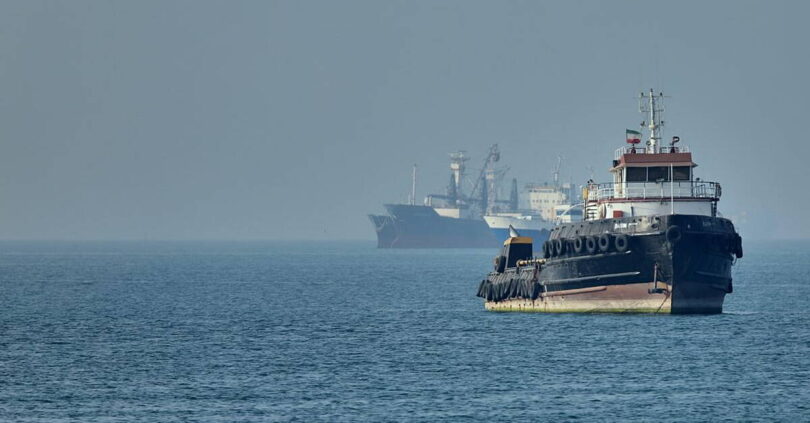
The British military reported two cargo vessels ablaze off the UAE.
The attacks came after US military said that two American-flagged merchant ships had successfully transited the Strait of Hormuz after it launched a new initiative to restore traffic.
Admiral Brad Cooper, commander of US Central Command, told reporters that American forces have opened a passage through the strait and that US military helicopters have sunk six Iranian small boats that were targeting civilian vessels.
He said Iran has launched multiple cruise missiles, drones and small boats at ships the US military is protecting, and that “each and every one” of the threats had been defeated.
Breaking Iran’s chokehold over the strait would ease global economic concerns and deny Tehran a major source of leverage. But such efforts also risk reigniting the full-scale fighting that erupted when the US and Israel first attacked Iran on February 28, prompting it to close the strait..
Iran’s effective closure of the strait, which runs between Iran and Oman, has caused a spike in worldwide fuel prices and rattled the global economy. The US-led Joint Maritime Information Centre is now advising ships to cross the strait in Oman’s waters, saying it set up an “enhanced security area”.
It was unclear whether shipping companies and their insurers will feel comfortable taking the risk, given that Iran has fired on ships in the waterway and vowed to keep doing so. Hundreds of ships have been bottled up in the Persian Gulf for weeks.
Iran has said the new US effort is a violation of the fragile ceasefire that has held for more than three weeks.
The US military’s Central Command said the two American-flagged merchant ships were “safely headed on their journey” after transiting the Strait of Hormuz. It said Navy guided-missile destroyers in the Persian Gulf were helping to restore traffic.
Its statement on X said that US destroyers had also transited the strait. It did not say when the Navy ships arrived or when the merchant vessels departed.
Mr Trump’s announcement on Sunday that the US would “guide” ships out of the strait warned that Iranian efforts to block them “will, unfortunately, have to be dealt with forcefully”.
He described “Project Freedom” in humanitarian terms, designed to aid stranded seafarers who have been stuck in the Persian Gulf since the war began.
Crews have described to The Associated Press seeing drones and missiles explode over the waters earlier in the war as their vessels run low on drinking water, food and other supplies.
Iran’s state-run IRNA news agency called the effort part of Mr Trump’s “delirium”.
Iran’s military command on Monday said ships passing through the strait must co-ordinate with them.
“We warn that any foreign military force — especially the aggressive US military — that intends to approach or enter the Strait of Hormuz will be targeted,” Major General Ali Abdollahi told state broadcaster IRIB.
The disruption of the waterway has squeezed countries in Europe and Asia that depend on Persian Gulf oil and gas, raising prices far beyond the region.
The US has warned shipping companies they could face sanctions for paying Iran for transit of the strait.
The Joint Maritime Information Centre urged mariners to co-ordinate closely with authorities in Oman “due to anticipated high traffic volume”.
U.S. Navy guided-missile destroyers are currently operating in the Arabian Gulf after transiting the Strait of Hormuz in support of Project Freedom. American forces are actively assisting efforts to restore transit for commercial shipping. As a first step, 2 U.S.-flagged merchant… pic.twitter.com/SVDxDhK72I
— U.S. Central Command (@CENTCOM) May 4, 2026
It warned that passing close to usual routes “should be considered extremely hazardous due to the presence of mines that have not been fully surveyed and mitigated”.
The head of security for the Baltic and International Maritime Council, a leading shipping trade group, said no formal guidance or details about the US effort had been issued to the industry.
Jakob Larsen questioned whether the effort was sustainable and said it carries a “risk of hostilities breaking out again”.
The United Arab Emirates accused Iran of targeting a tanker linked to its main oil company with two drones as it navigated the strait. It did not say when the attack occurred. No injuries were reported.
ADNOC Logistics & Services, an affiliate of the oil company, said on X that the ship held no cargo when it was hit off the coast of Oman.
Iranian news agencies, including the semi-official Fars and ILNA, reported on Monday that Iran struck a US vessel near an Iranian port southeast of the strait, accusing it of “violating maritime security and navigation norms”.
The reports said the vessel was forced to turn back.
US Central Command said on X that “no US Navy ships have been struck”.
The US has enforced a naval blockade on Iranian ports since April 13, telling at least 49 commercial ships to turn back, according to Central Command.
The blockade has deprived Tehran of oil revenue it needs to shore up its ailing economy. US officials have expressed hope that the blockade forces Iran to make concessions in talks on its disputed nuclear programme and other longstanding issues.
Iran’s latest proposal for ending the war calls for the US lifting sanctions, ending the blockade, withdrawing forces from the region and ceasing all hostilities, including Israel’s operations in Lebanon, according to the semi-official Nour News and Tasnim agencies, which have close ties to Iran’s security apparatus.

Iranian officials said they were reviewing the US response, though Foreign Ministry spokesperson Esmail Baghaei told reporters that changing demands made diplomacy difficult. He did not give details.
Iran has claimed its proposal does not include issues related to its nuclear programme and enriched uranium — long a driving force in tensions with the US and Israel.
Iran wants other issues resolved within 30 days and aims to end the war rather than extend the ceasefire.
Mr Trump expressed doubt over the weekend that the proposal would lead to a deal.
Pakistan said it has facilitated the transfer of 22 crew members from an Iranian vessel seized earlier by the US, describing the move as a confidence-building measure as Islamabad attempts to revive talks.
Pakistan hosted face-to-face talks last month.
Pakistan’s Foreign Ministry said the crew members from the container ship MV Touska were flown to Pakistan overnight. They were expected to be handed over to Iranian authorities.
The vessel will be brought into Pakistani waters for necessary repairs before being returned to its original owners, the ministry said, adding that the process is being co-ordinated with the support of Iran and the US.