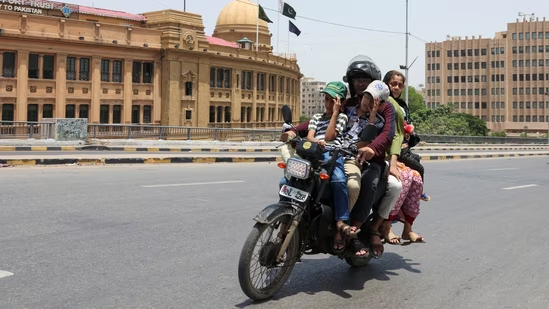
Karachi experienced a blistering heatwave on Sunday, May 3, with temperatures hitting 40.9°C as per a report by Dawn. The extreme weather left residents devastated as basic utilities collapsed, and millions were made to suffer acute water shortages and relentless power cuts.
A meteorological official stated that the intense heat, combined with stifling humidity, made the “feel-like” temperature peak at 46°C. The scorching conditions are expected to persist through the week, which leaves the population with crumbling infrastructure in a dire state in the days to come.
Water crisis in Karachi
Worsening the environmental condition is the water crisis in the city, which has deepened as a result of ruptured pipelines and power failures at pumping stations. The Karachi Water and Sewerage Corporation (KWSC) claimed to have repaired a pre-stressed reinforced concrete cylinder (PRCC) pipeline to support the.
However, the ground reports of the crippled supply network contradict the assurances of normalcy. Officials have admitted that the city is facing a serious water deficit at present, to make matters worse. While Karachi has a daily requirement of 650 million gallons per day, they are receiving around 610 million gallons, leaving a shortfall of approximately 40 million gallons.
While there have been claims from officials that the water situation in Karachi has “improved significantly,” many regions of the city, including Landhi, Baldia Town, and Orangi Town, remain in severe crisis. Desperate citizens have been driven to purchase water from private tankers at exploitative rates.
Loss of power supply
Living conditions in the city were made significantly worse with frequent power outages during the heatwave. K-Electric refused to halt loadshedding and reportedly attempted to justify it as a matter of “minimising so-called losses.”
The life-threatening heat forced residents out of their homes, with many taking to the streets in Mauripur to protest against being denied basic utilities. Despite a spokesperson for the utility claiming that the “economic loadshed” is typically suspended when temperatures reach extreme levels, ground reality painted a different picture, with many forced to endure the heat and humidity in the dark.
Opposition blames political leadership
Lawmakers of Muttahida Qaumi Movement Pakistan have held the provincial government responsible for the ongoing crisis, calling them out for their “incompetence, negligence and mismanagement.”
While the political leadership has described the massive water shortfall as a “serious administrative failure” that has effectively paralysed the city, they have yet to come up with an effective solution. With weeks of summer heat still left to endure, the standoff between the desperate public and the administration is likely to plague Pakistan’s largest commercial hub further.