Israel supplied the United Arab Emirates with a laser defence system and other advanced weapons during the war on Iran, the Financial Times reported on Thursday.
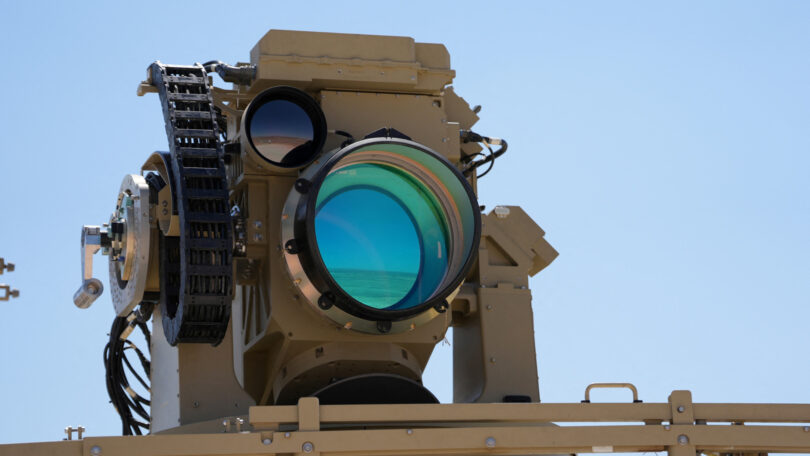
A version of Israel’s Iron Beam laser defence system was sent to Abu Dhabi to help defend against Iranian drones and missiles, two people familiar with the matter said.
The advanced system, first deployed by Israel in December 2025, is designed to intercept short-range rockets and drones.
A lightweight surveillance system known as Spectro was also supplied, the report said. It can detect incoming drones from up to 20km away.
Last week, Axios reported that Israel had also sent an Iron Dome air defence system to the Gulf state, along with personnel to operate it.
CLICK FOLLOW: TO FOLLOW US
Sign up to get the latest insights and analysis on
Israel-Palestine, alongside Turkey Unpacked and other eSPORTY
Israeli Prime Minister Benjamin Netanyahu ordered the deployment of the system’s battery, including interceptors and several dozen trained soldiers, the report said.
According to FT, a person familiar with the matter said the number of Israeli boots on the ground “was not small”.
The report added that Israel also shared real-time intelligence with the UAE throughout the conflict.
Iranian officials have previously told Middle East Eye they believe the UAE was actively participating in the US-Israeli war on Iran.
Israel and the UAE normalised relations in 2020 under a US-brokered agreement, and have since developed close strategic, military and economic ties.
Deep cooperation
After the US and Israel launched a bombing campaign against Iran in February, Tehran responded by firing rockets and drones at Israeli and US targets across the region.
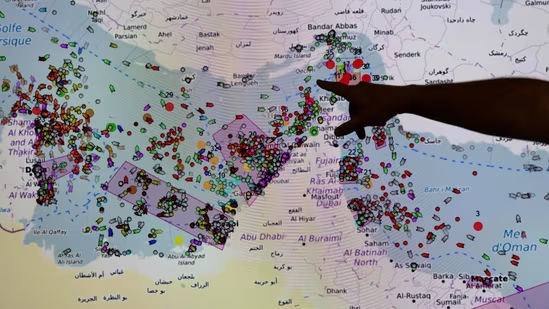
The UAE was among the most heavily targeted, with authorities saying Iran launched around 550 ballistic and cruise missiles and more than 2,200 drones at the country.
UAE’s Burj Al Arab to close for 18 months refurbishment after Dubai tourism drop-off
Read More »
While most were intercepted, debris caused damage in Abu Dhabi and Dubai, including at the Burj Al Arab, Palm Jumeirah, Dubai Airport and the Fujairah oil industrial zone.
According to Axios, Israeli and Emirati officials said the two countries have worked closely together, both militarily and politically, since the war began.
The Israeli air force also carried out strikes targeting short-range missiles in southern Iran before they could be launched at the UAE and other Gulf states.
When the South Pars gas field – a key part of Iran’s energy infrastructure – was bombed on 18 March, Tehran responded by targeting facilities across the Gulf.
Missiles and drones also struck hotels, airports, data centres, ports and US embassies across the region.
Last month, the US agreed a temporary ceasefire with Iran, halting hostilities and restarting negotiations, which have yet to produce any major breakthroughs.