US Central Command (Centcom) has requested to deploy the military’s secretive Dark Eagle hypersonic missile to the Middle East for possible use against Iran as a way to hit targets deep inside the Islamic Republic while remaining beyond the reach of its air defences, according to a report by Bloomberg on Thursday.
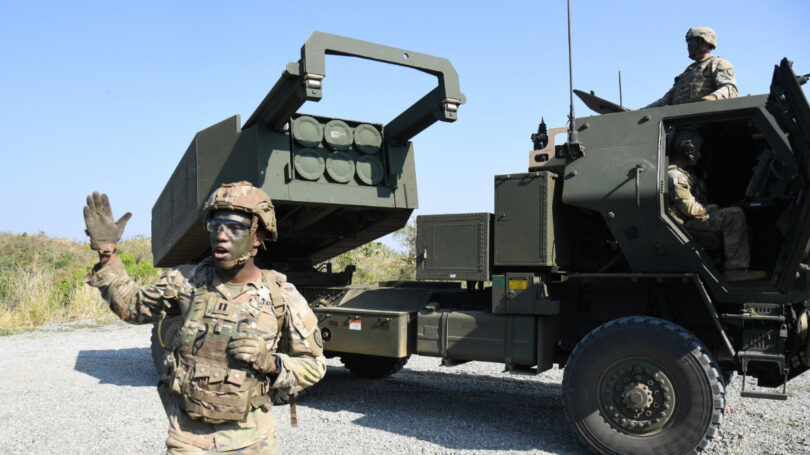
Centcom made the request to the Department of War based on intelligence that Iran has moved its ballistic missile launchers out of range of the US’s Precision Strike Missile, a supersonic surface-to-surface ballistic missile fired from a High Mobility Artillery Rocket System.
If Centcom’s request for the Dark Eagle hypersonic missile is approved, it would mark the first time the long-delayed weapon is deployed, and potentially used, should the US resume attacking Iran. The missile has a reported range of more than 2,776 kilometres.
Axios reported on Thursday that US President Donald Trump is being briefed by Centcom on plans for a fresh wave of attacks on Iran.
The report said that “short and powerful” strikes, potentially targeting Iranian infrastructure, were being planned as a result of deadlocked peace talks.
CLICK FOLLOW: TO FOLLOW US
Sign up to get the latest insights and analysis on
Israel-Palestine, alongside Turkey Unpacked and other eSPORTY
If the US were to deploy the Dark Eagle hypersonic missile against Iran, it would likely raise questions among sceptics about the cost of armaments being deployed against a country that Trump has regularly characterised as defeated.
The Dark Eagle was designed to target Chinese and Russian air defence systems. Both countries are nuclear-armed powers and have militaries more sophisticated than Iran’s, according to military analysts.
The Trump administration has repeatedly claimed that it has established air superiority over Iran’s skies, but Iran’s downing of an F-15E Strike Eagle fighter earlier this month underscores that it still has air defence capabilities.
Cost of war
Fighting between Iran and the US has stopped as a result of a fragile ceasefire, with the two sides shifting their focus to competing maritime blockades. The US and Iran have both seized vessels in the Gulf and Indian Ocean as they try to assert their dominance over the Strait of Hormuz.
Meanwhile, military experts say both sides are using the ceasefire to rearm and regroup.
The US and Iran are at an impasse over how to end the war.
Middle East Eye was the first to reveal that Iran received air defence systems from China. The New York Times later reported that Beijing may have sent shoulder-fired missiles to Iran.
‘Empowered’: UAE’s exit from Opec appeases Trump, delivers blow to Saudi Arabia
Read More »
The New York Times reported earlier this month that the war has significantly depleted a huge portion of the US military’s global ammunition stockpile and that the Pentagon has been forced to relocate military equipment in Asia and Europe to the Middle East.
The conflict has depleted both offensive and defensive weaponry, including precision-strike missiles and Patriot interceptor missiles.
The Pentagon said on Wednesday that the war has cost the US $25bn so far. The Dark Eagle costs $15m per missile, and the US only has eight of them, Bloomberg reported.
Trump rejected this week what he characterised as a “nonnuclear” deal that Tehran offered as a path to end the war but deferred discussions on its nuclear programme.
As the war enters its third month, however, some diplomats and analysts tell MEE that Trump may be unable to reach an agreement with Tehran, mainly because of his unwillingness to provide sanctions relief to the Islamic Republic.