The Iran–US confrontation has entered a dangerous pause: the guns have largely fallen silent, but none of the core issues that triggered the conflict have been resolved. What stands instead is a brittle ceasefire without a roadmap, a US-led naval blockade in the Strait of Hormuz, and a slow-burn crisis that is roiling global energy markets and Middle East security.
A ceasefire without an agreement
In Islamabad, the second round of ceasefire talks between the US and Iran collapsed, underscoring just how little trust exists between Tehran and the Pakistani mediators it openly derides as “flunkies” of Washington. Yet, despite the collapse, Washington went ahead and declared an “indefinite ceasefire” – without any formal agreement on what that ceasefire actually entails.
Normally, ceasefires follow at least a minimal framework: points agreed in advance, then a halt in hostilities, followed by detailed negotiations. Here, the basic building block is missing; there is no understanding on how either side will implement restraint, let alone de-escalate. There is no agreement on Iran’s nuclear programme, no understanding on ballistic missiles, and no clarity on rules for reopening or securing the Strait of Hormuz.
ALSO READ | What the US-Iran ceasefire really reveals
The result, as Shishir Gupta puts it, is “war on a slow burner”: a conflict that can flare up with a drone strike or a boat attack and then recede again, without either side actually wanting to launch a full-fledged new war. Both Washington and Tehran appear exhausted and unwilling to escalate, but they are equally unwilling to concede.
Iran’s strategy: Drag, delay, claim victory
Iran, badly hit by American military strikes and economic pressure, is playing for time and optics. Tehran has a long-standing propensity to drag out every file – nuclear, missiles, and now Hormuz – not to solve the crisis, but to keep leverage alive and claim symbolic victories along the way.
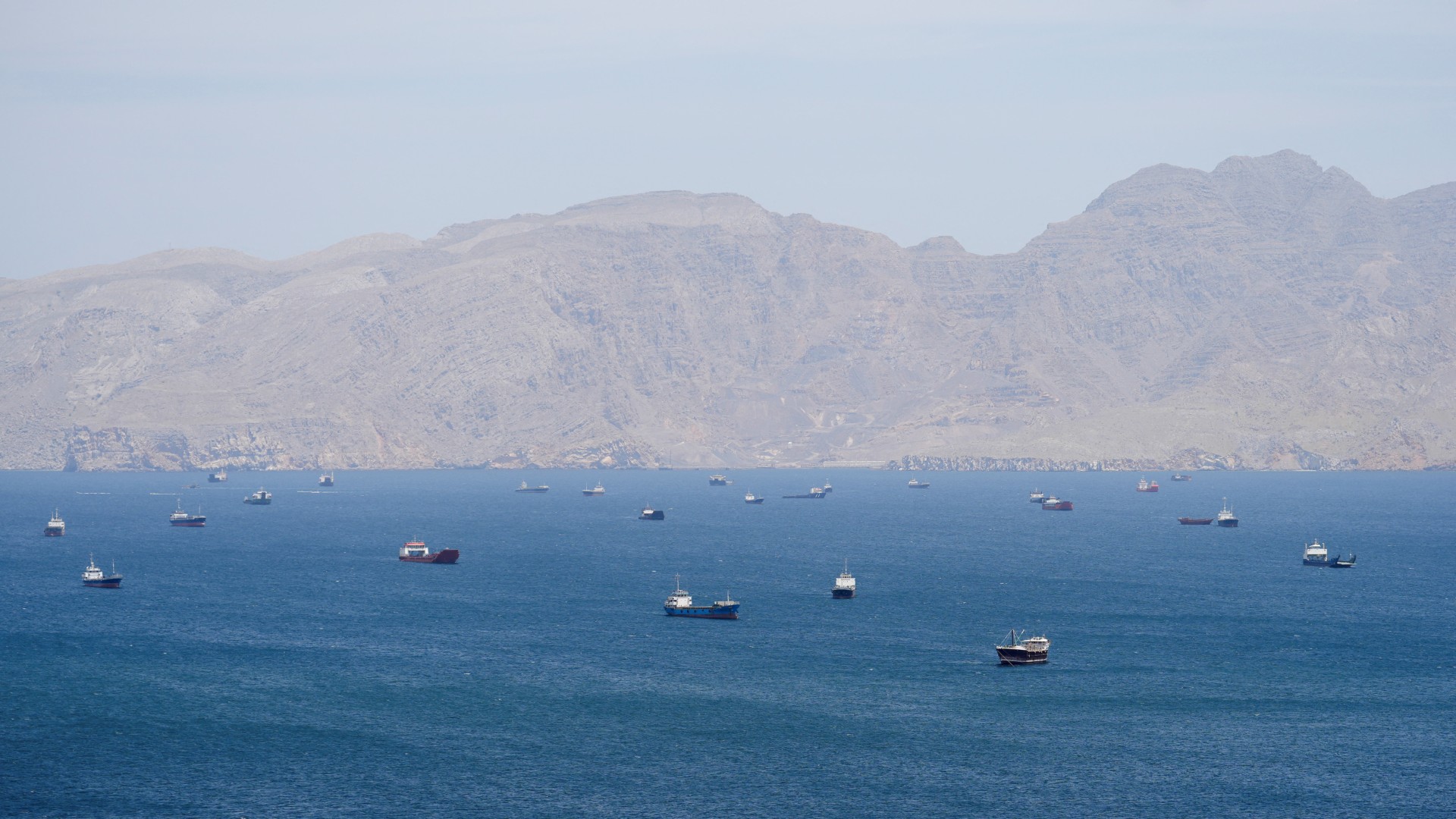
By holding the Strait of Hormuz hostage to its grievances, Iran is weaponising a vital chokepoint through which a significant share of the world’s oil flows. The aim is to engineer or threaten an energy shock so severe that Gulf monarchies, Asian importers and European economies all press Washington to end the confrontation on terms less painful to Tehran.
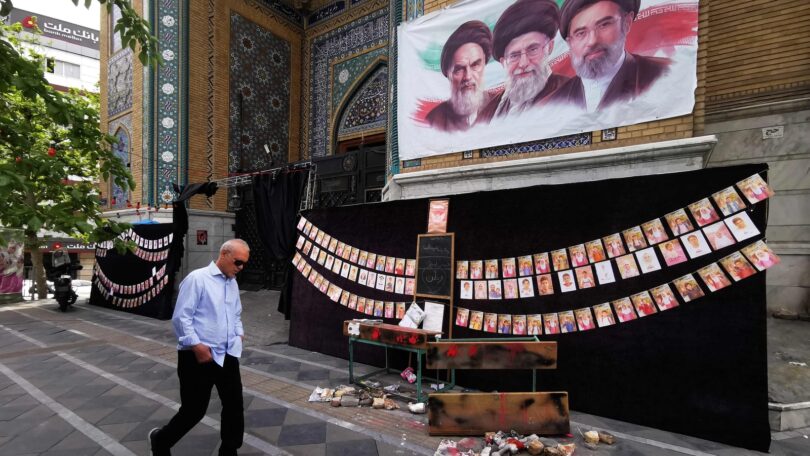
In the battle of narratives, Iran has scored real gains across the “Arab street” and the broader Muslim world. Despite American dominance over global social media platforms, Iran has framed itself as the lone state standing up to “Satan” – the US and Israel – in a way that resonates with both Shia and Sunni audiences angered by decades of Western interventions. This political and psychological victory matters, even as the country absorbs heavy punishment on the ground.
America’s upper hand at sea
On the battlefield, though, the picture is starkly different. The US has systematically degraded Iran’s conventional capabilities: its air force, navy and ground units have all taken serious hits. A US-led armada, with three aircraft carrier groups deployed in the region, now effectively dominates the Strait of Hormuz.
Washington has forced at least 37 Iranian tankers to turn back, tightening a blockade that is choking Iran’s already fragile economy and setting the stage for deeper internal pain in the months ahead. Iran can harass and retaliate with sporadic drone strikes, ballistic missile launches or kamikaze boat attacks, but these remain pinpricks against overwhelming American naval superiority.
ALSO READ | Iran has offered new deal to US, says report. It has 3 key focus points
Israel, meanwhile, is a silent but active player – striking when it wants, saying little, and letting the US–Iran confrontation absorb the spotlight. On the ground and at sea, Gupta is blunt: the US, with its “huge armada” and unmatched military might, is the one “winning the game,” even if it is losing the popularity contest in the region.
Gulf’s message: Finish the job
Caught between a global energy crisis and a security threat next door, Gulf capitals are walking a careful line. Publicly, Saudi Arabia, the UAE and others have stayed remarkably quiet as the Islamabad talks falter. Privately, their message to Washington is not “stop the war,” but “make it decisive.”
Recent high-level Indian visits – External Affairs Minister S. Jaishankar to the UAE, and National Security Adviser Ajit Doval shuttling between Riyadh and Abu Dhabi – have unfolded against this tense backdrop. Gulf leaders, according to Gupta, are effectively telling the Americans: if you have started this, finish it; do not let Iran keep the region perpetually hostage with threats of nuclear weapons and Hormuz disruption.
ALSO READ | US bragging about ‘having cards’: Iran’s Ghalibaf shares new formula as Hormuz blockade persists
For Riyadh and Abu Dhabi, the nightmare scenario is not a short, sharp conflict but an endless cycle of brinkmanship in which Iran’s nuclear advances and maritime blackmail continue unchecked. They want a decisive outcome that restores freedom of navigation, limits Iran’s ability to threaten shipping, and reduces the long-term risk of a nuclear-armed Tehran destabilising the region even further.
At the same time, they are pushing the US to ensure that Iran complies with international law and its own commitments under the Nuclear Non-Proliferation Treaty, including past assurances that it would neither build nuclear weapons nor enrich uranium to weapons-adjacent levels.
Trump’s hard choices with elections looming
For US President Donald Trump, the political and strategic calculus is unforgiving. Reports of mounting American casualties, soaring ammunition costs and an inflation spike driven in part by higher fuel prices are feeding domestic discontent. Yet after Washington walked out of the Islamabad talks, Gupta argues that Trump is left with essentially one path: maintain and tighten the blockade until Iran relents on the two core issues – Hormuz and nuclear enrichment.
The freedom of navigation through the Strait of Hormuz has become the focal point of this “war after the war.” Until tankers can move freely without fear of attack or interdiction, the blockade remains both the main pressure tool and the main source of global economic anxiety.
At the same time, US intelligence assesses that Iran has enriched uranium well beyond what is necessary for civilian power generation, directly contradicting Tehran’s own pledges. Combined with explicit Iranian rhetoric about attacking Israel and the US, this leaves Trump with no “soft” options: backing down would look like capitulation, both internationally and to his domestic base.
That is why he has assembled a formidable force in the region, while warning Russia and China against bailing Iran out. The implicit threat is that if Moscow and Beijing choose to underwrite Tehran, Washington has levers of its own in Ukraine and Taiwan. For Trump, walking away now by merely declaring victory is politically untenable; he has “the tiger by the tail” and cannot simply let go.
A world living with instability
The paradox of this moment is that full-scale war is unlikely to return soon, but peace is nowhere in sight. Both sides are bruised and wary of escalation, yet both cling to maximal demands: Iran wants sanctions relief and strategic leverage; the US wants Iranian concessions on nuclear, missiles and maritime security.
What fills the gap is a prolonged phase of instability – a simmering conflict that keeps energy markets on edge, rattles Middle Eastern fault lines, and leaves the larger world exposed to sudden shocks in oil prices and security flare-ups. Iran may have won the narrative on the street, but the real ball, for now, is in Washington’s court.
Unless the US and Iran can move beyond symbolic victories and coercive leverage to a structured, enforceable agreement, the Strait of Hormuz will remain a pressure point on the global economy, and West Asia will remain trapped in a tense, uneasy limbo.