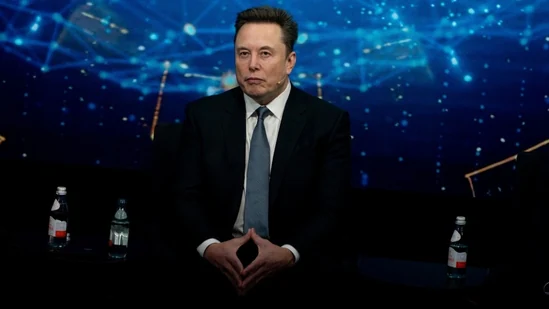
As Elon Musk’s trial against OpenAI begins this week, legal experts and prediction markets agree that he will enter the Oakland federal courthouse as an underdog.
Since March, Kalshi has put his chances of victory at about 40% on average, down significantly from the 57% Musk touted in January when he posted on X, “Can’t wait to start the trial.”
“Plausible win, but not where the smart money sits,” Jeff Ward, a clinical professor of law at Duke University and the director of the Duke Center on Law and Technology, said of Musk’s chances of victory.
The remedies Musk is asking for include damages that could exceed $180 billion to be paid from OpenAI’s for-profit arm to its nonprofit parent, the removal of OpenAI CEO Sam Altman and President Greg Brockman from their leadership roles, and the unwinding of OpenAI’s recent conversion to a more traditional governance structure. Even one of those proposed changes would significantly complicate OpenAI’s path to a public listing, which could come by the end of this year.
Musk is alleging that Altman tricked him into bankrolling OpenAI when it was an idealistic nonprofit set up to develop artificial intelligence for the benefit of humanity, only to then turn it into a de facto for-profit company that took investment from Microsoft.
OpenAI argues that Musk knew about and supported the plan to create a for-profit structure, left after he wasn’t granted control, and is only suing now, having started his own AI company, to throw sand in the gears of a competitor.
In the months leading up to the trial, Musk’s initial 26 claims were whittled down to four: breach of charitable trust, promissory fraud, constructive fraud and unjust enrichment. In recent days, Musk told the court he was willing to drop the two fraud claims in the interest of streamlining the trial, so long as it didn’t undermine the other claims, and the judge agreed.
That leaves the case likely turning around the key issue of breach of charitable trust: the argument that he donated assets that were intended for an open-source nonprofit, which were then taken and used for a closed-sourced for-profit. (OpenAI’s current for-profit company, recently restructured as a public-benefit corporation, is controlled by its nonprofit parent.)
Duke’s Ward believes that the breach of charitable trust claim is “compelling legally and rhetorically.” But, he also believes “the theory is being stretched thin here,” given that Musk donated the funds indirectly and two states’ attorneys general have signed off on the restructuring he is challenging. Musk donated to OpenAI indirectly through the Musk Foundation, his private charitable foundation, first to a nonprofit arm of startup accelerator Y Combinator and then through a donor-advised fund.
Experts in nonprofit law question the judge’s decision to allow Musk to bring the breach of charitable trust claim, given that he is not on the board of the nonprofit or company. Although an early board member, Musk is suing in his capacity as a donor.
“I am surprised that he has been granted standing,” said Ellen Aprill, a senior scholar at UCLA’s law school who specializes in nonprofit law. “It’s pretty unusual in California for donors to have standing at all.”
In general, only the attorney general of California has the authority to police whether nonprofit donations were used appropriately, she said.
However, Judge Yvonne Gonzalez Rogers allowed the case to proceed to trial in part by relying on a notable precedent that allowed an exception to this rule: a landmark 1964 California Supreme Court Case called “Holt v. College of Osteopathic Physicians and Surgeons,” which found that if the attorney general was too busy to step in when donations were misused, people with a “special interest”—like a trustee—could sue to make sure the donation was used for its initial purpose.
Aprill believes that this precedent is still a stretch in Musk’s case because OpenAI could argue that the attorney general of California was clearly not too busy to attend to this matter. He spent months negotiating with OpenAI and signing a memorandum of understanding signing off on its new structure of a nonprofit controlling a public-benefit corporation.
“The judge is reading the precedents she cites quite broadly,” Aprill said.
Rose Chan Loui, a law professor at UCLA and the founding executive director for the Lowell Milken Center on Philanthropy and Nonprofits, appreciates that Musk is “holding OpenAI’s feet to the fire” but also has concerns about whether he should have been granted standing to bring the breach of charitable trust claim.
In her view, his strongest legal path forward was likely the fraud claims. In her decision to allow the case to move to trial, the judge highlighted excerpts from OpenAI co-founder Brockman’s diary, in which he had written, “This is the only chance we have to get out from Elon..to convert to a b-corp without him,” referring to a type of for-profit company.
However, Chan Loui believes the remedies for fraud would have fallen far short of what Musk really wants. It is possible that he would just walk away with the roughly $40 million he originally invested plus interest.
“In dangling an offer to drop the fraud claims, Elon Musk is taking an all-or-nothing approach, acknowledging that those claims alleging direct harm probably won’t get him the equitable relief he wants, which is to reverse all the transactions that OpenAI has entered into that don’t comply with its charitable purpose to ensure that AI is developed safely and for the benefit of all humanity,” Chan Loui said.
The judge has decided that the jury won’t have the final say on remedies, even if it does find OpenAI guilty. She has ruled that the trial will be split, with an initial phase looking only at liability, and a subsequent phase looking at remedies, during which the jury’s decision on the size of any potential disgorgement will be “advisory.”
She had earlier voiced skepticism about Musk’s expert’s estimate that OpenAI ought to disgorge as much as $134 billion—as Musk requested in January, when OpenAI’s valuation was lower—saying he was “pulling these numbers out of the air.”
Duke’s Ward believes the most likely outcome, even if Musk does win, would pair a money award well below the headline figure with “targeted governance fixes and guardrails” such as independent board seats, mission-protective covenants and constraints on licensing intellectual property.
Write to Keach Hagey at Keach.Hagey@wsj.com