The moment you cross the finish line after completing one of the most brutal and physically demanding challenges sport has to offer, a marathon, you feel a state of euphoria unlike any other: the runner’s high.
As I crossed the line in Rome last month, after finishing my debut in the 26.2-mile event, I screamed like I was a gladiator in the neighbouring Colosseum, and pumped my fist in celebration, not once, not twice, but three times.
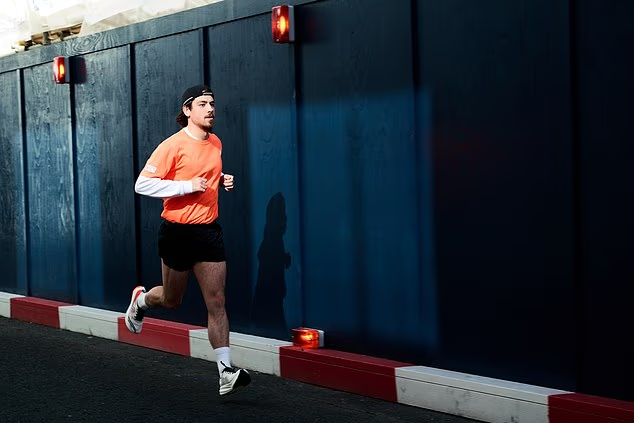
I’d done it. After 12 weeks of endless laps of Victoria Park in east London through the bitterly cold winter months, interval sessions, tempo runs, and long, hard slogs through the Walthamstow Wetlands, I had actually done it. I’ve never felt a high quite like it.
But then came the cramps. Lots of cramps.
For the next few days of sightseeing in the Italian capital, I could barely walk. Everything hurt, from my hips to the balls of my feet. My high turned to pain real quick, and I wondered when I would next be able to run.
Now, this is a feeling that I’m sure almost all of the 59,000 runners taking on Sunday’s TCS London Marathon, no matter how experienced, will live through after they cross the iconic finish line on The Mall in St. James’s Park.
I’m a marathon runner who has used the training app Runna to help me recover from my race
Recovery after a marathon is almost as important as the training leading up to the big event. In the weeks after such a punishing and savage activity, focusing on rest and recuperation is imperative.
Eventually, most runners will have to get going again, though. I allowed myself a week’s rest before easing myself back to the tarmac, using the training app that guided me to a PB in Rome, Runna.
Runna is an app, founded in 2021, that offers custom training plans and coaching for various race distances and goals. It can be used by those just starting their running journey or by elite athletes looking to shave just seconds off their marathon times.
While it’s well-known for helping people get that medal around their neck, once it’s on, they also offer post-race recovery plans that allow the leg muscles to recharge while maintaining fitness.
Ben Parker, Runna co-founder and head coach, tells Daily Mail Sport: ‘Running is a high-impact and demanding sport, and I’m sure there are many runners who will have experienced injury as part of their training journey to the marathon. No injury risk can ever be eliminated entirely.
‘But at Runna, we take every step to mitigate these risks. Through educating runners to make sustainable choices when building their plan and navigating the app, as well as in the fundamental decisions that go into building every plan that we create.
During my first few runs after Rome, my legs were wrecked. It felt like they had been dipped in cement, and I was carrying an extra 20 kilograms around.
It took me a few runs in my recovery plan to start to feel anything close to normal again. Something that has worked for me is the ‘downtime’ Runna provides through ‘controlled progression’ in the training plan.

Runna provide a post-race recovery plan that will be perfect for London Marathon runners
Common sense is key when recovering from a marathon – something I don’t always possess when it comes to training – and you need to listen to your body as you get back up to speed.
And Parker, who is running the London Marathon himself, his 43rd such race at that distance, has key advice for those who have just run the event: take things slow in the weeks after the race.
‘Following the event, I’d recommend people take time getting back into running,’ he adds. ‘Completing a marathon is a huge accomplishment and places a significant amount of load on the body.
‘You will feel sore muscles for a number of days afterward, and it’ll take a few weeks to get back to full strength, so proper rest and recovery are important.
‘It’s essential to gradually reintroduce intensity and the normal routines of training, given that the window of time post a max effort like a marathon is when we’ll be most susceptible to a potential injury.
‘The priority is rebuilding consistency and making sure the body feels comfortable. Once that’s in place, intensity can be added back in step by step to help get back into running sustainably and safely.’