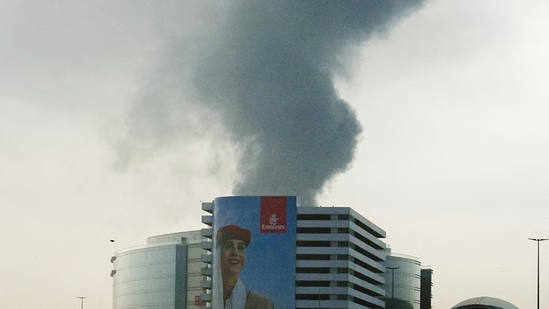
The President Donald Trump-led United States (US) administration is confident that blockade of Iranian ports will ultimately make Iran bend as the chokehold would fill the Kharg Island storage and shut the “fragile Iranian oil wells”.
Kharg, a strategically vital Iranian coral island in the Persian Gulf, is considered to be the primary hub for nearly 90 per cent of Iran’s oil exports, facilitating millions of barrels of crude shipments daily to international markets.
The US has been trying to have Iran come to a permanent ceasefire that would put a full stop to the fighting that erupted on February 28 and has shaken the entire Gulf and regions beyond. Track Iran war April 22 updates here
US President Donald Trump on Tuesday announced an extension of the in-effect temporary ceasefire shortly before it was about to expire. The Pakistan-brokered two-week ceasefire was announced on April 8.
“Based on the fact that the Government of Iran is seriously fractured, not unexpectedly so and, upon the request of Field Marshal Asim Munir, and Prime Minister Shehbaz Sharif, of Pakistan, we have been asked to hold our Attack on the Country of Iran until such time as their leaders and representatives can come up with a unified proposal. I have therefore directed our Military to continue the Blockade and, in all other respects, remain ready and able, and will therefore extend the Ceasefire until such time as their proposal is submitted, and discussions are concluded, one way or the other,” Trump said on Truth Social.
‘Kharg Island storage will be full soon’
Adding to it, Treasury Secretary Scott Bessent said Trump has made clear, “the United States Navy will continue the blockade of Iranian ports.” He added that due to the the blockade, “in a matter of days, Kharg Island storage will be full and the fragile Iranian oil wells will be shut in. Constraining Iran’s maritime trade directly targets the regime’s primary revenue lifelines.”
“The US Treasury will continue to apply maximum pressure through Economic Fury to systematically degrade Tehran’s ability to generate, move, and repatriate funds. Any person or vessel facilitating these flows—through covert trade and finance—risks exposure to U.S. sanctions,” Bessent said.
We continue to freeze the funds stolen by the corrupt leadership on behalf of the people of Iran, he said.
Days after the announcement of the ceasefire, US President Donald Trump announced the beginning of a military blockade of all maritime traffic to and from Iranian ports.
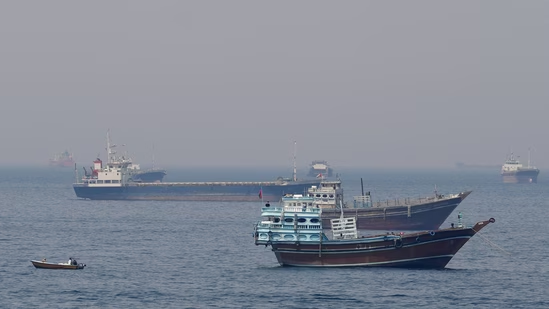
Iran called the move an “act of piracy” and warned the US against provocative acts. US imposed the naval blockade in the Strait of Hormuz to exert economic pressure on Tehran following the collapse of ceasefire talks.
Iran, meanwhile, has maintained its own chokehold on the Strait of Hormuz since the start of the war that US-Israeli strikes on February 28 triggered. Iran’s geographical advantage makes it a de facto in charge of sorts of the Strait.
It was briefly re-opened on Saturday but quickly shut again, following reports of vessels in or near the strait, including a tanker, being targeted by Tehran. Trump said Iran had “decided to fire bullets” and called it a “total violation” to the ceasefire agreement. Iran said it would keep the route choked until the US stops the blockade of its ports.